Retailers hope for bumper Christmas as household savings hit record €31bn
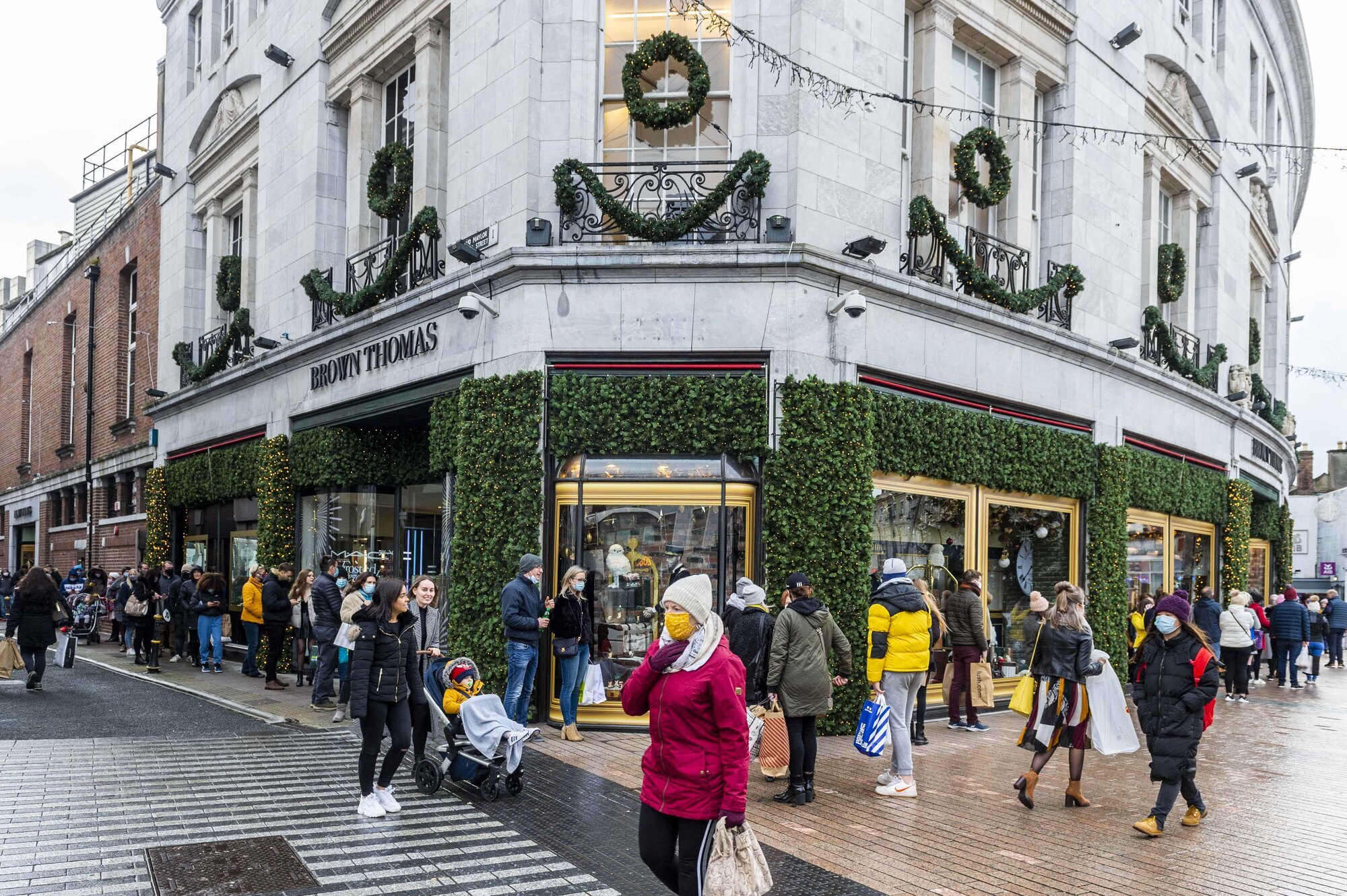
Retailers are hoping to attract shoppers to urban centres in the run-up to Christmas. Picture: Andy Gibson
Retailers are hoping for a bumper Christmas as Irish households amassed a record €31bn in savings during the height of the pandemic – even more than what was accumulated during the Celtic Tiger SSIA era.
New figures released by the Central Statistics Office (CSO) showed households saved more than €31bn last year, bringing their financial net worth to an all-time high of €312.8bn. The level of savings has trebled since before the pandemic due to higher household incomes and lower consumer spending.
Households saved over €31 billion in 2020, bringing their financial net worth hit an all-time high of €312.8bnhttps://t.co/UJtH1VllbP #CSOIreland #Ireland #NationalAccounts #Economy #Economics #Macroeconomics #EconomicIndicators
— Central Statistics Office Ireland (@CSOIreland) November 2, 2021
#EconomicActivity #Output #ValueAdded pic.twitter.com/0smgJr3hGc
The €16bn saved in deposits in 2020 was significantly higher than the height of the Special Saving Incentive Accounts (SSIAs) in 2006, when €12bn was added.
However, even as public health restrictions have eased, Covid-19 case numbers have soared, with Retail Ireland, the country's largest representative body for the retail sector, saying consumer confidence needs a boost so money can start flowing through the economy.
Arnold Dillon, director of Retail Ireland, said: "We have seen a strong retail recovery over recent months, but not all parts of the sector are benefitting. Footfall is still dramatically reduced in some key retail districts. The lack of office workers and tourists has taken a heavy toll.
"A concerted effort, involving all of Government, will be needed to relaunch and reinvigorate our urban centres. This will require immediate steps to attract people back in the run-up to Christmas, along with longer-term strategies to foster vibrant, accessible, attractive, safe, and liveable towns and cities.
"Key challenges have emerged – urban centres have been under-used and as a result of that, significant issues are arising out of making sure they are clean and attractive and that anti-social behaviour is addressed," he said.
One likely destination for some of the household savings gathered in the past two years is green home improvement and retro-fitting as Ireland aims to reach its targets to cut greenhouse gas emissions.
The Irish League of Credit Unions said in its affiliated members, total savings last year to the end of September were up 6.1%, and total savings at June 2021 were €14.52bn, up €448m, an increase of 3.2% for the year to that point.
It referred to some changes already under way, such as the Central Bank changing the investment regulations to allow credit unions to provide social housing funding to certain Approved Housing Bodies (AHBs) via a regulated investment vehicle.
"Other areas that could be considered are the mortgage and SME lending markets if credit unions were allowed to do more in this space by the Central Bank," an ILCU spokesperson said.
"The move to multi-annual funding of deep retrofit projects by the SEAI [Sustainable Energy Authority of Ireland] would be a welcome development as it would result in more green home improvement loans from credit unions under the CU Greener Homes scheme.
"Many people will use their excess savings to improve the warmth and energy efficiency of their home through measures such as exterior and interior wall insulation, installation of heat pumps, solar panels and heating controls.
"While there is clearly a desire among Irish households to undertake improvements to maximise the energy efficiency of their homes, research highlights that 58% of people simply do not know where to start with a home energy efficiency upgrade while almost two thirds (60%) of respondents were unsure of what supports and grants are available."
The CSO said total gross disposable income of households grew by €9.3bn (8%) in 2020, but this was "unevenly distributed", while also referencing the role played by the Pandemic Unemployment Payment and the Employment Wage Subsidy Scheme.
CONNECT WITH US TODAY



Be the first to know the latest news and updates