Nphet and NIAC to meet to discuss advice around easing of Covid-19 restrictions
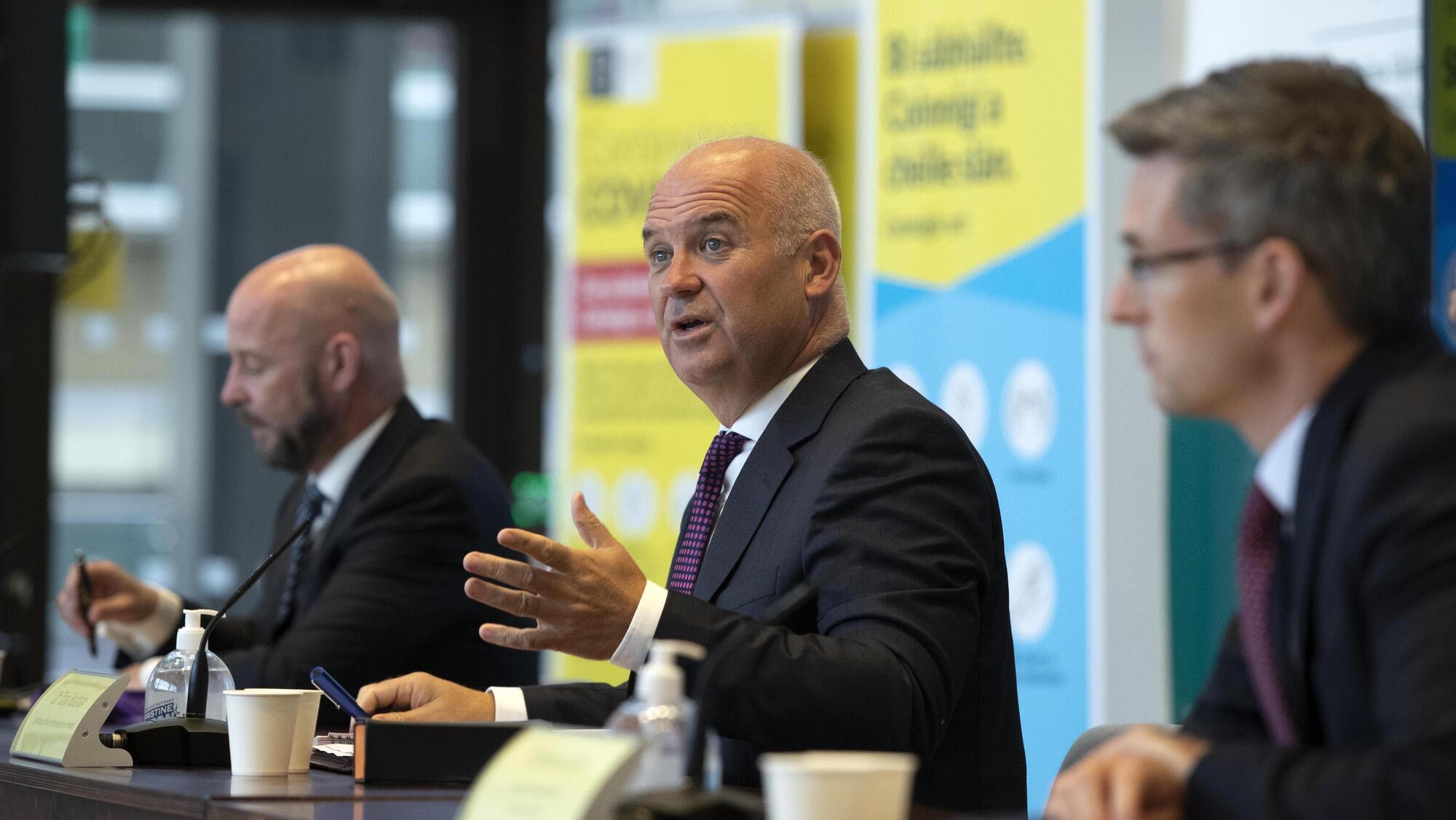
CMO, Dr Tony Holohan, Deputy CMO, Dr Ronan Glynn, and Chair of the NPHET Irish Epidemiological Modelling Advisory Group, Professor Philip Nolan. File Picture: Colin Keegan/ Collins Dublin
Public health experts are due to meet today to produce advice on the reopening of the country from October 22 and an extension of the booster programme.
With Covid cases now rising, the Government is looking at a number of options, including the retention of Covid certs for the hospitality sector and the requirement to wear masks in some places, however, the Taoiseach has stressed that the country will not be moving backwards.
However, the final decision to be made by Cabinet on Tuesday will be influenced by the recommendations of the National Public Health Emergency Team (Nphet), which will meet today.
The National Immunisation Advisory Committee (NIAC) is also expected to produce advice around boosters ahead of the Cabinet meeting.
Children's Minister Roderic O'Gorman has not ruled pausing the reopening of nightclubs from next weekend, stating that it will be dependent on public health advice.
But Mr O'Gorman said there is a "strong desire" to ease restrictions from October 22, but the Government remains concerned about the transmission of the virus.
He said the continued use of Covid certs would be "a good option going forward", but added that "enforcement is important" and encouraged restaurants and pubs to properly check customers for proof of vaccination or immunity.
Asked if he believes nightclubs will be allowed to open, Mr O'Gorman said: "I think that depends on what we get from Nphet tomorrow. I would definitely like to see it happening, the nightclub industry has taken the longest hit from Covid now of almost 19 months shut."
This was echoed by Minister for Social Protection Heather Humphreys who said: "We're not going back, that's important to say, but we were looking at what we are going to do regarding the remaining restrictions, we're going to look at Covid certs, we're going to look at booster vaccinations, and those are all of the issues that are being taken into consideration."
Pointing to Israel, she said a booster rollout had worked in other countries and said antigen testing should also be considered as a way to fully reopen.
Meanwhile, both the Vintners’ Federation of Ireland (VFI) and Licenced Vintners’ Association (LVA) said the drop in pub licence renewals is a dramatic escalation in the crisis faced by pub owners, coming just before the government decides whether to remove all remaining Covid restrictions currently operated by the trade.
Vintners say it is now critically important that restrictions on trading are lifted this week, after it emerged that nearly 350 pubs have closed since the pandemic struck.
Figures released by the Revenue Commissioners show a 5% drop in pub licence renewals across the country, with 37 shut in Cork and 33 closed in Dublin alone.
Prior to the pandemic, there were 7,137 licenced pubs throughout the country. That has dropped to 6,788. The 349 pubs that have closed were in 25 counties.
An infectious diseases expert has said that some restrictive measures would be needed to contain the Covid-19 virus and allow a return to "normal life".
Society was going to have to be innovative, Professor Paddy Mallon told Newstalk Breakfast. He was supportive of everything that could enable people to live a more normal life.
Prof Mallon questioned why Ireland remained an “outlier” when it came to antigen testing. Testing and treatment were two key elements in the fight against a virus. Antigen testing could play a vital role for people to test themselves and take themselves out of circulation, he said.
Even vaccinated people could still contract and transmit the virus so antigen testing could help. Widespread antigen testing would give added protection, he said.
The solution was not “all or nothing” he said with regard to restrictions. There should be different measures for different situations.
“No one measure is going to fix everything.” There needed to be a broader dialogue about the measures and the need to continue them in daily life to contain the virus, Prof Mallon said.
He added there was a need to expand a system of widespread antigen testing which would give added protection.
CONNECT WITH US TODAY



Be the first to know the latest news and updates