Irish students compete in global robotics contest with system to aid older people

The team of students from Confey College are (back row) Shivam Gupta, Smrithi Santosh, Sophia Shah, Joel Joseph Rajesh (middle row) Mary Selkirk, Pawel Zielinski, Eoghan Craven Grace (front row) Aaron Dunne, Kushal Jadar, Ryan Lacey and Neha Maria Abey. Not pictured are Anna Mei Kinsella and Sean Coniendo.
A group of nine secondary school students is set to represent Ireland on the world stage at a robotics competition.
The group from Confey College Leixlip in Co Kildare are through to the final stages of the FIRST Robotics Challenge and will be up against teams from over 175 other countries.
Seven members of the team are in third year — Joel Joseph Rajesh, Shivam Gupta, Ryan Lacey, Sophia Shah, Kushal Jadar, Smrithi Santhosh, and Sean Coniendo — while Neha Maria Abey and Aaron Dunne are in sixth year.
Despite having to work largely as an online team due to Covid-19 restrictions, the teens were able to complete their entry projects.
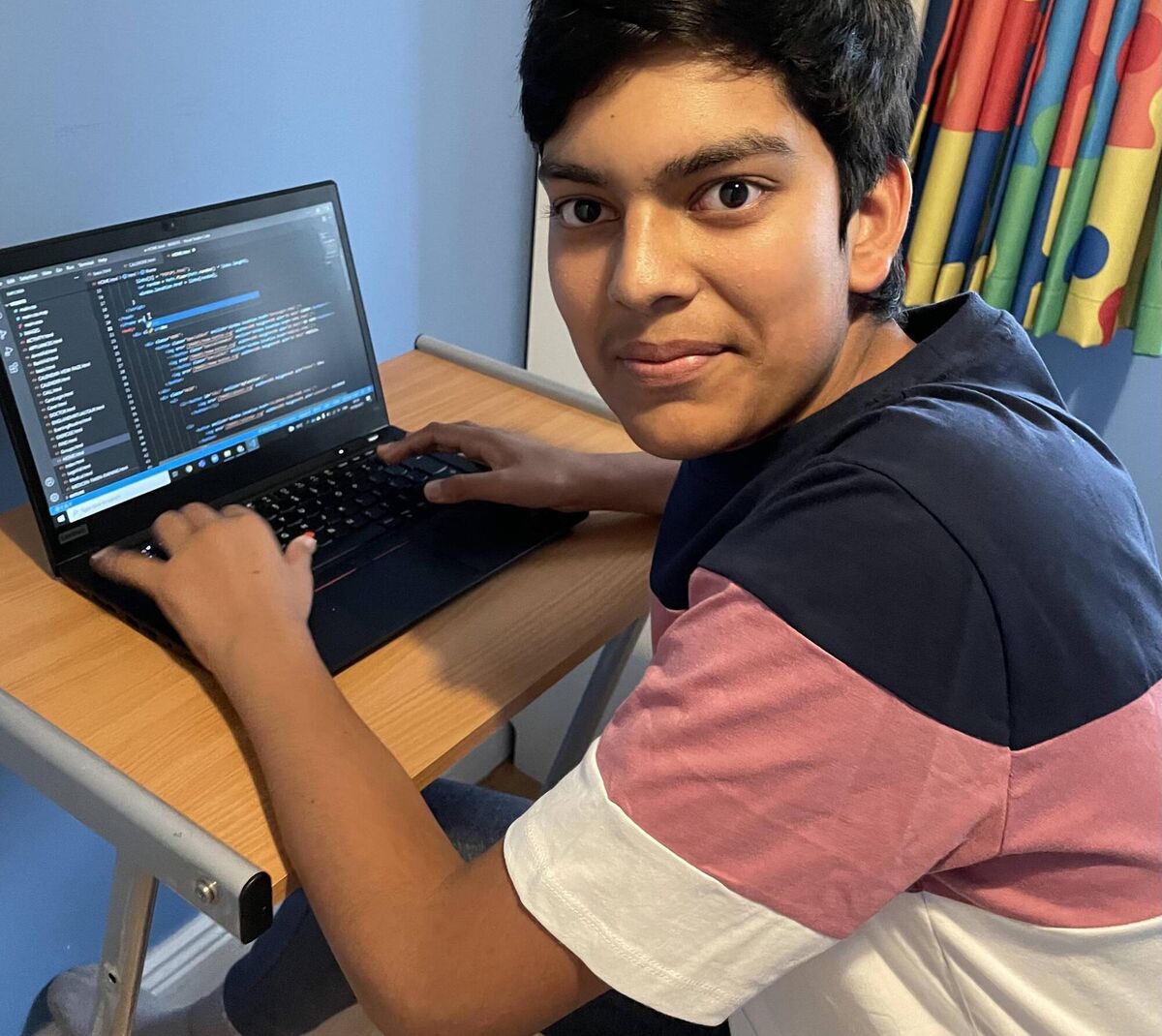
As part of the competition, the team had to create a solution to a problem in their community. Using the current pandemic as an opportunity to improve the lives of others, they set about creating a STEM-based system to aid older people.
"Our team felt that the elderly were by far the most heavily impacted by Covid-19. Being the age group that had the highest mortality rates, they were forced to isolate at the highest level, unable to leave their houses for months at a time," said Joel Joseph Rajesh, who worked as part of the app design team.
"Unlike younger generations, many elderly people lacked the IT skills that would have helped them to communicate with the rest of the world."
The student team considered all of those older people whose mental and physical health suffered as a result of having little to no communication with the outside world during the lockdowns, as well as those who were ill and who passed away in nursing homes and hospitals without their family by their side.
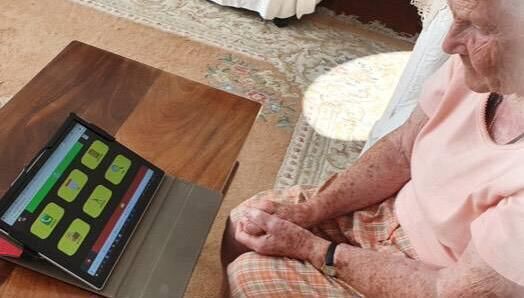
In a bid to remedy this problem, the students developed an easy-to-use tablet system that can be either voice-activated or one-touch activated that makes communication simpler.
The system offers a variety of ways to communicate via phone or video as well as an emergency call button that will immediately contact 999.
Entertainment options are also available with news, radio, films, and audiobooks available at the touch of a button.
The interconnected cloud databases offers important functions such as automated renewal of prescriptions and planning medical appointments. A voice-activated reminder function will ensure that medication is taken at the correct time and appointments are not forgotten.
Importantly, carers and medical staff can log in to the system to log activity, communicate important information and monitor vital statistics.
A telescopic tablet holder designed by the team allows for hands-free use and with an inbuilt wireless charger, there is no fussing with cables and wires.
As they fine-tune their work, they will be surveying people and reaching out for feedback on their system so it will be a useful aid for people in their daily lives.
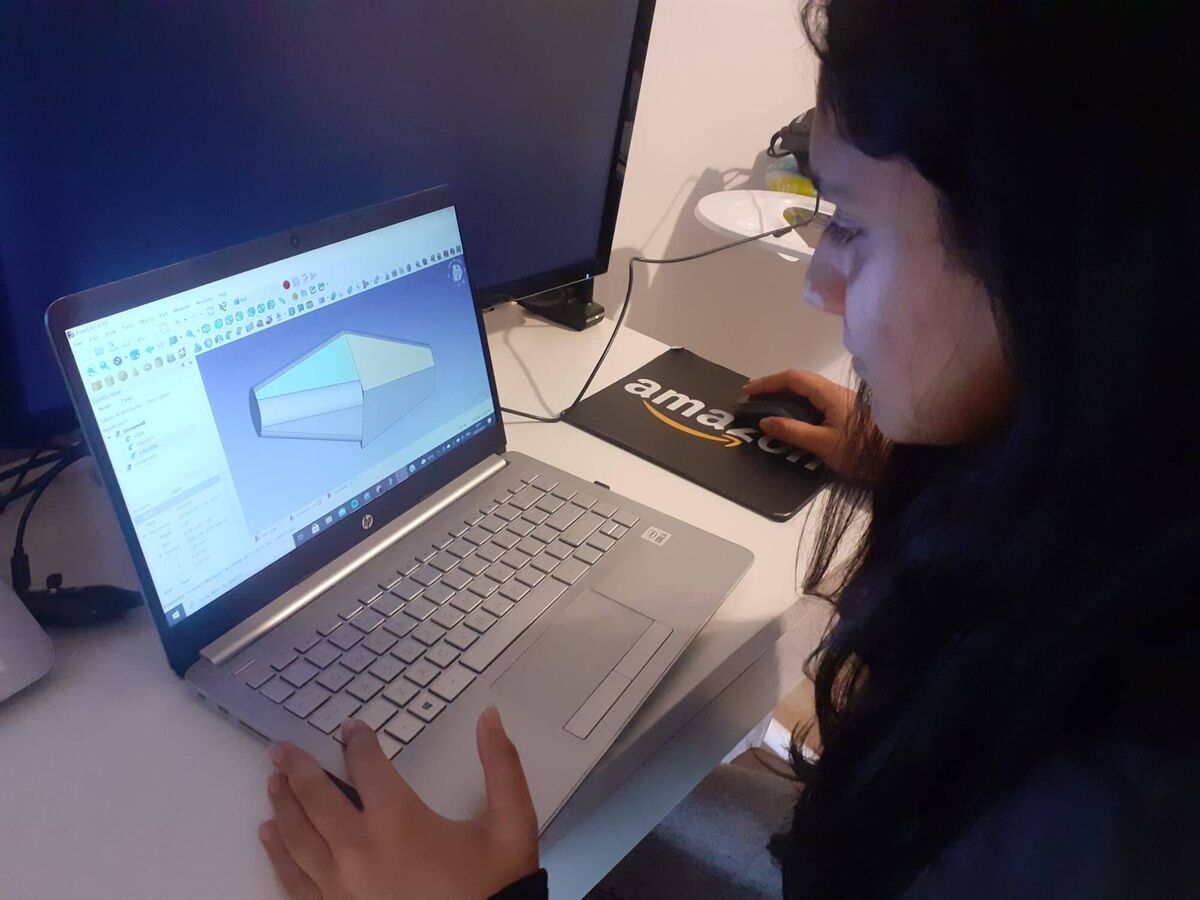
The FIRST Robotics Challenge kicked off in June and there are three parts to the final stage: the Solutions Challenge, the CubeSat Prototype Challenge and the Robotics Challenge.
For the CubeSat challenge, the students are required to build and launch a CUBE Satellite and then deploy them into the lower layers of the Earth's atmosphere.
Team Ireland's satellite will monitor air quality at different times of day at different altitudes before travelling to the uppermost layers. It is hoped the data gathered from this will encourage people to rethink how they commute to work and school and what impact it has on the quality of our air.
For the Robotics Challenge, the team will use components provided in a REV Robotics kit that is capable of completing different tasks such as lifting itself, driving around and launching balls.
Once the three challenges have been completed, judges will announce the winner at the end of September.
No matter the outcome at the end of the competition, the team are grateful to have had the opportunity to work together and try to make a difference in people's lives.
"We hope it can inspire others to try to solve the challenges of our generation," said Joel Joseph.

CONNECT WITH US TODAY



Be the first to know the latest news and updates