Cork, Kerry, France and Spain: Wally the Walrus has captured attention all over Europe
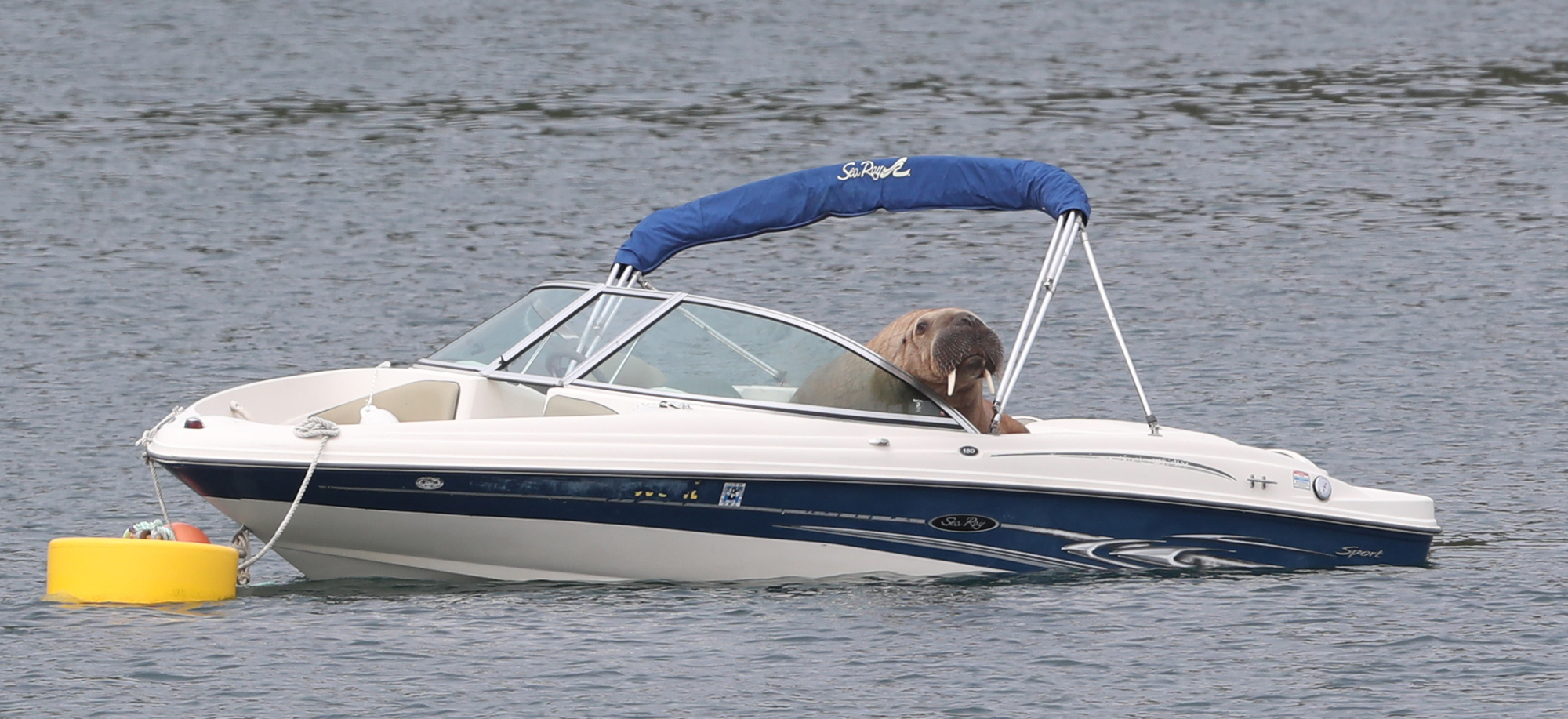
Wally on a boat in Crookhaven, West Cork, on Wednesday. Picture: Niall Carson/PA Wire
Wally the Arctic walrus has been grabbing headlines in Ireland since he first appeared on these shores back in March.
Sightings of walruses this far south are rare – according to the Irish Whale and Dolphin Group, just two other appearances have been recorded in Ireland since 1999.
So when 800kg Wally landed on the rocks on Valentia Island in Kerry, he became something of a celebrity.
But after a couple of weeks in the Kingdom, Wally decided to move on.
On March 26, he popped up on a slipway in the harbour town of Tenby in Wales – 487km away.
PLEASE RESPECT WILDLIFE FROM A SAFE DISTANCE: This image shows one of many boats today that came dangerously close to the walrus as he attempted to rest on a boat in the West Cork area. pic.twitter.com/e90ljmESqa
— Seal Rescue Ireland (@seal_rescue) August 18, 2021
In the days that followed though, UK animal charities became concerned for Wally's welfare. Some irresponsible viewers started to disturb him by getting too close on their jet skis and paddleboards.
Eventually, RNLI volunteers resorted to shooing Wally away with airhorns for his own safety. And so, Wally swam off.

After a brief stop-off at the Isles of Scilly off Cornwall, he crossed the English Channel and landed in the town of Les Sables-d'Olonnen on the west coast of France on May 27. It was the first time the town had seen a walrus in half a century.
From there, Wally continued south, visiting La Rochelle on his way to Bilbao in northern Spain in early June – the furthest south a walrus has been documented going.
While in France, Wally climbed aboard a moored rib for a rest – badly damaging it and injuring one of his flippers – an action he would repeat upon his return to Ireland.
Executive director of Seal Rescue Ireland (SRI) Melanie Croce said this was because walruses, like seals, are pinnipeds, meaning they rely on floating ice to rest.
Because of global warming and the resulting melting of Arctic sea ice, pinnipeds are losing their natural habitats.
"He's is adapting and climbing up on the next best thing, which would be boats and ribs," she said.
Indeed, after landing back in Waterford in early August, Wally climbed aboard another rib, sinking it.
Thereafter, SRI launched an appeal for a disused rib on which Wally could rest, instead of risking him damaging someone else’s property.
They then secured a sturdy pontoon with raised sides – likened to 'a floating couch' – which was to be offered to Wally, who at this point, had arrived in east Cork.
But no sooner was the plan in place, had Wally ventured over to West Cork.
SRI now plans to use towels gathered from the sunken Waterford rib to transfer his scent to a new disused one, thus making him more likely to choose it as his resting spot. From here, his health can be monitored.
Wally has travelled more than 3,000km in Europe, visiting five different countries and collecting fans in each. But his popularity may be making his life more difficult.
"If people don't respect him from a safe distance, it could be dangerous for him," Ms Croce said.
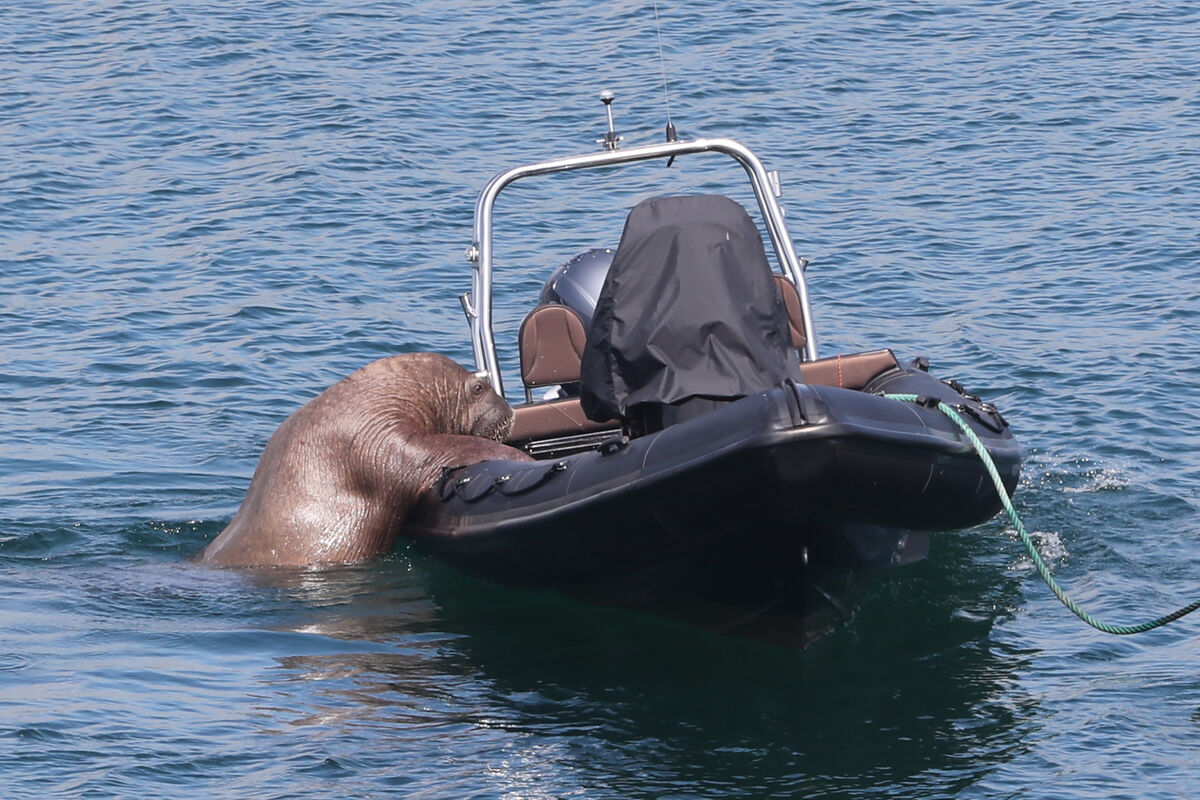
SRI’s concern was echoed by Minister of State for Heritage Malcolm Noonan who, on Thursday, urged the public to show some "cop on" and consideration for Wally.
As for where Wally goes from here, Ms Croce believes he will likely return to Kerry, before swimming back up along the West Coast and on to the North Sea and Arctic beyond.
"He's unpredictable though. He hasn't informed us of his travel plans, but he’s headed in the right direction," she said.
Ms Croce said Wally, like grey seals and other pinnipeds, are most vulnerable while in shallower coastal waters. She urged people to be respectful of Wally during the remainder of his Irish sojourn.
"We just want to keep him safe on his trip home."


CONNECT WITH US TODAY



Be the first to know the latest news and updates