Climate change can't be avoided, says UN as it warns of dire consequences
Climate change can't be avoided, says UN as it warns of dire consequences

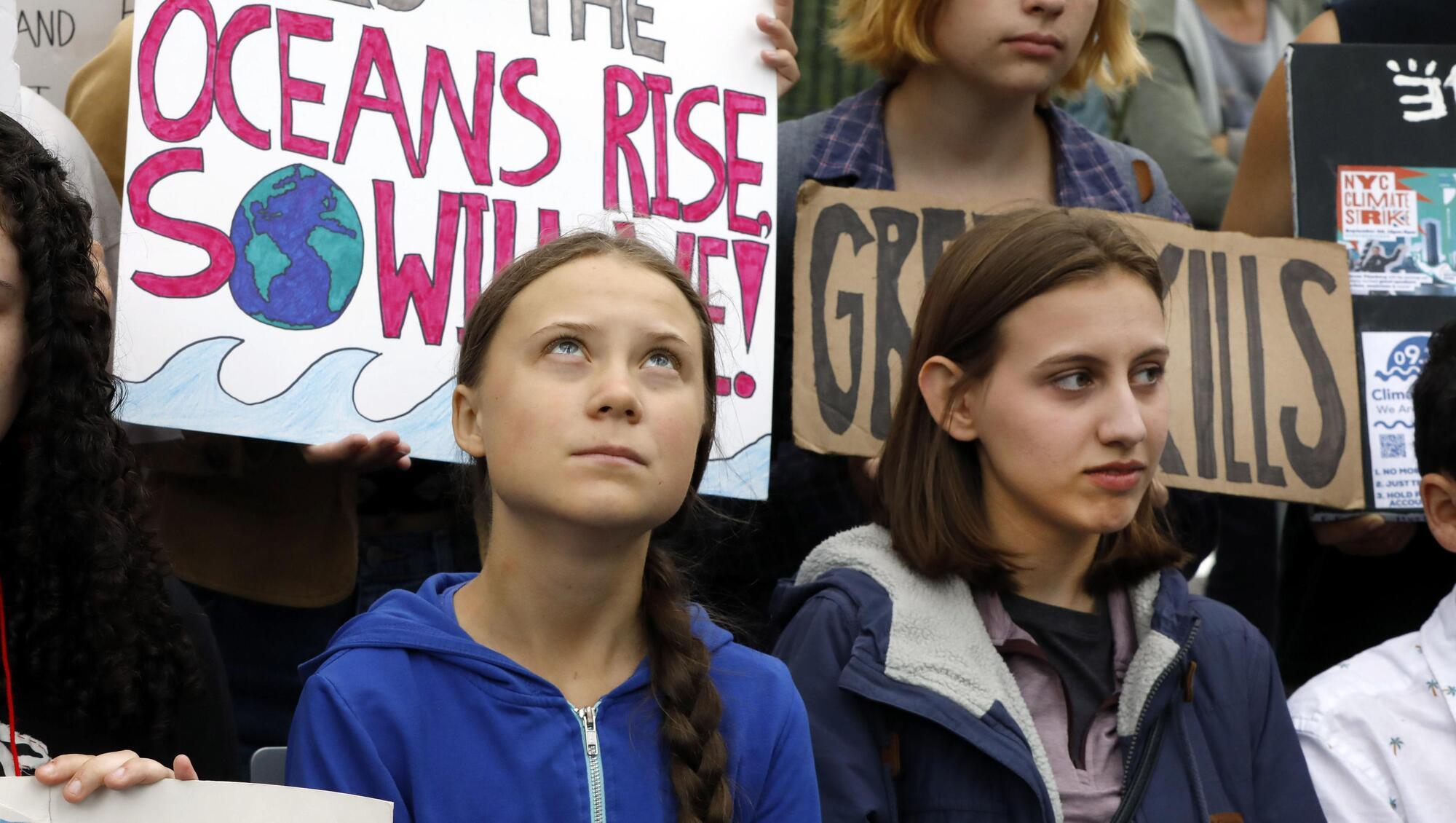
Swedish environmental activist Greta Thunberg and American climate activist Alexandria Villasenor at a demonstration in front of the United Nations in September 2019. Picture: Richard Drew/AP Photo

A new UN report will set out a stark message on the state of the climate crisis, raising pressure on Governments here and abroad to act.

The report from the UN’s Intergovernmental Panel on Climate Change (IPCC), to be published today, is the first part of a review of scientific knowledge about how the world is warming due to human activity.

The IPCC's findings will be revealed at a press conference at 9am this morning and can be watched live below.

Today's report is the first such global assessment since 2013, when scientists found that global warming was “unequivocal” and human influence on the climate was clear, with the majority of warming since the 1950s extremely likely to be down to human activity.

The high-level report authored by 234 experts will suggest that some level of climate change is now irreversible, and that extreme weather events are linked to climate change.

It also comes with stark warnings about the effect climate change will have on Ireland.

The message in the latest report is expected to be even stronger, with warnings of how soon global temperatures could rise 1.5C above pre-industrial levels — a limit that countries have pledged to try to avoid breaching because of the dangerous consequences for humanity.

Climate expert Professor John Sodeau, Emeritus Professor of Chemistry in UCC, told the Irish Examiner that the warnings in the report show the need for "real change" in how people live day-to-day.

John Sodeau, Professor Emeritus of Chemistry at UCC/

"Whatever way you look at it, whatever things we've gotten used to — an increasing dairy herd, cheap and frequent air travel — we know the consequences of these things and we have to decide if we can sustain them," he said.

We have been too complacent, and the price will be paid by today's children."

Research conducted by mapping and data consultants last year indicated that more than 62,000 Irish homes are at risk from coastal flooding by 2050 due to climate change, with Dublin, Louth, Clare, Limerick, and Galway considered the most at risk.

More than 21,000 homes and almost 2,000 businesses are at risk in the capital alone.

The report also comes in the wake of a record-breaking heatwave in Ireland, where overnight temperatures did not drop below 20C in some parts of the country, and other areas recorded daytime highs in excess of 30C. Heavy rains and long cold snaps have also become more frequent.

Green Party leader in the Seanad, Pauline O'Reilly, said that the report will show that Ireland will not escape the consequences of climate change.

Senator Pauline O'Reilly.

“Extreme weather events are climate change, and they are all around us," she said. 

On this very island, they impact our food security, our water supply, and our plant and animal wildlife which cannot adapt quickly enough.

“New research has begun to undermine the perception that Ireland would escape relatively lightly from climate change. The Irish Centre for High-End Computing last September projected that temperatures would increase by 1 to 1.6 degrees compared with a baseline period of 1981-2000. While this may not sound like much, warming will be enhanced 'at the extremes' [ie on hot days and cold nights] with summer daytime and winter night-time temperatures projected to increase by up to 2.4Cs."

People Before Profit TD Bríd Smith said that the report shows a need for a new economic model.

People Before Profit TD Bríd Smith. Picture: Gareth Chaney/Collins

"We are miles off our emissions targets, " she said. 

We're not really touching on half of our contribution. But I'm not sure we can until we look at a different economic model. One is the cause of the other."

Drawing on more than 14,000 scientific papers, the review will provide the latest knowledge on past and potential future warming, how humans are changing the climate and how that is increasing extreme weather events and driving sea-level rises.

A summary report is being published after being approved in a process involving scientists and representatives of 195 governments that has taken place over the last two weeks.

That means governments have signed off on the findings — and pressure will be on them to take more action at global climate talks known as Cop26, which are being held in Glasgow in November.

CLIMATE & SUSTAINABILITY HUB

More in this section

Lunchtime News

Newsletter

Keep up with stories of the day with our lunchtime news wrap and important breaking news alerts.

Cookie Policy Privacy Policy Brand Safety FAQ Help Contact Us Terms and Conditions

© Examiner Echo Group Limited