Precautions against airborne spread of Covid-19 still not being taken- even in some hospitals
Precautions against airborne spread of Covid-19 still not being taken- even in some hospitals

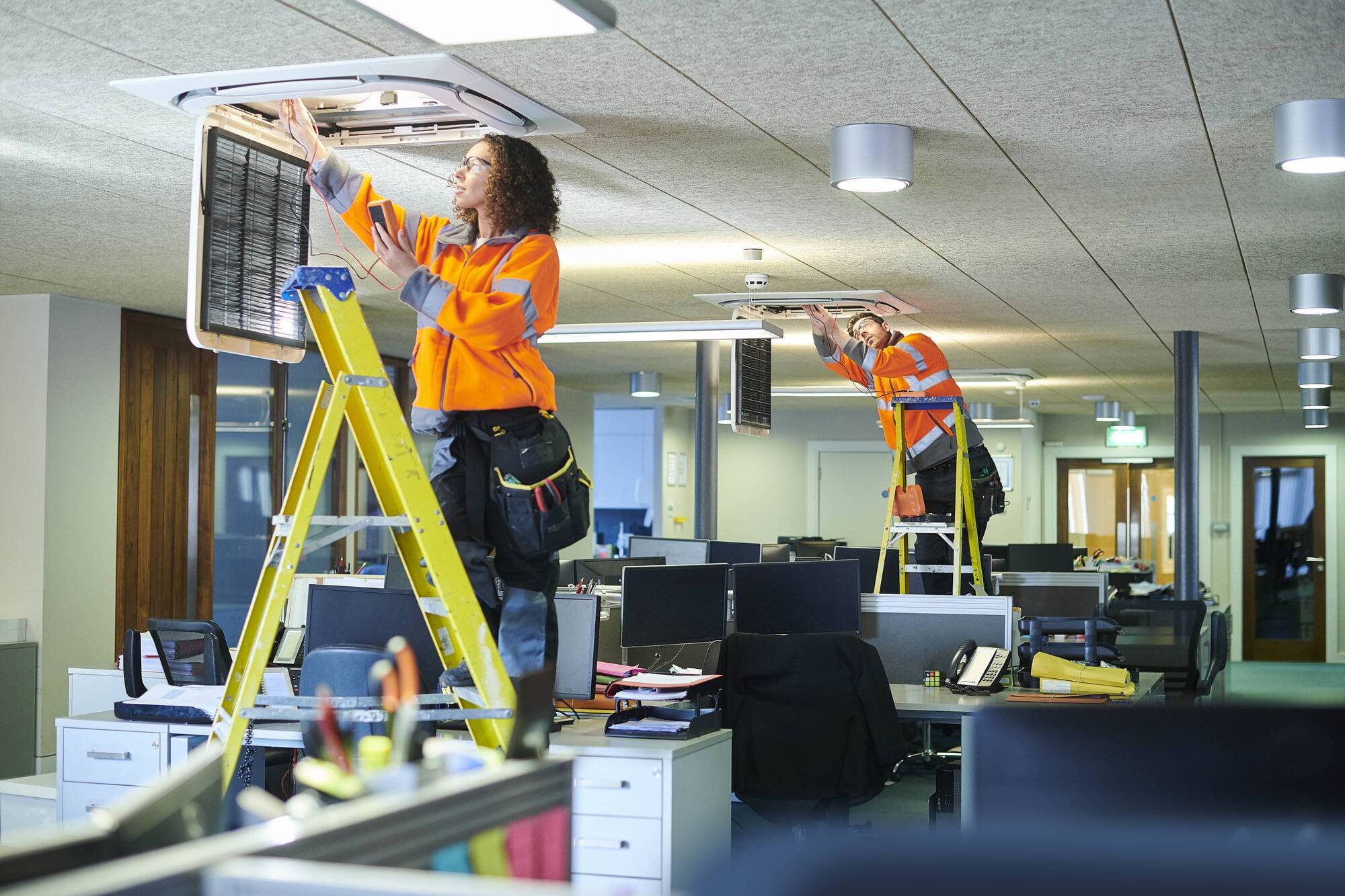
Professor John Wenger, chair of the expert group on the role of ventilation in reducing transmission of Covid-19, said fresh air is crucial in workplaces. 

Ahead of a mass return to workplaces in a matter of weeks, employers have been warned that they need to take steps now to ventilate their premises to help stave off outbreaks of Covid-19.

Professor John Wenger, chair of the expert group on the role of ventilation in reducing transmission of Covid-19, said fresh air is crucial.


“The message is not getting out there about the importance of ventilation as one of the protective layers against the spread of Covid-19,” he said.

“The idea there can be this mass return to the office in September; people should be doing these things now to make sure their working environment is as safe as possible.” 

Advice from the expert group contributed to the decision by the Department of Education to send carbon dioxide monitors to schools, he said.

Employer checklist

Prof Wenger, of the school of chemistry in University College Cork, said employers should first consult a Health and Safety Authority document called: “Employer Checklist No 8 – Ventilation”.

This has 32 questions to guide risk analysis including ensuring machines do not block air vents and improving ventilation in rest areas. Even break rooms in hospitals have been identified as a source of infection, he said.

Secondly, workplaces should avoid only using systems that recirculate air. He recently saw air-conditioning units in a gym without other ventilation.

“All it does is take in air, cool it, and send it back out,” he said. “You have the impression because it is chilled air that it is fresh air but it is not.” 

Increasing natural ventilation in large and small spaces should be next.

“The idea is to have windows that are opposite each other or a door and window opposite each other,” he said. “You need to increase the flow of air across the room, i.e cross-ventilation.” 

Evaluating air quality using carbon dioxide monitors is next as he said they provide “an early warning” of problems. High levels can impair brain function.

Prof Wenger said: “We recommend using 800ppm (parts per million) which is twice the outdoor level. If it goes beyond that you should really do whatever you can to improve ventilation.” He advised spending between €100 and €200 to ensure good quality and checking it has a non-dispersive infrared (NDIR) sensor.

The final step may only be needed for difficult to ventilate spaces.

Prof Wenger describes the HEPA filter device as “a high-efficiency air filter” which cleans the air.

“To be fair it might be best to check things first before you invest in a filter, just check with the CO2 monitor,” he said. “We don’t want people thinking ‘oh we have to buy this, and we have to buy this’.” 

Anyone travelling to work with other people should keep opposite windows at the front and back of the car slightly open, he said.

Prof Wenger also urged people to stand up and open bus windows. “If they start increasing the capacity again, the windows should be open and I would wear a mask,” he said.

x

More in this section

Lunchtime News

Newsletter

Keep up with stories of the day with our lunchtime news wrap and important breaking news alerts.

Cookie Policy Privacy Policy Brand Safety FAQ Help Contact Us Terms and Conditions

© Examiner Echo Group Limited