Christian Eriksen's former heart doctor says CPR training essential in all schools
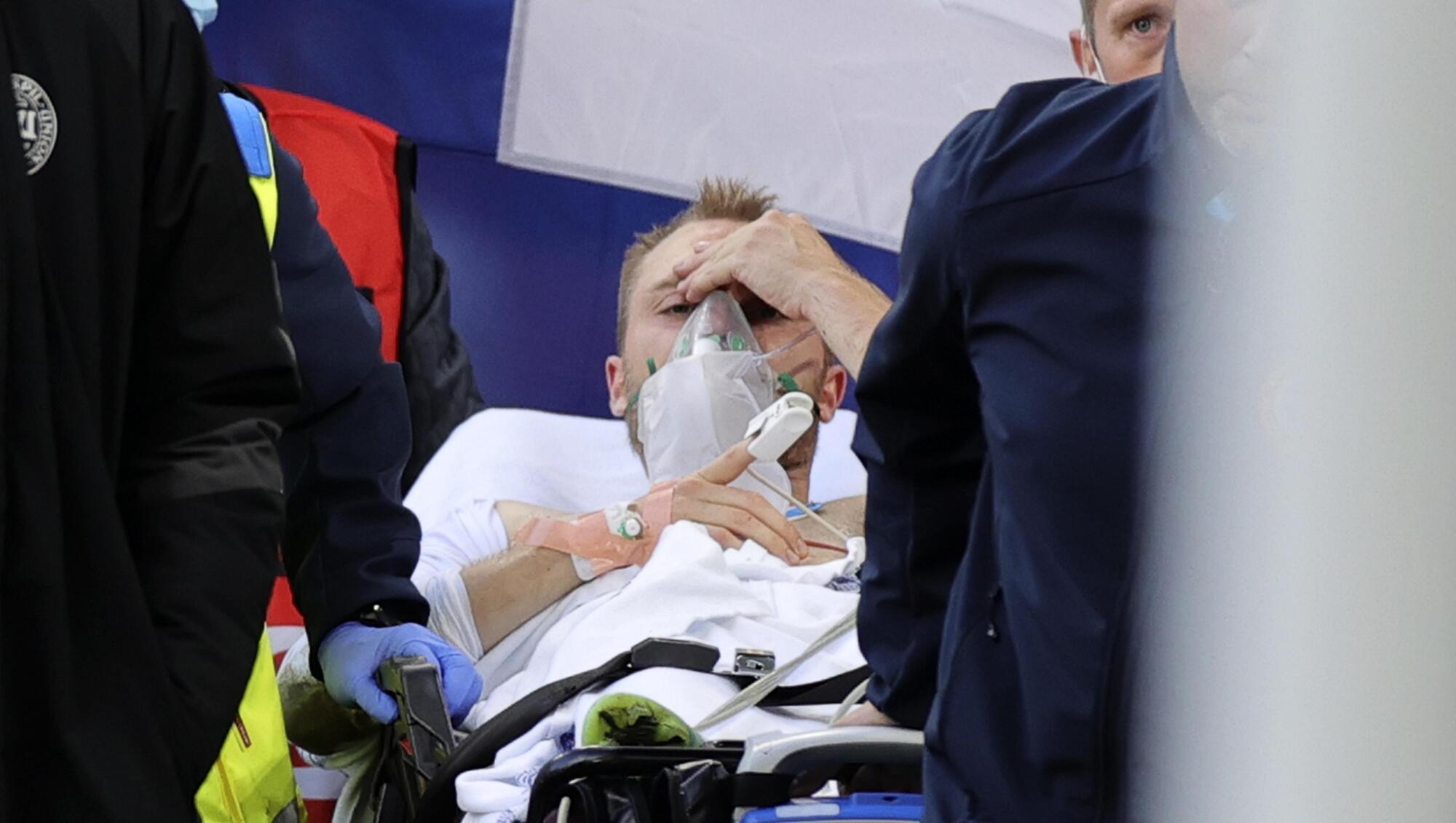
Paramedics using a stretcher to take Denmark's Christian Eriksen pff the pitch after he collapsed during Euro 2020. Picture: Friedemann Vogel/Pool via AP
One of the world's leading heart doctors, who worked with Christian Eriksen at Tottenham Hotspur before the Danish footballer's sudden cardiac event at this year's European Championships, has said CPR training should be compulsory in schools in order to save lives.
Dr Sanjay Sharma was joined by Gaelic football player and cardiac event survivor Cathal Joyce, and consultant in emergency medicine at Cork University Hospital, Dr Conor Deasy, in emphasising the importance of CPR and defibrillators at an event in aid of Croí, the Irish heart and stroke charity.
Mr Joyce spoke of how he was a fit 25-year-old avid sportsman when he collapsed during a warmup for a game in 2015.
Three rounds of CPR and a single shock of a defibrillator helped save his life, he said.
What was heartwarming during his recovery since, Mr Joyce said, was the response from hundreds of schoolchildren in Ireland eager to learn CPR when he spoke to them on the importance of lifesaving techniques.
His single biggest wish was to see defibrillators maintained properly.
Many of the defibrillators dotted throughout the country are not maintained properly, which could potentially be the difference in a life being saved.
It only took a few minutes to make sure they were charged and ready to go if needed in an emergency, Mr Joyce said.
Dr Sharma, professor of sports cardiology at London’s St George’s University, has worked with the Football Association on heart screening and cardiac health among young athletes.
He said men are 20 times more likely to have a cardiac event compared to women when playing sport, and that they usually effected men aged between 45 and 55.
There is no point having a defibrillator locked away if nobody know where it is kept, or not being maintained and serviced, he added.
To be successful, the mean time between collapse and CPR should be 90 seconds, he said.
"Even if you do not have a defibrillator, you will be making an incredible contribution to the survival of a young individual if you can start effective CPR," Dr Sharma said.
Christian Eriksen's outcome was helped hugely because of the speed of action after his collapse, he said.

CONNECT WITH US TODAY



Be the first to know the latest news and updates