Refugee crisis: 'What happened to that four-year-old girl who wore those shoes?'
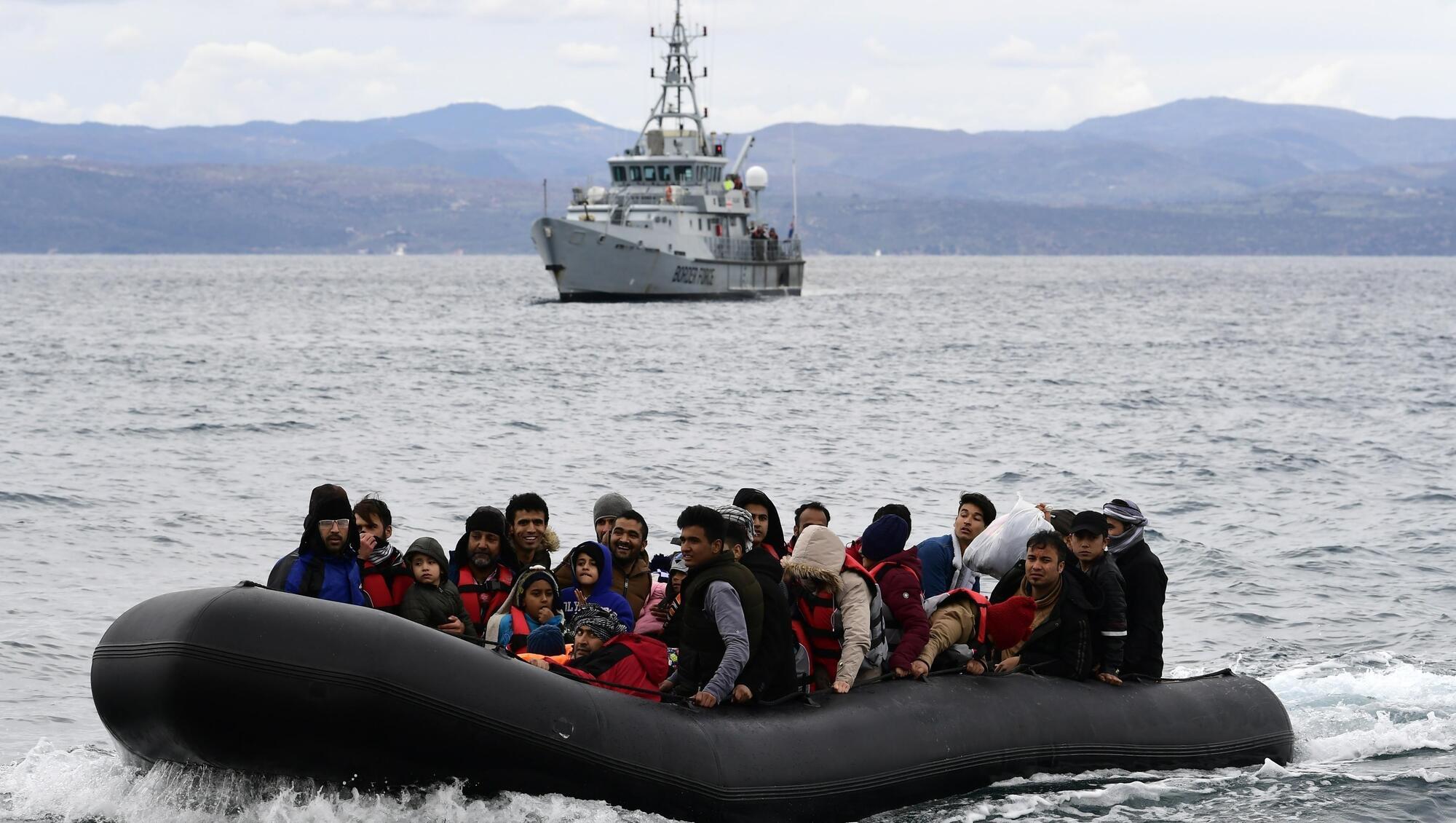
'We’ll never begin to understand what they have gone through and what they’ve lost,' says Amy Boyden of the migrants who arrive on the Greek island of Lesbos, many of them having crossed the Aegean sea from Turkey on board fragile dinghies. Picture: Michael Varaklas/AP/File
As Amy Boyden clambered over a mountain of orange foam lifejackets on the Greek island of Lesbos, the nauseating scale of the humanitarian crisis knocking on Europe’s door hit her hard.
“It felt like I was at a funeral," she said. "There were thousands and thousands and thousands of lifejackets."
“You can walk over them. It felt like walking across the ocean and across dead bodies. The air was so still and there was such a sense of hopelessness. It’s so sad that these people had to go through this.”
Ms Boyden, a recent UCC Law graduate, visited 'Lifejacket Graveyard', a place where washed-up lifejackets or those left on the beaches by people who make it to shore are gathered after she arrived on the Greek island as an international humanitarian aid worker this year to help with the unending refugee crisis.
She noticed a little girl’s shoes among the mountains of black and orange foam.
"It’s so distressing to think of my own niece in that situation,” Ms Boyden said.
But despite their overwhelming mass, the volume of jackets at Lifejacket Graveyard barely hints at the scale of the refugee crisis.
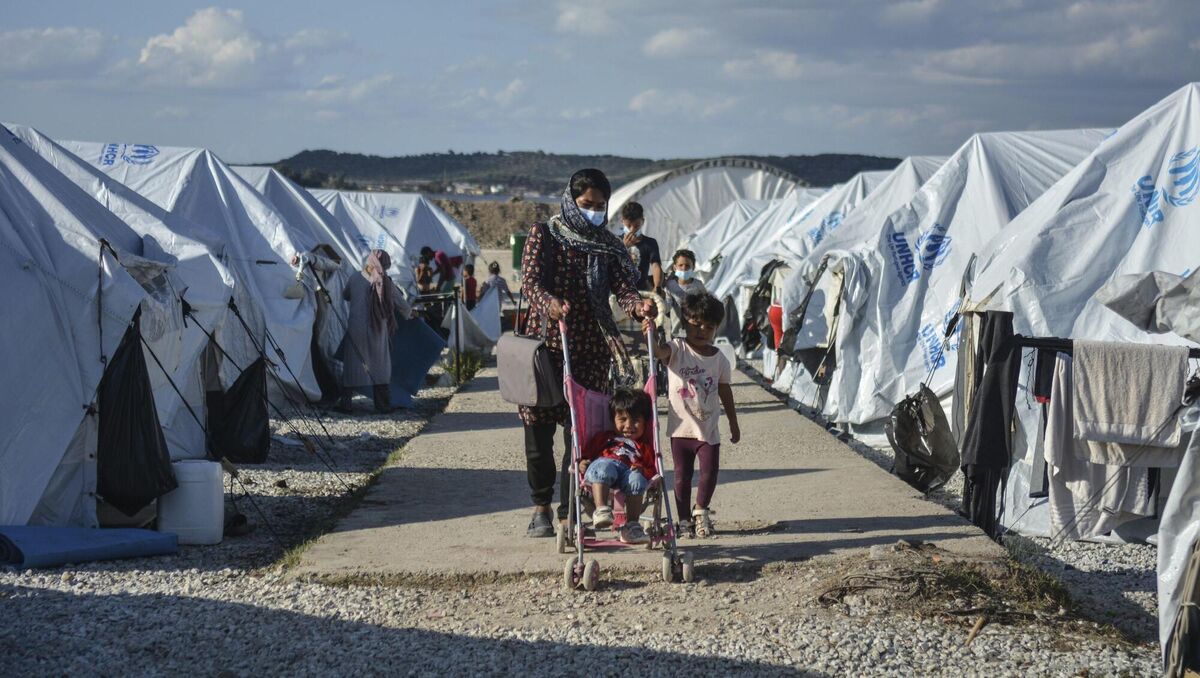
Internationally, some 82.4m people are forcibly displaced worldwide according to the United Nations High Commissioner for Refugees (UNHCR).
And although headlines now rarely scream about people drowning in the Mediterranean, 815 people have died trying to make that crossing already this year, according to estimates by the International Organisation for Migration (IOM) Missing Migrants project.
And Greece, a country that saw more than a million people arrive on its shores during the refugee crisis of 2015 and 2016, is now hardening its stance on new arrivals.
The Mediterranean country says it has little choice due to the lack of support from the rest of Europe.
Greek migration minister Notis Mitarachi recently told Reuters that the government is taking a tougher approach “so we don’t send the wrong message of incentivising people to come” to Greece.
Many of those who arrive in Greece do so through Lesbos, which is only separated from Turkey by a narrow strait.
From Turkey, people are stuffed onto little boats like livestock and are often sold fake lifejackets, death traps painted brightly to pose as something good.
The horrifying subject of defective lifejackets was raised in the European Parliament as far back as 2016, when they were viewed as “clearly to blame” for many deaths at sea.
These people are just like you and me, they have skills and dreams and aspirations.
"It’s horrifying how they’ve been treated," Ms Boyden said.
Inspired by her godmother, who still volunteers in her 60s, Ms Boyden eventually made the trip to Greece in March, two months after she planned to leave following five Covid-cancelled flights.
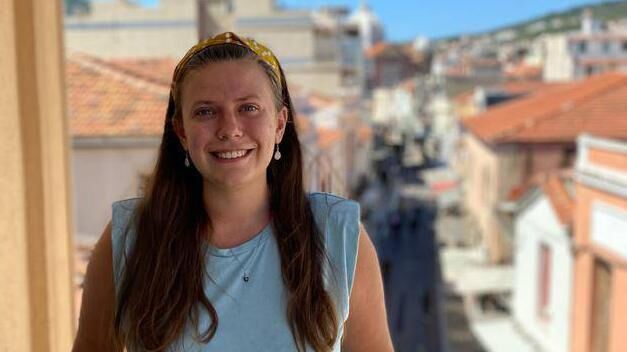
Ms Boyden has been teaching English at the Kara Tepe or ‘New Moria’ refugee camp which was hastily located on an abandoned army firing range after a fire ripped through the infamous Moria refugee camp last September.
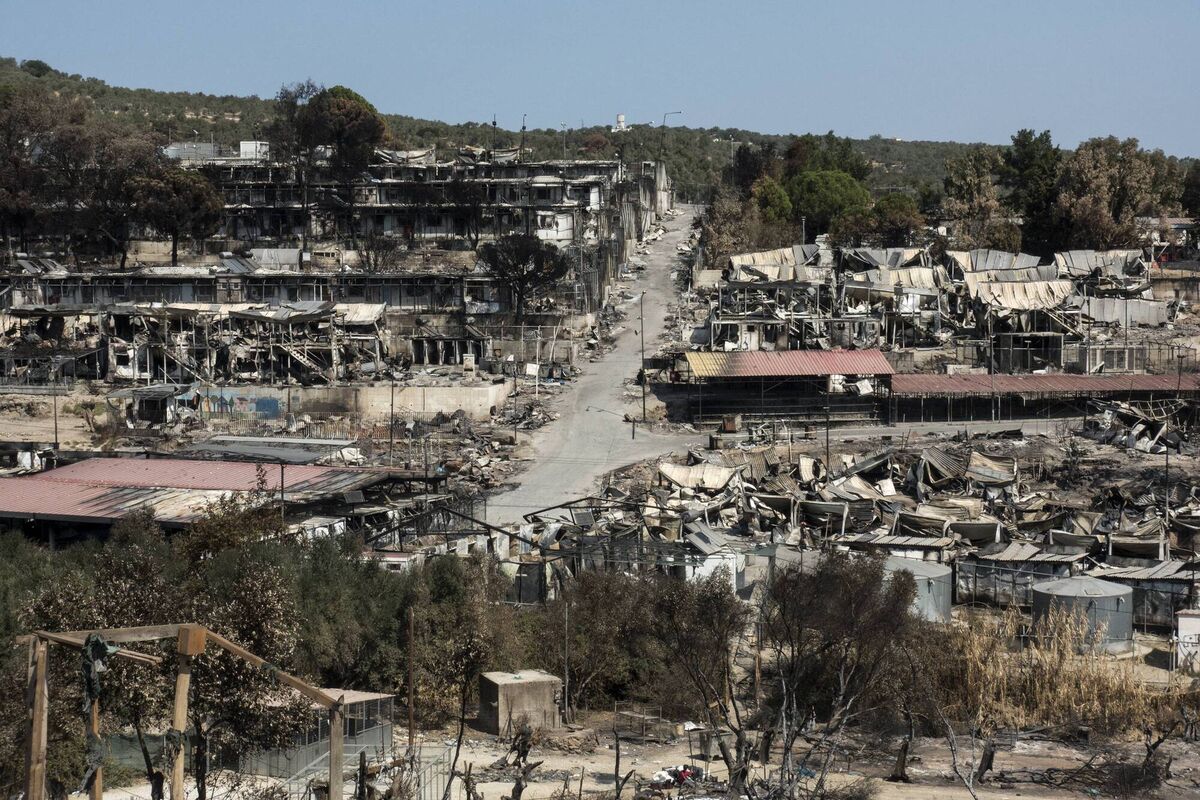
Moria, Europe’s largest refugee camp, was originally designed to hold 3,000 people but 13,000 subsisted there when the fire hit in the middle of a Covid outbreak.
Armageddon-like images from that fire and its aftermath show dazed children clutching what little possessions they could save as they shuffle beneath looming charred security fences ensnared in sharp, blackened barbed wire.
Human Rights Watch raised serious concerns that the new site where Ms Boyden works has significant lead poisoning from its days as a firing range.
However, Ms Boyden said that the facilities are at least an improvement on Moria, and the camp is not as overcrowded.
It is estimated that some 6,000 people live at the new, temporary camp including more than 2,000 minors.
A strict lockdown was imposed on the camp to contain the spread of Covid-19, further limiting the already restricted lives of its inhabitants.
She said life at the camp is not easy for those seeking asylum:
“There is running water, toilets, showers but people sometimes have to walk quite a bit to get to them.
“It’s pretty tough. The mental health situation in the camp is catastrophic. There’s a lack of resources for supporting people trapped in this situation, they’re overstretched.
“Some people say to me that every day is the same. All their hope is drained. There’s a lot of waiting and isolation.”
Everyone wears masks in camp, she said, and an NGO provides hand sanitation. There are rapid antigen and PCR tests and if someone tests positive they go into a quarantine area for two weeks. However, serious cases of Covid in the camp have been very rare, she said, as most people are still quite young.
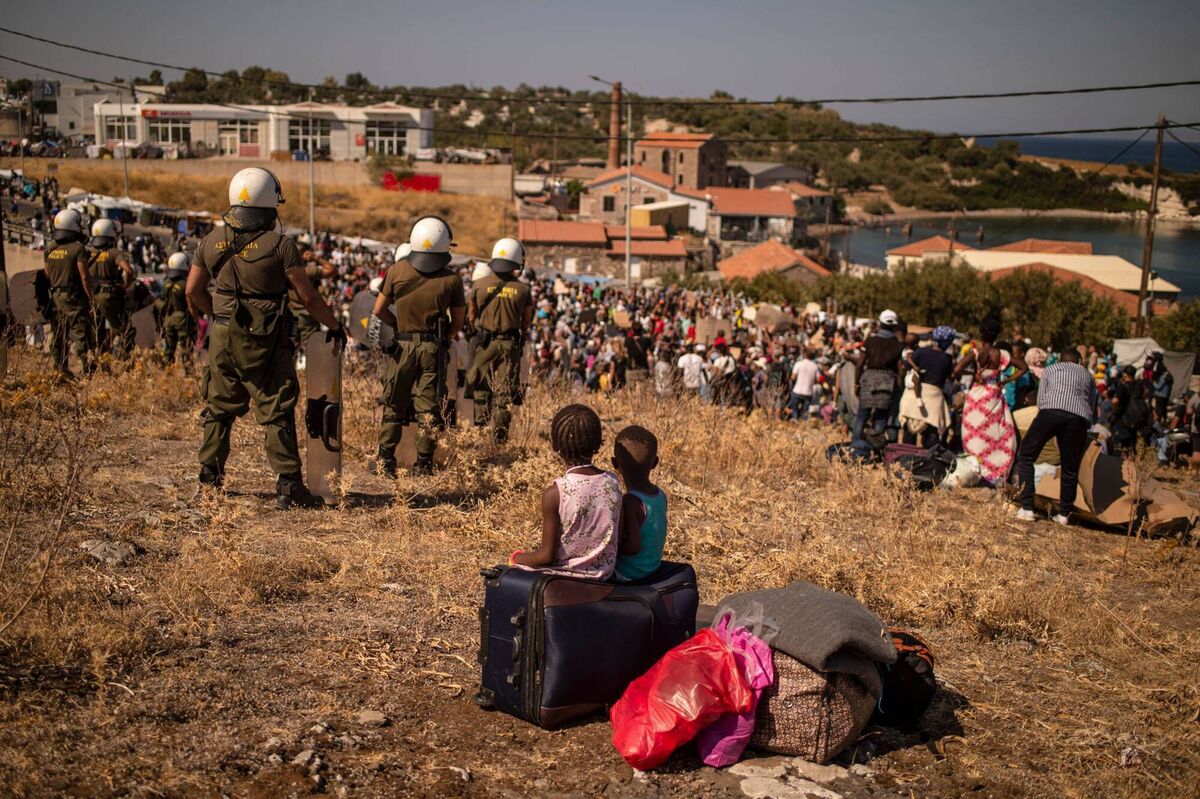
Ms Boyden teaches adults. Her youngest pupil is 18 and her oldest is 46.
“I’m teaching them how to read and write — it’s very rewarding," she says. "They try so hard. They just need to believe in themselves more.”
Learning a European language empowers them and will be valuable when navigating the asylum process, she said.
She said that many of her students have had to flee horrifying realities in their home countries.
“A lot of them come from Afghanistan. To face the Taliban, to decide that you’re going to leave with your family and walk across so many countries by foot. It’s insane.
“Then they have to go on that boat journey from Turkey to Greece which is also so treacherous:
The Greek authorities have repeatedly denied that their coastguards have been pushing migrant boats back into Turkish waters.
However, Ms Boyden said that allegations about this “horrible” practice are rife.
She said that people are too quick to demand that people should now return to countries such as Afghanistan which are still violent and unstable.
“It makes me so angry. A lot of people say, ‘well if the country is safe refugees should go back to them'. But if they were willing to make that massive, dangerous journey, we’ll never begin to understand what they have gone through and what they’ve lost.
“In Kabul, in Afghanistan, 40 schoolgirls were killed in a bombing. Or in Iran, an Iranian man was beheaded because of his sexual orientation. Or in Palestine, the Gaza Strip is being bombed by Israel.
“If your son runs the risk of being beheaded because of his sexual orientation, don’t you think he has the right to leave and resettle? I think they have every right.
“Unspeakable crimes against human rights are being committed every day.
“It’s devastating to see people’s hopes and dreams being drained in camps.
“It’s intense. Recently, there was a mother of three, she was pregnant with her fourth child and she put her three children outside the tent, she went back in and set herself on fire. She just could not do it any more.
"But she didn’t die, and now she’s being prosecuted for arson.”
Ms Boyden believes that Ireland could do more to help these people, by ending direct provision and by taking in more refugees.
“Since the 1800s, 10m Irish people have migrated to countries across the world. Ireland, I feel, could take in far more refugees. We have quite a low population, and so many countries took us in. I feel we should do something in return.
“These people just want their children to go to school without the fear of them being blown up by extremists. They just want to live peaceful lives.
“We have a tendency to turn a blind eye if it’s not affecting us. But if it was affecting you, God almighty, you’d want somebody to be helping you.”
She encouraged every adult to volunteer.
“It’s a hugely rewarding experience and anyone can do it. It’s great to make life that bit better for people, to help them forget the nightmare they’ve been living and to show them that there is hope.”
Ms Boyden is fundraising for school materials and for hygiene products and clothes for fast-growing babies and children at the camp.
To donate to her campaign, visit exa.mn/AmyBoydenFundraiser.
CONNECT WITH US TODAY



Be the first to know the latest news and updates