Making public transport fully wheelchair accessible will cost €328m
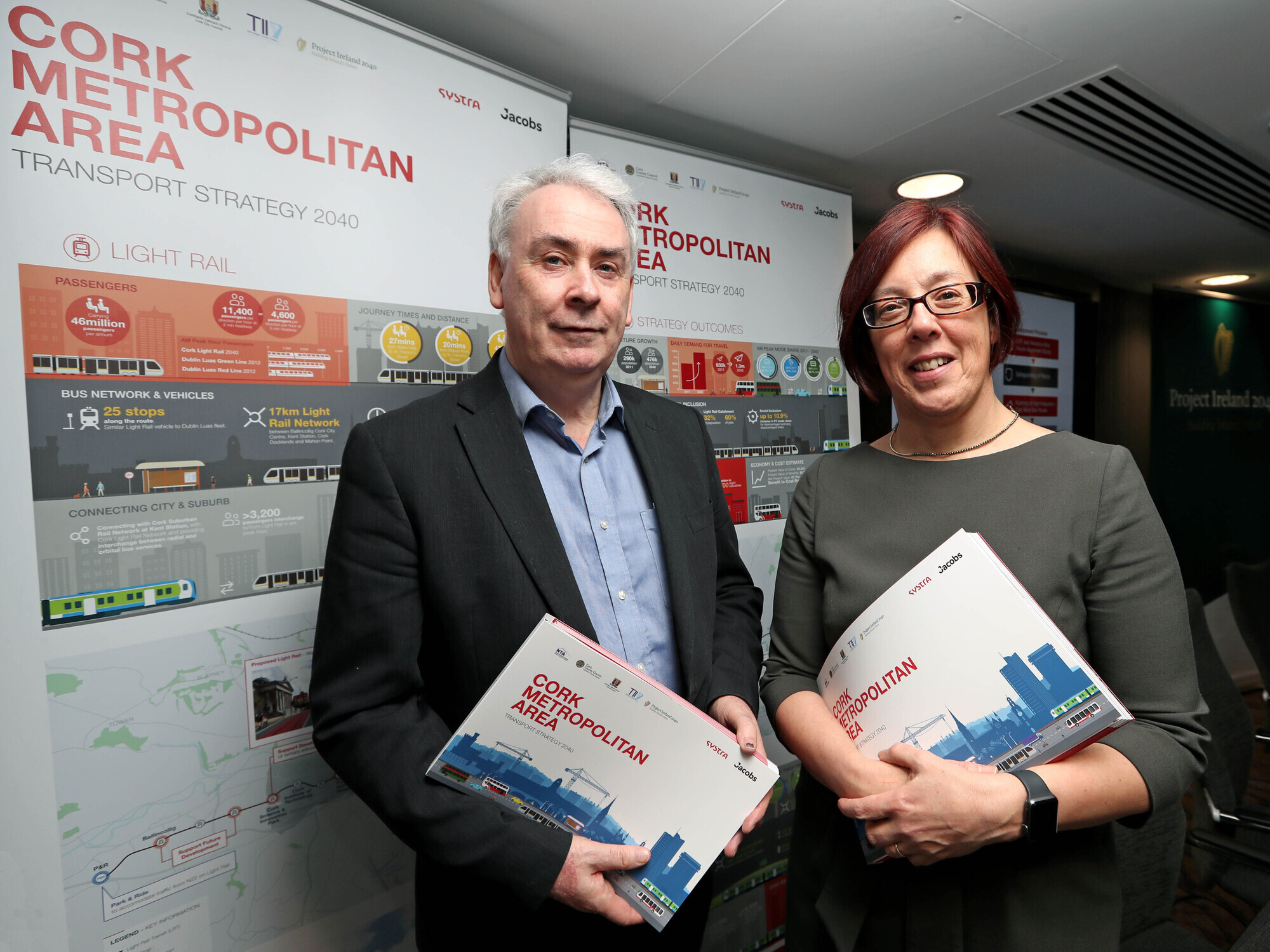
Hugh Creegan, deputy chief executive, National Transport Authority, and Anne Graham, chief executive. Mr Creegan said much of the existing infrastructure of the bus and rail system is old and therefore it is a major task to make it all wheelchair accessible. Picture: Jim Coughlan
The projected cost for making all public transport in Ireland entirely wheelchair accessible is €328m.
That is according to the body with direct responsibility, the National Transport Authority (NTA), which said that in order to make all elements of transport infrastructure fully accessible, a minimum budget of €327.5m would be required.
That figure does not include money spent to that end under the Public Transport Accessibility Programme, a four-year retrofitting project which commenced in 2018 with a capital budget of €28m.
In a letter to Social Democrats TD Catherine Murphy, in response to a parliamentary question regarding the extent to which public transport in Ireland is accessible to persons with disabilities, the NTA’s deputy CEO, Hugh Creegan, said that all new public transport infrastructure is wheelchair accessible.
“However much of the existing infrastructure of the bus and rail system is old and therefore it is a major task to make it all wheelchair accessible,” he said.
The €328m figure is dominated by taxi upgrades and the need to overhaul railway station facilities, Mr Creegan said.
Overall, €12.5m would be needed to upgrade facilities in bus stations along with a further €10m to upgrade all non-urban bus stops across the country, he said, along with €115m for the country’s railway stations, and €190m for its fleet of taxis and hackneys.
However, the budget for upgrading the bus and coach fleet for all public service obligation services is nil, Mr Creegan said, due to that project having already been completed, with 40 new single-deck coaches having been introduced between the end of 2020 and the early months of this year.
Some €8m had meanwhile been spent on a further 20 such vehicles for delivery later in 2021, while 43 new double-deck coaches are currently on order for delivery to Bus Éireann, at a cost of €21.3m, with the first of those vehicles due to enter service in the coming weeks.
Mr Creegan said that an audit of the country’s 54 railway stations was first undertaken in 2014, with a guide price returned at the time of €79m.
Some €14m had been spent by the end of 2020, he said, leaving an outstanding cost of €115m “when construction inflation and other changes in costs since 2014 are taken into account”.
Separately, the cost to replace all non-accessible hackneys and taxis in the country, per an audit carried out in March of this year, would be €15,000 per vehicle, based on a mix of new and older vehicles.
With 12,646 such vehicles currently registered on Irish roads, the overall bill would be “in the region of €190m”, Mr Creegan said.
The wheelchair-inaccessible bus stops in the country meanwhile would cost an average of roughly €10,000 per stop for about 1,000 separate non-urban stopping points, he said.
“Solutions such as relocating the bus stop to an alternative location may be necessary, but this can give rise to additional problems in that the alternative stop location may not suit other users,” he said.
He added that the NTA is working with local authorities and operators to ensure that every town with a population of over 5,000 has at least one wheelchair-lift accessible bus stop available for both inward and outward-bound journeys.


CONNECT WITH US TODAY



Be the first to know the latest news and updates