Niac changes hope to keep Covid vaccine rollout on track
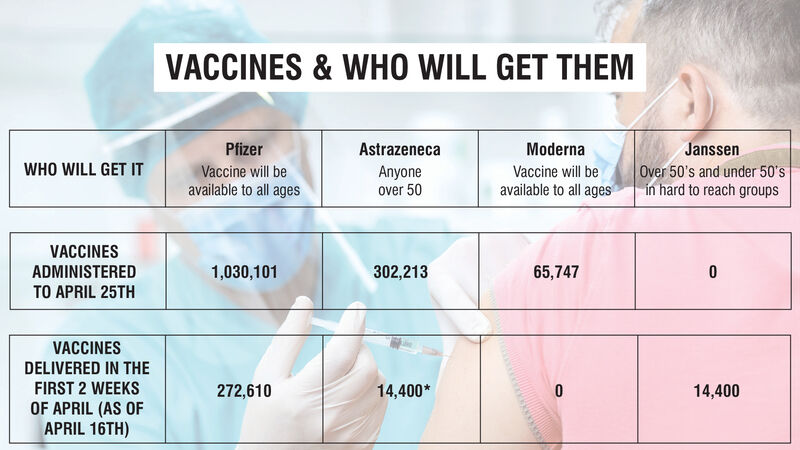
The Pfizer vaccine has made up the bulk (74%) of vaccines administered to date, followed by AstraZeneca (21%) and Moderna (5%), with Janssen only now coming into use.
This week has seen significant changes to the Covid-19 vaccination programme and what vaccines will be made available to people under the age of 50.
It has been hard to keep pace with the many changes already made to the programme over the past four months given the logistical challenges, ongoing supply issues, and some concerns over rare and unusual blood clotting incidents, all of which put Government vaccine targets out of reach.
While there are four Covid-19 vaccines available for use – Pfizer, Moderna, AstraZeneca and Johnson & Johnson/ Janssen – issues with supply or possible safety concerns have arisen and led to delays, missed targets, and the need to revise plans on a weekly basis.
As in other countries, Ireland’s rollout has been stymied by supply issues with the AstraZeneca vaccine, which has led to the EU taking a legal challenge against the pharma company for failing to deliver on contracted orders.
Concerns over a possible blood-clotting risk also led to delays as the European Medicines Agency (EMA) and other authorities paused the use of the AstraZeneca vaccine and the Janssen vaccine to assess their safety and efficacy.
On investigating a small number of reported blood-clotting incidents, the EMA concluded that the benefits outweighed any risk of taking these vaccines.
Back home, the National Immunisation Advisory Committee (Niac) also weighed up the associated blood-clotting risks and this week recommended that both the AstraZeneca and Janssen vaccines be restricted for use among those aged 50 and over.
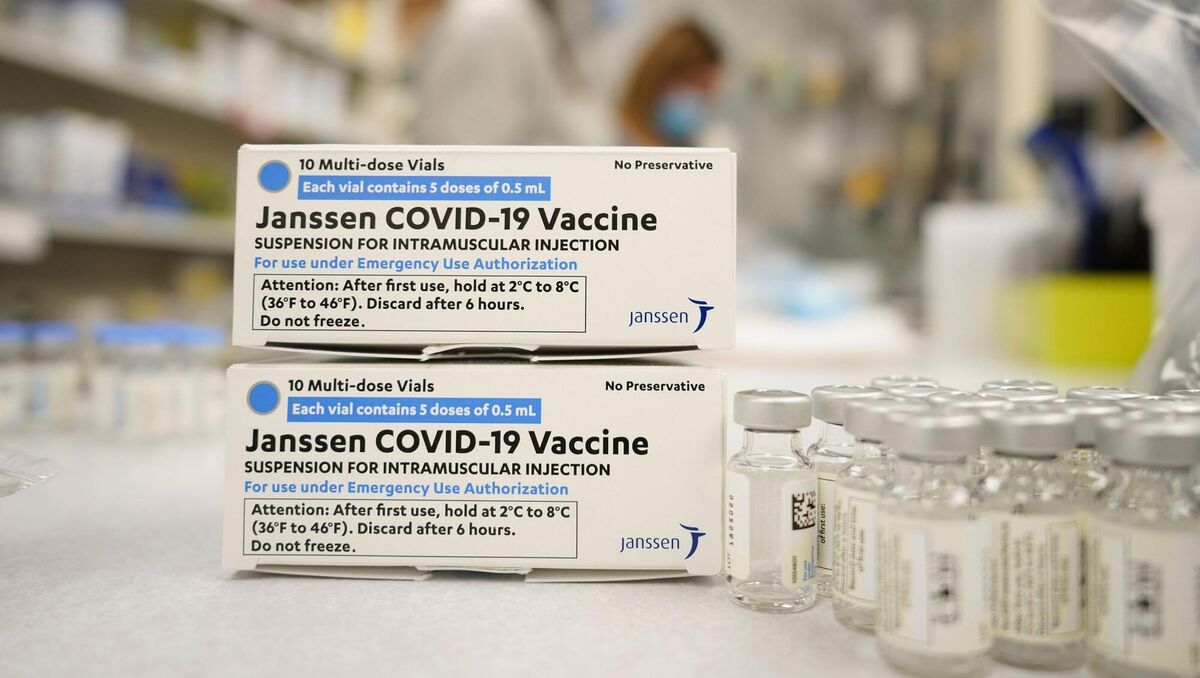
The Janssen vaccine can also be used in people under 50 where no other vaccine is available and for certain hard-to-reach groups, such as those who are homeless, while the use of the AstraZeneca vaccine has been broadened from those aged 60-69 to all over 50s.
The latest changes mean that those aged over 50 can now receive any of the four vaccines currently available, while those under 50 will be prioritised for the Pfizer and Moderna mRNA vaccines.
In another change, pregnant women between 14-36 weeks gestation will be offered the Pfizer or Moderna mRNA vaccines.
To date, more than 1.3m Covid-19 vaccine doses have been administered, mainly to vulnerable groups in nursing home or residential care facilities or at greater risk from Covid-19, frontline healthcare workers, and those aged over 70, while the current focus is on vaccinating those aged 60-69 before moving onto those aged 50-59 years.
The Pfizer vaccine has made up the bulk (74%) of vaccines administered to date, followed by AstraZeneca (21%) and Moderna (5%), with Janssen only now coming into use.
The Government, which has committed to a target of offering 80% of the adult population a first vaccine dose by the end of June, will be hoping that this week’s changes will keep the programme on track.
Close to 1m people have received their first dose of a Covid-19 vaccine to date and about 10% of the adult population has been fully vaccinated.
Almost 4m vaccine doses are scheduled for delivery between April and June.


CONNECT WITH US TODAY



Be the first to know the latest news and updates