Post office network needs special delivery to save it from ruin
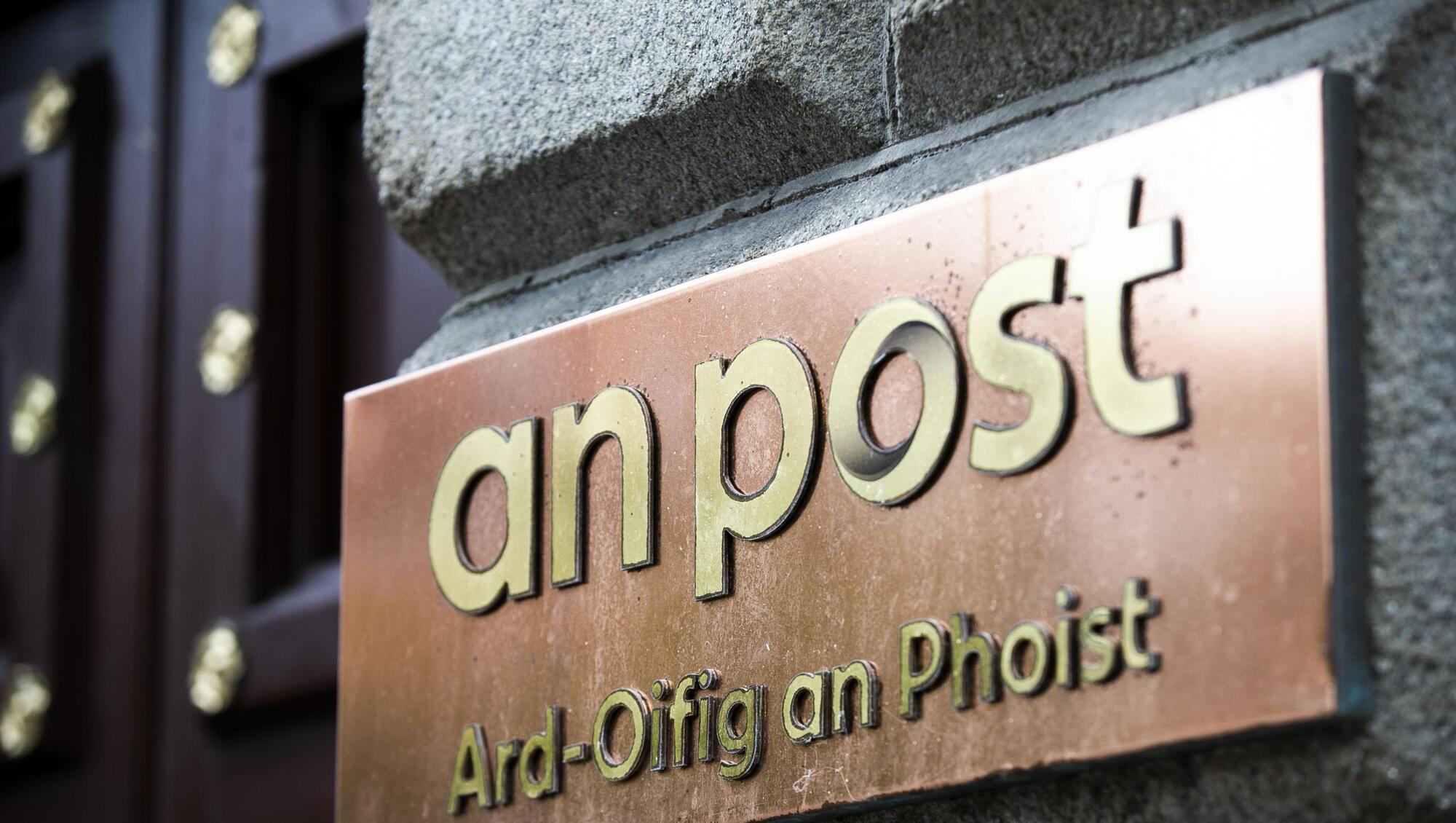
The problem for postmasters around the country is that, when it comes to the future of the post office network, there’s been too much chat and not enough action. Picture: Sam Boal / RollingNews.ie
Even at the worst of times, some people still want to go to the post office, even if it’s just to have a chat over the counter. The problem for postmasters around the country is that, when it comes to the future of the post office network, there’s been too much chat and not enough action.
The representatives of the Irish Postmasters’ Union (IPU) and the Independent Postmasters’ Group (IPG) were blunt in their appraisal of what could happen come July, when transformation payments from An Post are due to stop and there is no alternative arrangement currently in place.
IPU general secretary Ned O’Hara said that, unless a solution is found, as many as 200 post offices could close over the next 12 to 18 months — a quarter of the entire network.
Tom O’Callaghan of the IPG said that those who could not eke out a financially viable future would simply pack it in.
The Oireachtas committee that heard from both organisations was told there has been plenty of “lip service” and platitudes aired about the post office network, but the time for action was coming.
In fact, they went further than that. Come July 1, transformation payments from An Post — short-term additional funding provided to postmasters — will cease. At that point, in the words of Mr O’Hara, comes the “cliff-face”.
In light of this looming deadline, the announcement last week of plans to establish a new inter-departmental group to examine directing more Government business to the post office network was “too late”.
Mr O’Hara also claimed that it would most likely be the busier post offices that would close first, given they tend to carry the most cost and, according to both organisations, any profits are by a fine margin.
Long-running fears over the future of the humble post office come following the announcement at the start of this month that Bank of Ireland will close 88 branches here in September, from Bantry to Bunbeg and Oughterard to Rosslare. There are some urban locations in amongst that number, including eight in Dublin, but it will mostly mean retail space opening up, often in centralised locations, on the main streets of towns around the country.
The pandemic has so far been a story of temporary closures and the fear that some businesses will never return. Just this week, vintners and auctioneers warned that many pubs — again, mostly in rural areas — may never reopen.
While Bank of Ireland is to throw some business An Post’s way to compensate for branch closures, that won’t kick in until September at least.
Listening to the debate at the joint Oireachtas committee on transport and communications networks, it was hard not to view the post office in the same way you might consider the opera: you definitely want it around, even if you’re not engaging with it too often.
The problem is the immediacy of the deadline and the absence of a concrete longer-term solution.
Mr O’Hara said everyone was favourable towards the concept of community banking, but the likelihood of An Post being able to effectively replicate the range of services offered by the pillar banks, at least in the short-term, is fanciful. There was even mention of the potential knock-on effect on credit unions which, lest we forget, people also enjoy having in their area.
So the push is for a much greater range of Government services — such as motor tax, driving licences etc — being made available through post offices, which cannot survive on cash transactions alone. In line with this is a call for a public service obligation (PSO), so that State subvention can keep everything ticking over, with regular reviews, while that future vision is secured.
The Grant Thornton review of the economic contribution and financial sustainability of the Irish post office network last September essentially laid out a blueprint that has yet to be acted upon.
In all of this, it’s important not to play up to outdated perceptions of ‘rural Ireland’, often viewed patronisingly as a generic setting where everyone dutifully attends Mass, local GAA matches and the pub, in that order. However, it is also true that rural areas took longer to see the benefits of the economic recovery and it could well take longer to rebound from the devastating impact of the pandemic. A modern, fit-for-purpose infrastructure is essential, and so the dreadfully lopsided nature of rural broadband rollout, and the tin-can-on-a-string quality of wifi in much of Ireland, is every bit as much of an obstacle to regeneration as empty buildings and decreasing footfall in town centres.
A PSO would appear to be the best short-term fix and, as some committee members pointed out, given the handing over of a €30m loan to the network in recent years, State support is not a leap into the unknown. Yet despite everyone singing its praises and going so far as to call for the reopening of post offices that have recently closed, that sense of security is absent.
The committee heard that a healthy, busy post office system is seen as integral to the overall wellbeing of communities, and not just for sentimental reasons. It is seen as a bulwark and a bellwether. If the Government wants it around in its current guise, it might simply be a case of postage paid.