Pandemic leadership requires communication and support, say top health leaders
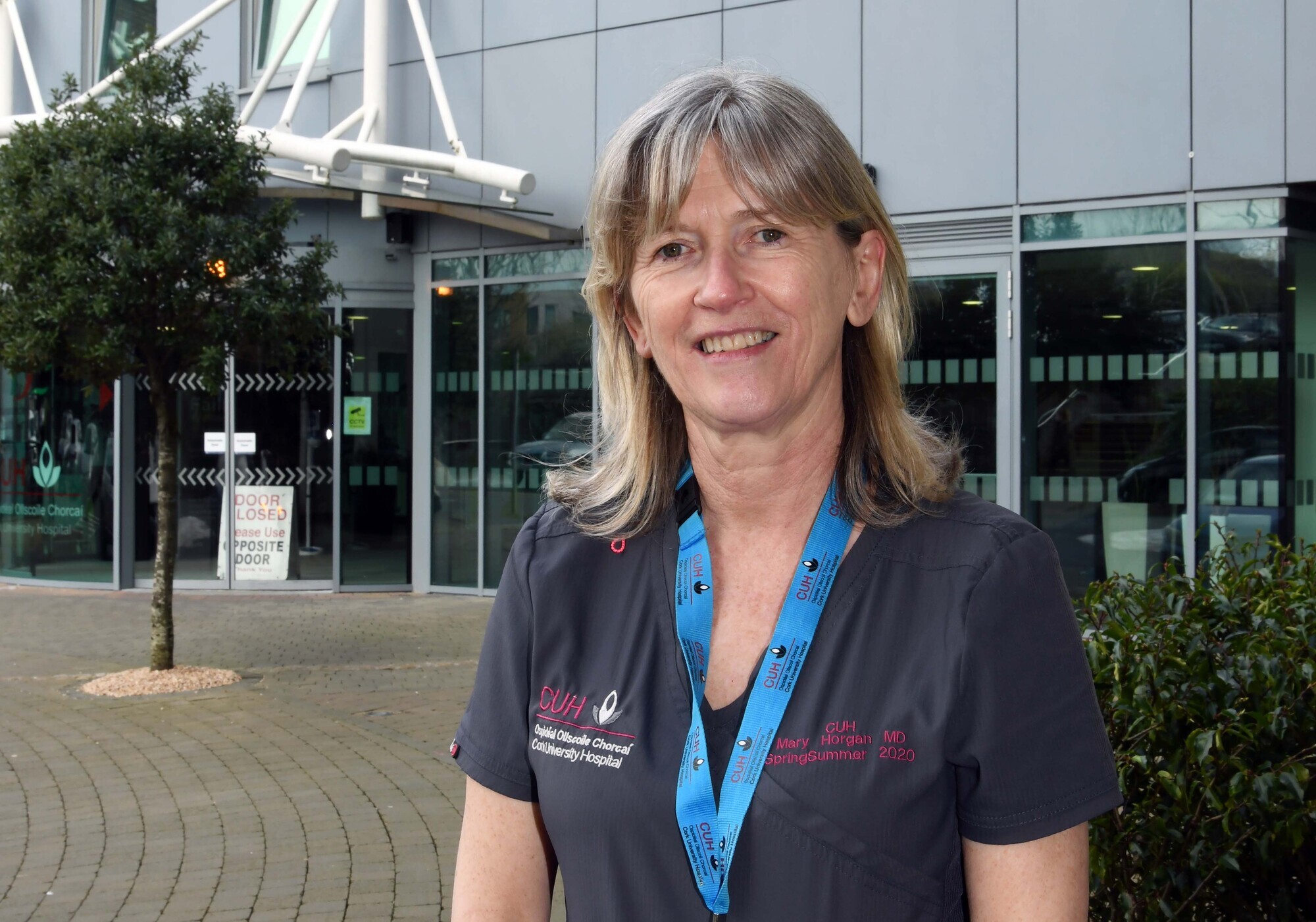
Prof Mary Horgan, consultant in infectious diseases at Cork University Hospital. Picture: Denis Minihane
Leadership during a pandemic should be about direct communication and being visibly supportive to those around you.
That was the message from two top Munster health experts on Tuesday.
Professor Mary Horgan, infectious diseases consultant at Cork University Hospital, and Michael Dowling, a Limerick-man who runs the giant Northwell healthcare provider in New York, reflected on the similarities between the outbreaks in both countries.
Mr Dowling said he had learned good leadership must involve inspiring positivity in those around you at a challenging time.
He said:
In a TV interview early last year as the scale of the pandemic became clear, he predicted New York would win against the virus and he said wast is important not to lose sight of that goal.
Prof Horgan who is also president of the Royal College of Physicians Ireland said: “In the past week I think some of the messaging here has been pessimistic.
“People are impatient because we haven’t had restrictions before, this is our modern day war except we don’t have young people dying.”
On a positive note, some patients – even non-Covid patients – were treated in more innovative ways because the pandemic pressures by-passed unnecessary regulations, Prof Horgan said.
“A lot of the red tape just went, those of us on the frontline were allowed to do our jobs and be creative and really work as a team. Likewise working closely with our colleagues in the community really worked, because we didn’t have a tier of bureaucracy,” she said.
Her Covid-19 patients in Cork benefitted from knowledge shared by a network of Irish emigrant doctors around the world.
“I reached out to the diaspora in New York, Australia and Europe to share experiences in a rapidly changing field of medicine. Everyone stepped up to the plate,” she said.
And Mr Dowling said it was time for government and health system leaders to look beyond Covid-19 at the patients whose care has been understandably missed.
“We need to worry now about what we will do post-Covid,” he said.
He said in Northwell, as in the HSE, there had been technological developments because of the pandemic, and the important thing now was to figure out how to use this for treating more mundane conditions like liver disease.
The conversation was hosted by University College Cork as part of the Global Speakers series.

CONNECT WITH US TODAY



Be the first to know the latest news and updates