Covid response has ignored women and other groups feeling greatest impact

Covid response has ignored women and other groups feeling greatest impact

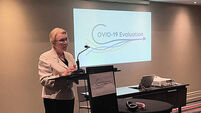
Dr Gabrielle Colleran told the Independent Scientific Advocacy Group webinar: “It’s no coincidence that schools were closed and that there was nothing in place for healthcare workers who were mainly female”. File photo: iStock

Women, members of the Traveller community and other minority groups are among the voices that have not been heard during the Covid pandemic despite being among those most affected.

A webinar hosted by the Independent Scientific Advocacy Group (ISAG) today heard how women and other groups had been ignored by decision-makers in the Covid response to date.

Consultant radiologist and Vice President of the Irish Hospital Consultants Association (IHCA) Dr Gabrielle Colleran said the failure of government to provide childcare support for frontline healthcare workers had “damaged morale” and left staff feeling “abandoned”.

“It’s no coincidence that schools were closed and that there was nothing in place for healthcare workers who were mainly female,” Dr Colleran said. 

The reality is that it didn’t impact the decision-makers at the table.

“The fact that there was no plan for us has impacted negatively on morale and we have strong concerns for recruitment and retention,” she said, pointing to significant levels of burnout and exhaustion across an understaffed health service.

Women were carrying a “disproportionate burden” of work during the pandemic but were not being represented at the decision-making table or in the media, she said.

Men invited onto TV and radio panels need to start turning down opportunities, she said, and instead refer female colleagues, as well as other unheard voices from the Traveller community, black community, rare disease community among others.

“Their voices need to be centred. We’ve heard enough distinguished male privileged voices. That’s uncomfortable and I appreciate that but that is the reality,” Dr Colleran said.

Public health specialist Dr Gabriel Scally said a different approach was adopted in the UK where he was frequently turned down from media panels because of policies on gender and ethnic balance.

UCC psychologist Dr Sharon Lambert, who is part of the Covid Women’s Voices campaign, added that decision-makers had not factored in the practical needs of women, in particular those on low incomes.

“Things like not being able to buy children’s shoes and clothes and having to buy them online. You can’t buy cheap children’s shoes and clothes online,” Dr Lambert said.

“People laughed because there were queues of women outside Penneys when the last lockdown was lifted. 

The reality is that there are people who live day-to-day. They don’t have €38 to spend on a pair of shoes that might come in four to six weeks.

As a woman and a mother, Dr Lambert said she struggled to see how day-to-day practicalities were taken into account when decisions were being made as part of the Covid response.

“The off-licence is open in our village but you can’t buy children’s clothes,” Dr Lambert said.

“There is almost no representation of low-income women or women from minority groups in decision-making,” she added.

The webinar heard that members of the Traveller community and those who were homeless were also among the groups most impacted by the pandemic but not often heard.

Dr Cliona Ni Cheallaigh, a consultant in general medicine and infectious diseases at St James’s Hospital, said people who were poor were twice as likely to die from Covid than those who were not. Homelessness was the biggest risk factor for severe disease from Covid-19, she said, even greater than age or frailty.

People living with rare diseases had also been forgotten about during the pandemic, patient advocate Kellie Tallant said.

The young mother, who has a rare lung disease, said there was little support for individuals with a rare disease or condition who were often relying on their GPs or consultants for information about Covid or vaccines.

“At one point last year I wondered are we all in this together? Are we only advocating for more common diseases or are people with rare diseases just forgotten about,” Ms Tallant said.

More in this section

Lunchtime News

Newsletter

Keep up with stories of the day with our lunchtime news wrap and important breaking news alerts.

Cookie Policy Privacy Policy Brand Safety FAQ Help Contact Us Terms and Conditions

© Examiner Echo Group Limited