Doubt cast on plans to reopen construction sites on March 5
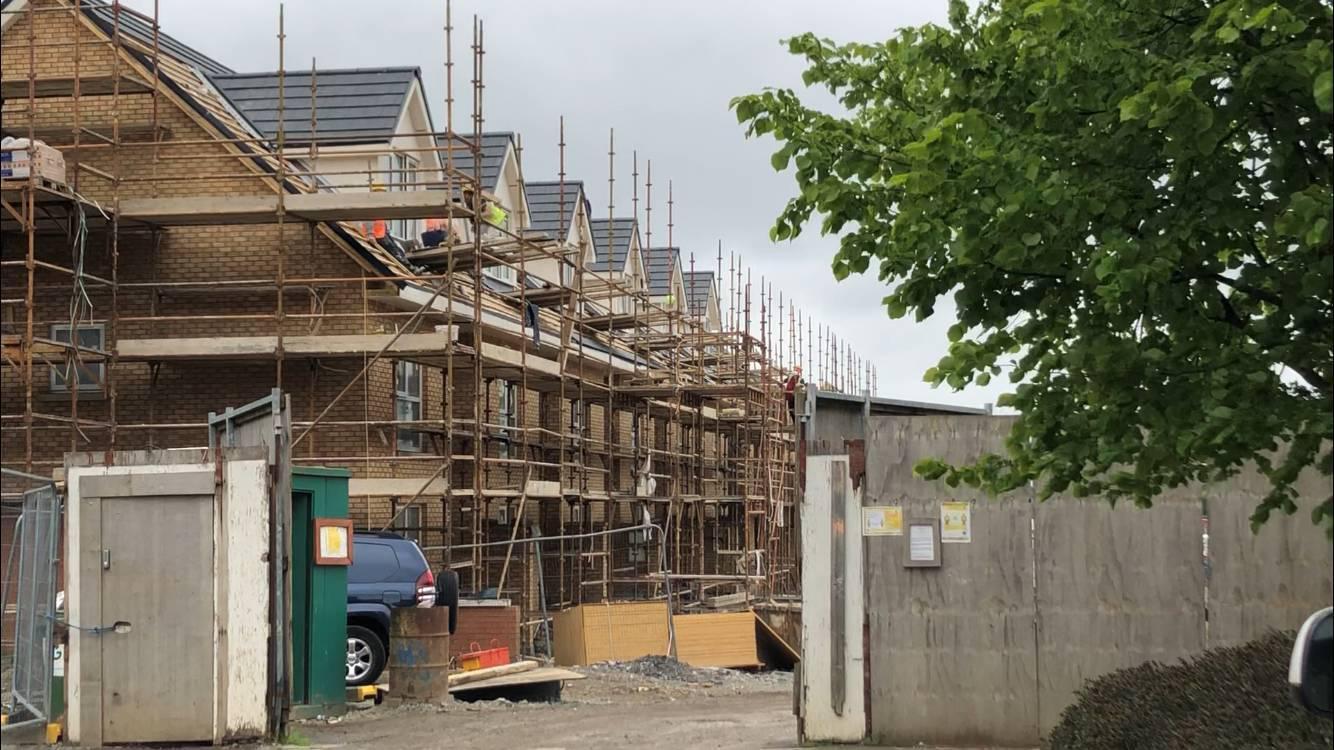
Deputy chief medical officer Dr Ronan Glynn stressed the reopening of society in March remains 'uncertain', and that case numbers need to improve before people start thinking about restarting construction and other industries. 

Deputy chief medical officer Dr Ronan Glynn stressed the reopening of society in March remains 'uncertain', and that case numbers need to improve before people start thinking about restarting construction and other industries. 

Doubt has been cast on the Government’s plan to reopen the construction sector on March 5, with Nphet warning the trajectory of case numbers is still too high to begin considering large-scale movements of people. 

Deputy chief medical officer Dr Ronan Glynn stressed the reopening of society remains ”uncertain” for March, saying case numbers need to improve before people start thinking about restarting construction and other industries. 

He said the focus should be firmly on core priorities — reopening schools and restarting non-Covid health services. 

Earlier, housing minister Darragh O’Brien said he is "more than confident" construction will resume on March 5. 

Mr O’Brien said building sites have shown they can operate safely.

"The reason the [construction] sector was closed was nothing to do with their own work practices — it was simply to reduce the movement of people.   

“I'm more than confident that we will be able to have the sector fully open and open again on March 5," he said. 

Between 700 to 800 new houses are not being built every week that the sector remains closed, the minister added. 

The Department of Health's deputy chief medical officer, Dr Ronan Glynn, said it was too early to speculate on reopening Ireland by March.  	Picture: Colin Keegan, Collins Dublin
The Department of Health's deputy chief medical officer, Dr Ronan Glynn, said it was too early to speculate on reopening Ireland by March.  Picture: Colin Keegan, Collins Dublin

However, when Dr Glynn was asked about the minister's comments at a meeting of the National Public Health Emergency Team (Nphet), he said it was too early to make predictions. 

“Looking at the data that’s in front of us, we need the epidemiological situation to improve and continue to improve," he said.

The HSE has restarted testing of close contacts since the end of January, which is reflected in the stubbornly high number of confirmed Covid-19 cases. 

Dr Glynn said testing will be further ramped up, which will impact daily case numbers, making it impossible to say with certainty at the moment when it will be safe for large movements of people. 

“Today is the eighth of February — we are clear what has to happen between now and the fifth of March," he said. "I really do think it is too early to begin to speculate about what might or might not happen beyond that point." 

"We need to assess where we are in relation to our core priorities. First and foremost among those is education, and the recommencement of non-Covid services because we know they have been really adversely affected over the past number of weeks." 

Professor Philip Nolan, chair of the Irish Epidemiological Modelling Advisory Group, said even though hospital admissions are dropping, mortality "will remain high for some time to come.” 

A further six deaths and 829 new cases of Covid-19 were confirmed last night by Nphet. 

Meanwhile, as the Government continues to roll out its vaccination programme, international concerns have been voiced about the effectiveness of the AstraZeneca jab against a South African variant of the virus. 

The head of the World Health Organization said the emergence of new variants has raised questions about whether or not existing vaccines will work.

Dr Tedros Adhanom Ghebreyesus called it "concerning news" that the vaccines developed so far may be less effective against the variant first detected in South Africa.

He said South Africa's decision to suspend its vaccination campaign using the AstraZeneca vaccine is "a reminder that we need to do everything we can to reduce the circulation of the virus with proven public health measures".

There are now 11 cases of the South African variant in Ireland, all related to travel, but no cases of the Brazilian variant.

The UK variant continues to be the dominant strain here, found in 75% of samples. 

Dr Glynn said that a new study which appears to indicate that AstraZeneca may not be effective against the South African variant is not conclusive. 

More in this section

Lunchtime News

Newsletter

Get a lunch briefing straight to your inbox at noon daily. Also be the first to know with our occasional Breaking News emails.

Cookie Policy Privacy Policy Brand Safety FAQ Help Contact Us Terms and Conditions

© Examiner Echo Group Limited