'Every action an individual takes matters': CMO warns of high mortality as 47 Covid deaths confirmed
Picture: Colin Keegan, Collins Dublin
The Chief Medical Officer has said the country is still experiencing high mortality even though incidence of the virus is beginning to fall.
Dr Tony Holohan expressed concern about the level of mortality in long-term care settings and vulnerable groups.
An additional 47 deaths related to Covid-19 were confirmed this evening by the Health Protection Surveillance Centre (HPSC).
So far this month, there have been 878 deaths related to the virus.
Of today's reported deaths, 46 occurred in January.
Of the 47 people who lost their lives to the virus, the youngest was aged 55 and the oldest was 99 years old.
The HPSC has also reported 1,466 confirmed cases.
As of 2pm this afternoon, there are 1,567 Covid-19 patients in hospitals across the country. Of these, 216 are in ICU.
There have been 69 additional hospitalisations in the past 24 hours.
Dr Holohan said it is positive to see the numbers of people hospitalised reducing and a stabilisation of numbers in ICU.
Professor Philip Nolan, Chair of the Nphet Irish Epidemiological Modelling Advisory Group, said that if the public work collectively to reduce contacts then the incidence will continue to fall.
"We have achieved suppression of transmission with the R number estimated at 0.4-0.7.
"We are maintaining an extraordinary effort but still we have a long way to go. We must maintain full suppression for several weeks if we are to achieve strategic options for the future.
Dr Lorraine Doherty, National Clinical Director for Health Protection HSE, HPSC reminded the public that one event can spark a chain of transmission that can spread throughout a community.
Dr Doherty gave two examples of how rapidly the virus can spread.
One case of Covid-19 resulted in an outbreak of 159 cases in two meat plants.
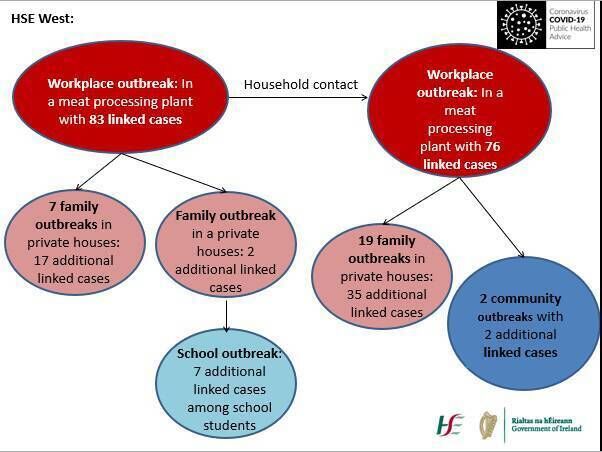
: The 83 cases in this plant resulted in nine family outbreaks and 19 cases in private households, the household outbreaks then resulted in a school outbreak with seven linked cases among school students.
One of the linked cases from this meat plant works in the second meat plant resulting in the spread from one plant to the other.
: The 76 cases linked with this outbreak resulted in 19 family outbreaks and 35 cases in private houses, the household outbreaks resulted in two community outbreaks with two additional linked cases.
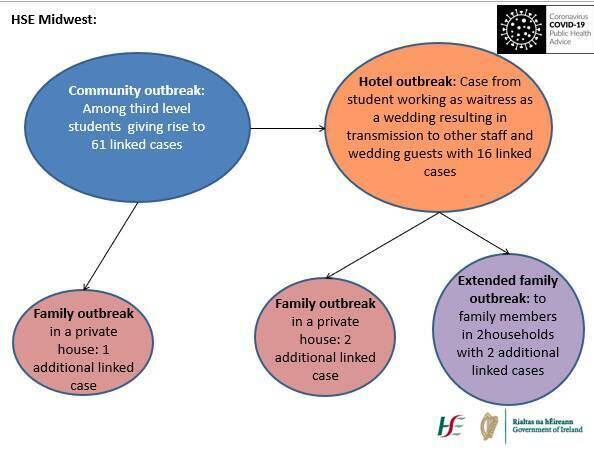
: The second example saw an outbreak among third level students in the Midwest lead to 21 further cases.
The student outbreak saw 61 linked cases. One student linked with this outbreak went to work as a waitress at a wedding which resulted in transmission to staff and guests with 16 linked cases.
From these cases, there were two family household outbreaks with two additional linked cases and one extended family outbreak to family members in two households with two additional linked cases.
Dr Doherty said the examples show how an outbreak in the workplace can lead to multiple outbreaks in families and other work settings.
"These ultimately lead to a higher incidence in the community and threatens the most vulnerable to Covid-19.
Dr Holohan also asked the public to remain vigilant and follow all public health advice.
"Our efforts to stay home and break transmission of the disease will save lives.
"Please continue to follow the public health advice and support each other to keep going."
Of the 1,466 cases reported today, 472 are located in Dublin, 106 in Galway, 103 in Cork, 77 in Waterford and 70 in Limerick. The remaining 638 cases are spread across all other counties.
The national 14-day incidence rate per 100,000 currently stands at 621.9 with Monaghan (1,373.3) the only county with an incidence rate above 1,000.
One in every 50 people in Belmullet local electoral area in Co Mayo tested positive for Covid-19 in the space of two weeks.
It continues to have the highest 14-day incidence rate in the country, at 2,008 per 100,000 people.
The new data covers the two-week period that ended on Monday when the country's rate was 721.
The Monaghan LEA has the second-highest rate, at 1,762, followed by Enniscorthy in Co Wexford, at 1,614.
Demand for tests remains high while the positivity rate is 8.4% for all tests over the seven days up to Tuesday - down from 17.5%
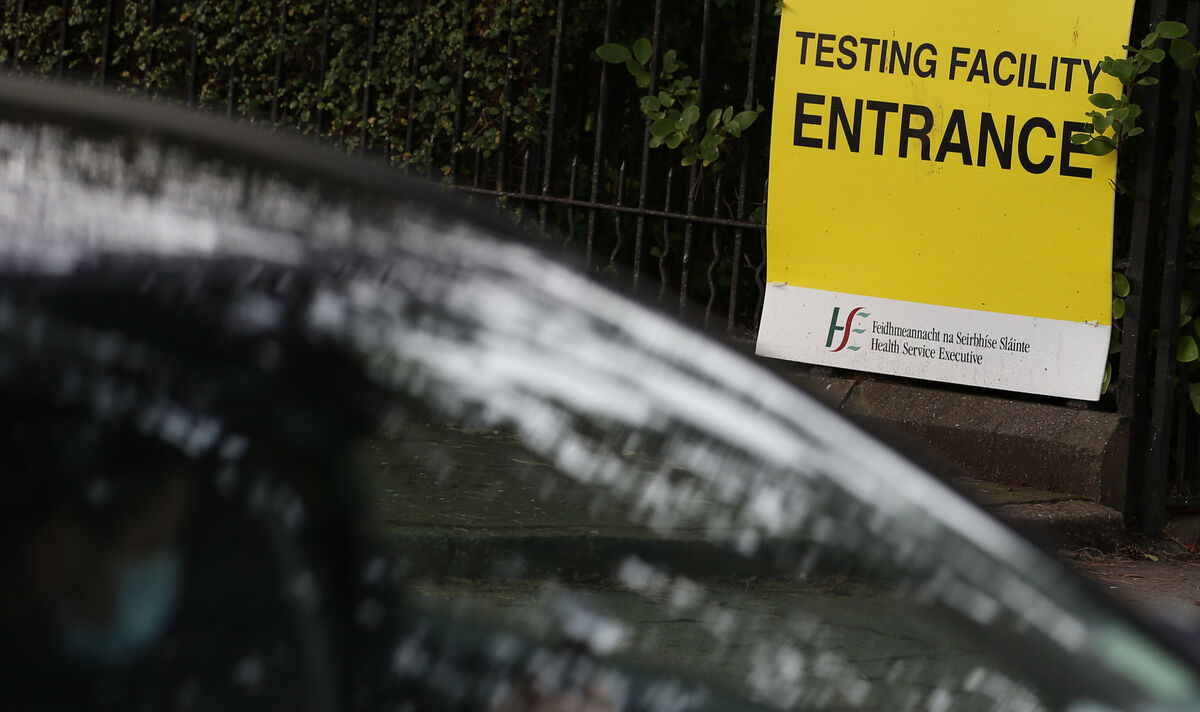
Close contacts of a confirmed Covid case will be referred for testing again from tomorrow.
The HSE put it on hold at the end of last year as the testing system struggled to cope with demand.
From tomorrow, close contacts of a confirmed case will receive a phone call and be referred to a Covid-19 test centre for a test on day five.
The Chief Medical Officer says close contacts should be tested twice as more capacity becomes available.
However, HSE chief executive Paul Reid says it will just be one test for now.
"It still will be at day five and we will assess that over the coming weeks in terms of when it is appropriate to revert back to a day zero and day seven test.
"Right now, we are sticking with a day five test."
Ireland has administered a total of 161,500 vaccines to date, the HSE have said.
As of January 27, 71,600 doses have been administered to long-term residents in care facilities.
A further 89,900 were given to frontline health care workers with 13,800 second doses administered.
The HSE says there are four nursing homes across the country where residents still have not received their first dose of a Covid vaccine.
The government promised that every resident would have received the initial jab by last Sunday.
HSE Chief Operations Officer, Anne O'Connor, says large outbreaks are preventing vaccination teams from going into some homes.
The AstraZeneca vaccine is expected to be approved tomorrow, and the HSE Chief Clinical Officer said they are waiting for that EU advice before making decisions on use, although Germany already today said they will not give it to over-65s.
Infectious Disease Specialist at the Royal College of Surgeons Professor Sam McConkey says the German decision is based on the size of the sample used in trials.
"Most large Phase 3 clinical trials are done first of all in young, healthy people between age 18 and 65. The number of people in the big Phase 3 evidence trial are tiny numbers of over-65s.
"So, we don't have enough cases of Covid or protection from Covid shown in that age group.
"We haven't got the most definitive, gold-standard evidence that this vaccine works on over-65s."
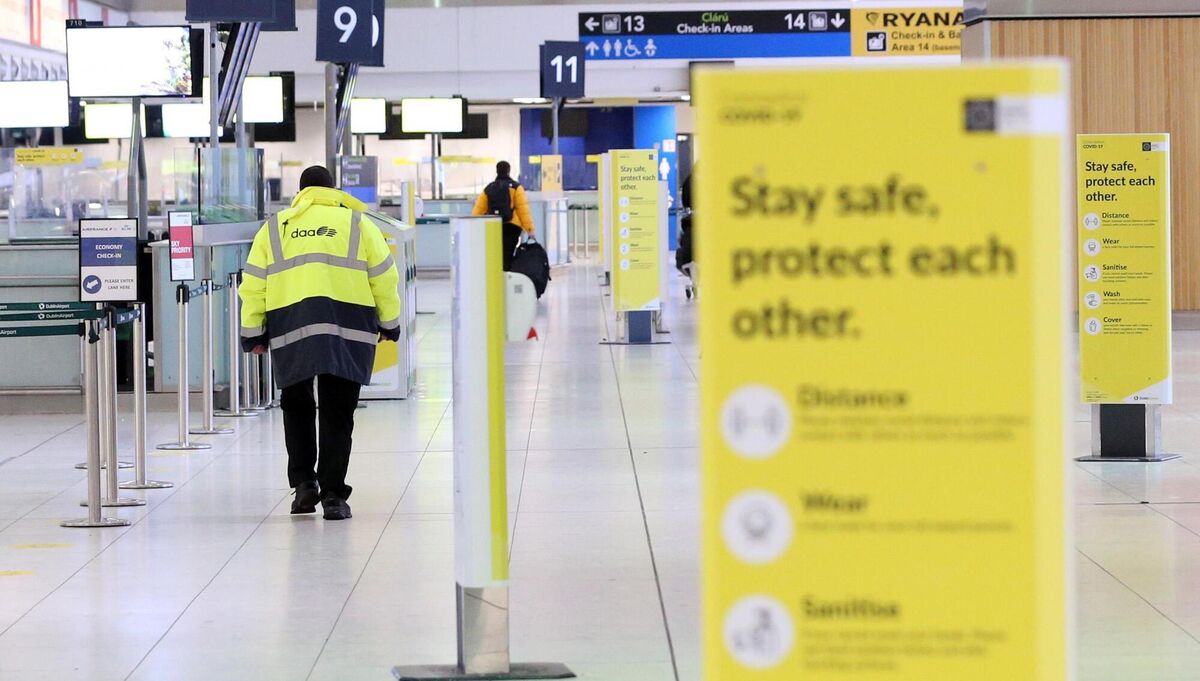
The government is considering further changes to the rules around international travel that would require anyone arriving here to have two Covid tests.
At the moment someone coming from another country needs a negative PCR test within three days of arrival.
Nphet has recommended all travelers be required to get a further PCR test on arrival and a third after five days in the country.
Tánaiste Leo Varadkar says they are giving serious consideration to that proposal.
"We are giving examination to a change which would mean two tests five days apart and that is something that is recommended by Nphet and something that we are giving full consideration to.
"We will make a decision on that quite soon. It's the model that Iceland uses, for example, two tests five days apart with quarantine in between.
"That may well be where we go."
Meanwhile, new Department of Justice figures show 39 passengers have arrived in the country since Monday without a negative Covid test.
Anyone arriving at ports and airports is now legally required to produce a negative PCR test for Covid-19 upon arrival.
The punishment for those who do not is a fine of up to €2,500 or up to six months in prison.
The figures also show that of the 2,000 arrivals at Dublin Airport on Tuesday and Wednesday, around a third were coming back from a holiday.
That is despite the strong advice from government and health officials to avoid non-essential travel.


CONNECT WITH US TODAY



Be the first to know the latest news and updates