Covid-19 'exacerbating' long-term housing issues
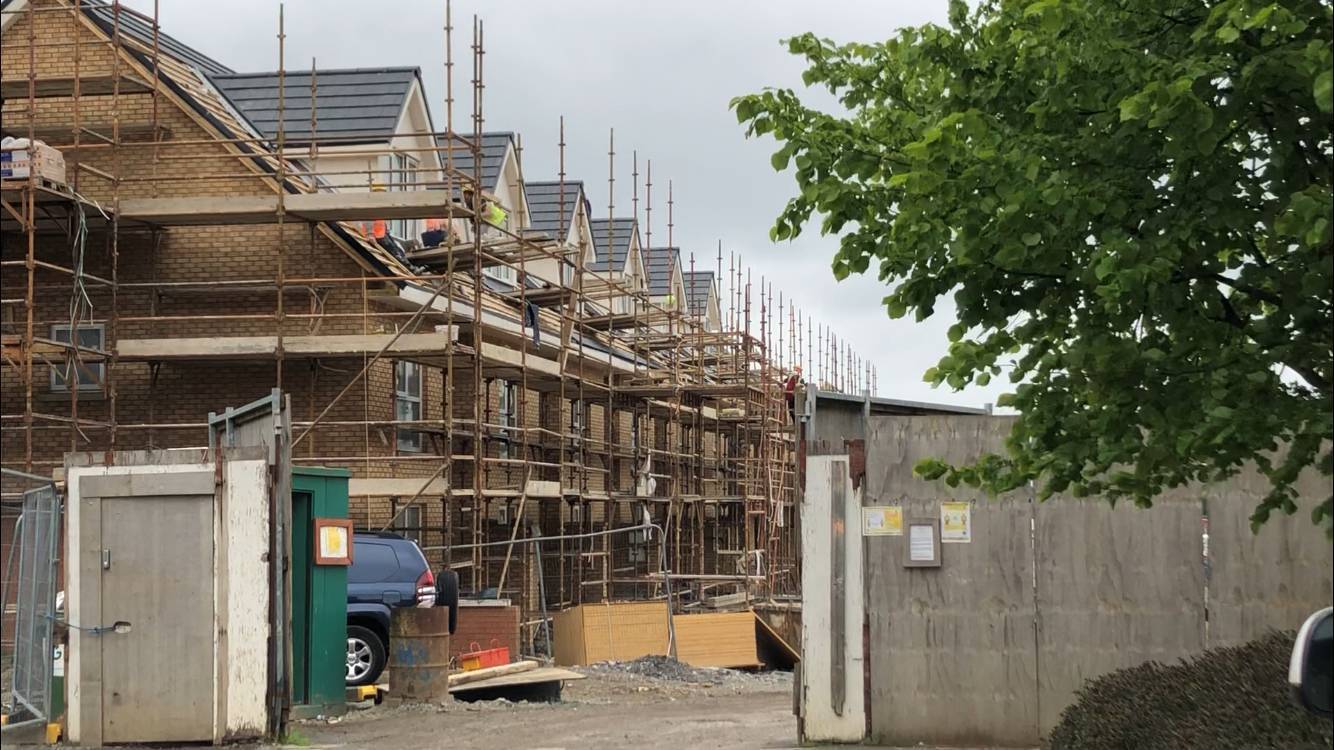
Young people are increasingly living at home with parents in 'inelastic' housing markets, the report found. Picture: PA
Ireland is likely to see issues in its housing supply exacerbated by the pandemic, according to an international report.
In a new report looking at difficulties in providing affordable housing among countries in the Organisation for Economic Co-Operation and Development (OECD), Ireland is seen as faring better than many of its international counterparts, and to have installed a number of measures to increase housing security during the pandemic.
It said Ireland was one of the few OECD countries where house prices in 2019 were lower than in 2005, but that was attributed to its status as a 'bubble' country, along with Greece and Spain.
However, the report also showed that average rents here are among the highest in the OECD and have increased considerably since 2005, albeit to a lesser extent than some other countries such as Turkey.
The OECD includes nations such as France, Germany, Canada, and the United Kingdom, and the newly-published report found that less than half of the OECD population, on average, is satisfied with the affordability of housing in the city or area where they live.
It also said: "Building new housing is a lengthy and costly process. An inelastic housing supply, resulting from a scarcity of developable land in urban areas or regulatory policies that make it harder and more costly to build, can make housing less affordable."
The report said: "Housing supply elasticities are highest in Ireland, Norway, Sweden and the United States (these countries are, on average, able to respond to changing demand), while at the other end of the spectrum, housing supply elasticities are lowest in Austria, Belgium, France, Germany, Israel, Italy, the Netherlands, and Switzerland.
"Policymakers and housing advocates in Australia, Canada, France, Ireland, Portugal and the United Kingdom, among others, have emphasised the need to prioritise social and affordable housing as a key counter-cyclical investment opportunity that can help support jobs and SMEs in the building sector and deliver more affordable housing."
The report found that fewer than half of the OECD population, on average, is satisfied with the affordability of housing in the city or area where they live.
"Affordability gaps are particularly pronounced in job-rich urban areas and among low-income households, renters in the private market, and youth.
"Youth, for instance, are in some countries increasingly living at home with their parents, while navigating a challenging labour market."
It also said: "The Covid-19 pandemic has exacerbated longstanding housing challenges, whilst renewing concerns over poor housing quality and heightening housing insecurity for households hard-hit by the crisis."
CONNECT WITH US TODAY



Be the first to know the latest news and updates