Taoiseach rules out tax hikes despite deficit
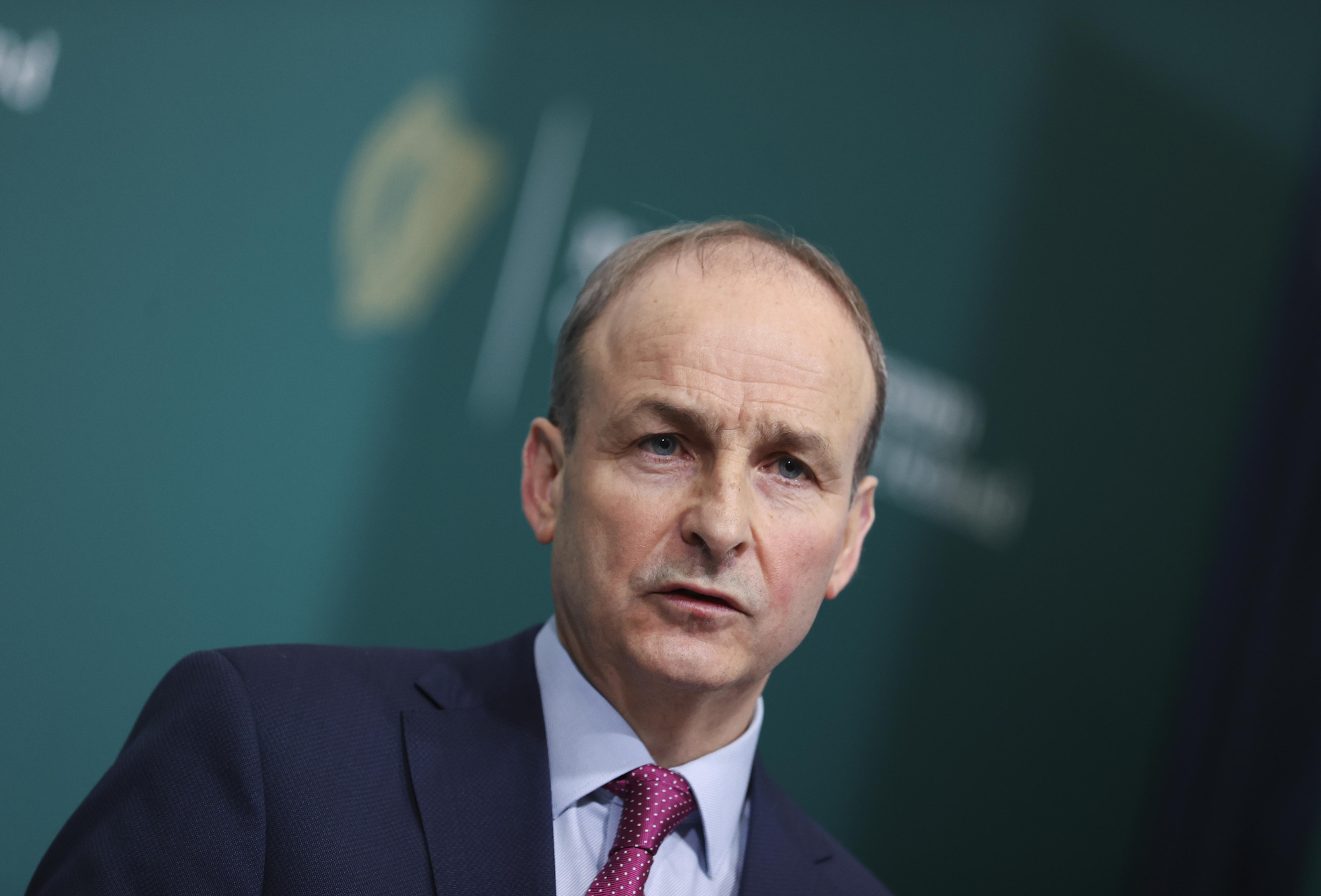
Taoiseach Michéal Martin said the Government was of the view that income tax should not rise, adding that despite the large deficit, the programme for government commitment would be honoured. Picture: Julien Behal Photography
Income taxes and Universal Social Charge (USC) rates will not be increased by the Government as it seeks to plug a €40bn hole in the public finances caused by Covid-19, Taoiseach Micheál Martin has said.
Mr Martin said the Government was of the view that income tax should not rise, adding that despite the large deficit, the programme for government commitment would be honoured.
“We’re saying that we’re not doing [that]. We’ll honour that commitment,” he said.
“That said, we’ll be borrowing about €40bn between 2020 and 2021. The initial focus will be on winding down the deficit again in the post-Covid era.
"We have been able to borrow cheaply, very cheaply, because of ECB policies and approaches. So, that will be the first emphasis,” he said.
Mr Martin said there was a lot of borrowing that had been exclusively Covid-related and then there was borrowing that was not Covid-related and obviously a lot would depend on economic growth post-Covid.
“You’ve about €12.5bn in household savings extra this year than you would have had last year and that’s quite significant. That could be released into the economy over time when people become less cautious and worried about the Covid impact on their own personal lives. So economic growth could take care of some, there might be other areas of revenue generation that cannot be ruled out,” he said.
Public Expenditure Minister Michael McGrath told the that achieving economic recovery would go a long way towards repairing the public finances after Covid.
"The output from the Commission on Taxation and Welfare will help to guide and inform policymaking in the next number of years,” he said.
Government sources said Finance Minister Paschal Donohoe was also looking to the Commission on Taxation and Welfare for options as to what to do, but sees the spending choices ahead of Budget 2022 being more important than tax changes.
“All of this is dependent on the scale of the deficit and the planned speed of correction. As important as tax changes may be, ultimately what will be far bigger will be the spending choices made,” a source said.
While every government in Europe is spending heavily this year to respond to Covid, the key issue is how much of this emergency spending becomes permanent.
CONNECT WITH US TODAY



Be the first to know the latest news and updates