Situation 'most serious it has been since last March' as 13 deaths and 938 Covid-19 cases confirmed
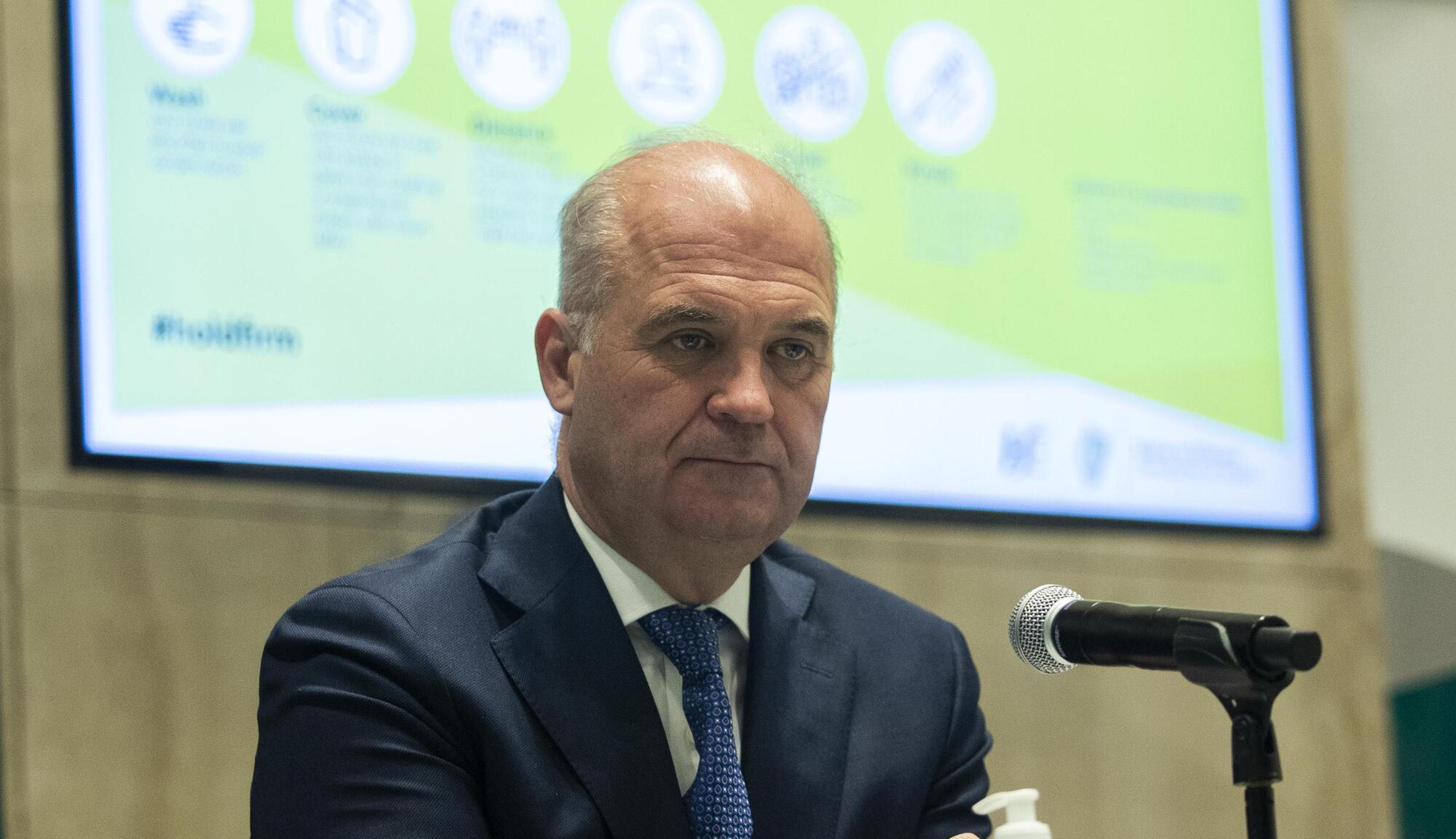
Dr Tony Holohan, Chief Medical Officer, Department of Health, pictured at a Covid-19 update press conference at the Department of Health. Picture: Colin Keegan, Collins Dublin
The Deputy Chief Medical Officer has warned the epidemiological situation is the most serious it has been since last March.
Dr Ronan Glynn has advised that people should act at all times as if they or those they come into contact with are infectious.
According to preliminary data, Dr Cillian De Gascun said the new variant of the virus from the UK is present in Ireland.
However, Dr De Gascun said that given the timeline of the samples that were analysed, the novel variant is not solely responsible for the recent increase in case numbers in Ireland.
He said the new variant is “predominantly in the east of the country”.
There have been 13 additional deaths related to Covid-19, the Health Protection Surveillance Centre (HPSC) has said.
This brings the death toll in the Republic to 2,184.
The HPSC has been notified of confirmed cases 938 of Covid-19.
There is now a total of 82,155 cases of the coronavirus in Ireland.
As of 2pm this afternoon, there are 251 Covid-19 patients in hospitals, of which 25 are in ICU.
There have been 24 additional hospitalisations in the past 24 hours.
Of today's 938 confirmed cases, the highest number are located in Dublin with 300 cases.
The are 110 cases in Cork, 72 in Limerick, 68 in Donegal and 41 in Kildare.
The remaining 347 cases are spread across 21 other counties.
Chief Medical Officer, Dr Tony Holohan said every indicator of the disease is rising "and rising rapidly".
"Revise your Christmas plans to ensure social contacts are limited and that hand hygiene, physical distance, ventilation and face covering measures are in place if you must have visitors to your home.”
Nphet met today to review the current situation and has made recommendations to Government.
Professor Philip Nolan, Chair of the NPHET Irish Epidemiological Modelling Advisory Group said the situation has deteriorated even in the past two days.
"The reproduction number is higher than we have reported since March at 1.5–1.8.
"The day on day growth rate is estimated at 7 – 9%. These data emphasise the need for us to be exceptionally careful over Christmas and to adhere strictly to public health guidance."
The Deputy Chief Medical Officer warned that the virus has now spread across all parts of the country and all age groups.
The national 14-day incidence rate per 100,000 currently stands at 153.2.
Donegal is the only county with an incidence rate above 300 at 317.9
Six other counties have a 14-day incidence rate above 200 - Louth at 291.7, Wexford at 257.8, Monaghan at 257.4, Kilkenny at 239.8, Limerick at 217.5 and Carlow at 200.2.
Data released by the HPSC today, revealed the number of Covid-19 clusters around the country dropped by more than a third in the past seven days.
In the week from December 13 to 19, 254 outbreaks were recorded - a 37% drop compared to the previous week.
The largest decrease was in the number of household clusters which dropped from 327 to 161 this week.
The 161 household family clusters accounted for the largest amount of clusters.
Hospitals saw the second largest number of clusters with 51 followed by schools with 17.
There were nine new outbreaks recorded in nursing homes - up six on the week before.
Two clusters were found to be related to travel and eight were linked with community outbreak.
Meanwhile, a senior HSE official has warned the Covid-19 situation is deteriorating at a faster pace than anywhere in Europe.
Chief clinical officer Dr Colm Henry said the infection rate is “frightening” and the curve is moving in an almost “vertical direction”.
His analysis came as HSE chief executive Paul Reid warned of “serious and dangerous” levels of transmission that could lead to a “massive surge” in hospital admissions after Christmas.
Dr Henry told the weekly HSE media briefing there could be 1,500 new confirmed cases of the virus a day by the first week in January.
Mr Reid also confirmed today that vaccinations for nursing home residents will start before New Year’s Eve.
The first tranche of vaccinations should start on December 30 across nursing homes for residents and staff as part of a three-week programme.
This will include hospital staff, with vaccinations taking place at key large hospital sites including Cork University Hospital.
Delivery is expected to come to about 40,000 doses overall in two batches during the first week.
CONNECT WITH US TODAY



Be the first to know the latest news and updates