Childline developing new video therapy service as it prepares for 'busier Christmas' than last year
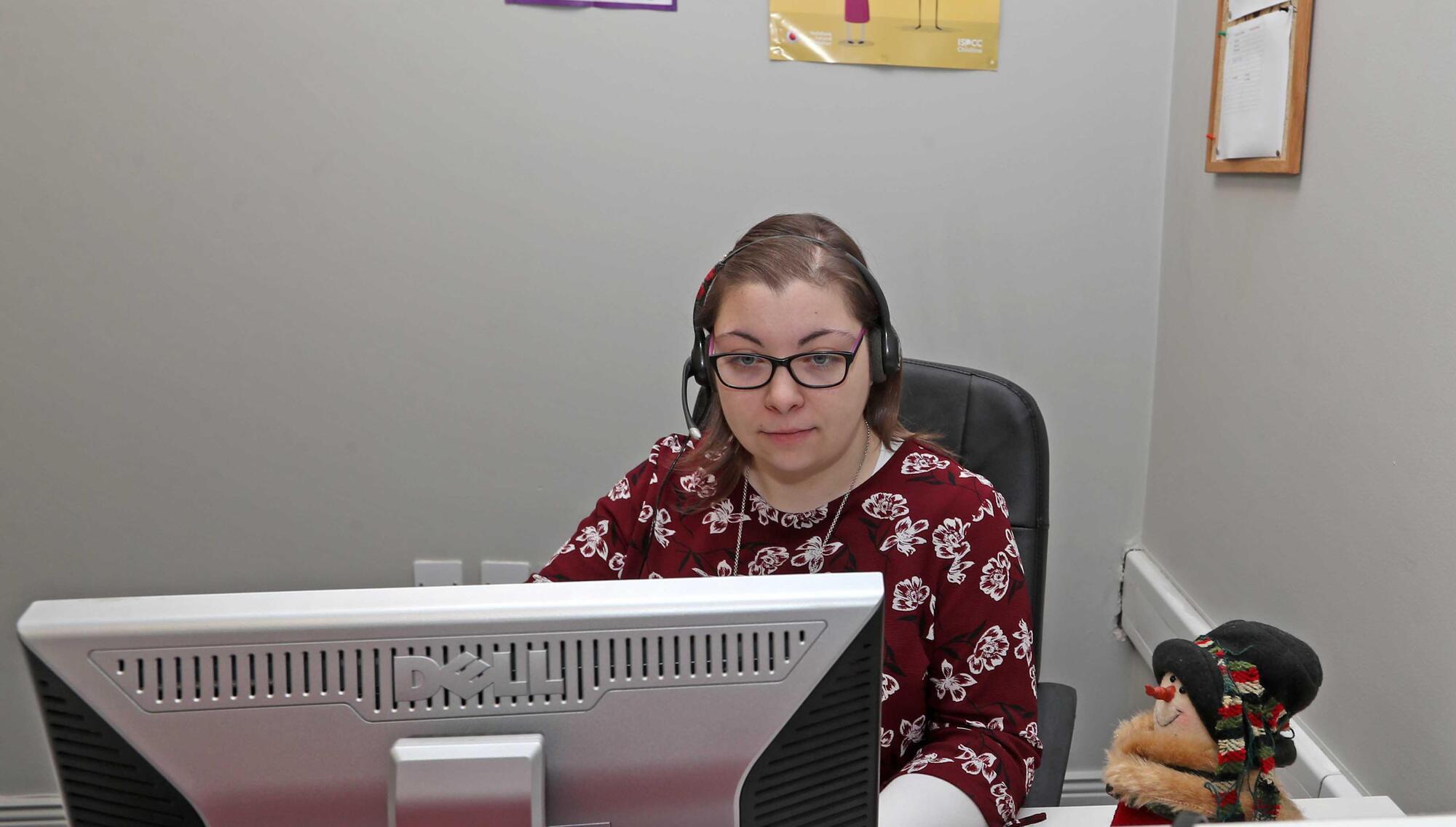
Megan Sarl, a Childline volunteer who is braced for a possible increase in contacts from children. Photo: Jim Coughlan
Childline is hoping to develop a video therapy service next year and is more than halfway through a pilot in two areas of the country in collaboration with Tusla.
Childline, which is operated by the ISPCC, said the service would be different from its current services - offered through phone calls, text and, increasingly, its online platform - and could help cut waiting lists for children in receipt of services through the Child and Adolescent Mental Health Service or awaiting other services.
News of the pilot programmes comes as the charity said it was expecting a "very different" Christmas period and bracing itself for a possible increase in contacts from children.
For children and young people like Jane, Childline is a lifeline.
— ISPCC (@ISPCCChildline) December 4, 2020
Childline relies on donations for 90 per cent of the funding which keeps us listening to children.
This Christmas, can you help us answer their call?
Donate now at: https://t.co/lGc3M429Dj pic.twitter.com/2mV7DhOhYC
Childline CEO John Church said Covid-19 has had a significant impact on the volume and nature of contacts it received over the past year, and that this could continue over the festive period.
"We are preparing for probably a busier Christmas compared to last year," he said. "We are 24/7 on all access points now.
"Children often have one adult they can turn to.
"There was a drop in referrals to Tusla and that shines through.
"A child can't talk to the parent when they are the problem."
Regarding the video therapy pilot project, it is currently being trialled in two counties, one in the north-east and the other in the south-west.
Mr Church said it was hoped the organisation could offer it more widely as another option next year, although he said it would be different to the current services and would require protocols around consent and other issues.
The current trial is three months through a five-month pilot and is being carried out in conjunction with Tusla, so any child using it is already known to care services.
It means a move away from the typically anonymised method of interaction offered through other Childline services, but John Church said the feedback so far was "very positive".
He said it would be "very similar" to current face-to-face therapies offered by the ISPCC and the plan would be to work towards offering a six-week resilience programme via video. If that was successful he said it could be utilised to assist children awaiting services from the HSE or Tusla, such as CAMHS.
A response to a recent parliamentary question by Deputy Michael Moynihan showed 2,230 waiting nationally for services, a reduction of more than 100 to the figure for October last year, but in CHO4 (Cork and Kerry) alone, 78 young people have been waiting more than a year to access CAMHS.
Speaking of the possible advantages of the service Mr Church said: “We can get to more children because staff are not travelling.” He stressed that the pilot plan was already in place before the pandemic.
"What Covid did was give us kick up the backside about doing quickly," he said.
Read More

CONNECT WITH US TODAY



Be the first to know the latest news and updates