Up to 15 mass-vaccination centres being considered by the HSE
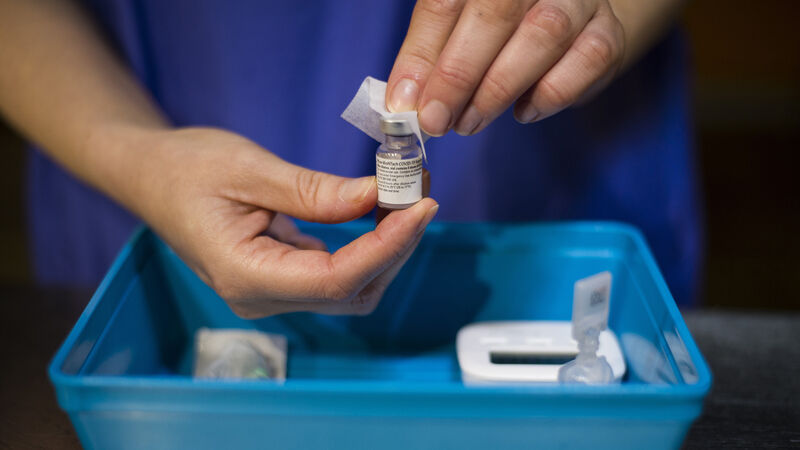
Up to 15 mass-vaccination centres are being considered by the HSE to facilitate the roll-out of the coronavirus inoculation.
The Governmentâs high-level taskforce on Covid-19 vaccination has been in discussions with a number of third level institutions about using their facilities for the rollout.
Taskforce chairman Professor Brian MacCraith told the Oireachtas committee on health that the challenge of implementing the vaccine is âunparalleled here and around the worldâ.
Speaking on Wednesday, Prof MacCraith said: âAt least 15 such mass-vaccination centres are under consideration by the team in the HSE at the moment.
âThe exact details of how many staff will be required by vaccination centre is still being worked through at the moment.â
He said he had held discussions with Wicklow IT, NUI Galway, University of Limerick and the University College Cork about using their facilities for vaccinations.
He added: âAll four of these institutions, in terms of areas like their major sports arenas and centres, were very positive in their initial response.
âThese conversations and dialogue will happen over the coming weeks, in very good time, before thereâs a need to actually establish the mass-vaccination centres. But thereâs great positivity around these.â
Prof MacCraith said it would be difficult to give timelines on how many people will be vaccinated at different stages of the coming year.
However, it is anticipated that up to 5,000 doses of the Pfizer/BioNTech vaccine will arrive in Ireland before the end of the month.
Modelling carried out by the task force has indicated that this could mean that around 78,000 staff and residents in care facilities could be vaccinated by mid to late-February.
Prof MacCraith said: âItâs not possible to have absolute certainty on these matters.
âLet me give you one example that weâre working through in various models: If you take the residential care facilities which are in the top cohort there, so we do know that â and thereâs just under 600 such facilities, about 589 is the number â and close to 78,000 between residents and staff.
However, Prof MacCraith warned that this was not yet fact, and would depend on how quickly the vaccine arrives in Ireland.
âThe dates and numbers arenât mentioned because itâs just, at this stage, impossible, to give you certainty around these,â he said.
Deputy chief medical officer Dr Ronan Glynn said discussions have taken place with social media companies such as Twitter and Facebook about ways to fight misinformation related to the vaccine.
However, he said it was important not to give the impression that the majority of people are vaccine-hesitant.
âObviously weâre concerned about the issue of misinformation and the extent to which that will influence peopleâs intention to get vaccinated,â he said.
âItâs important that we donât give a perception thatâs the majority view.
âWe know that 70 to 80% of people in Ireland, either definitely or probably, will get this vaccine when theyâre offered it.
âSo perhaps rather than focusing on vaccine hesitancy per se, what we should be doing is trying to promote even better levels of vaccine confidence.â
Dr Glynn said an effective communications strategy would be one of the key tools needed for a successful implementation strategy.
Professor Karina Butler, head of the National Immunisation Advisory Committee, said the vaccine provided âhopeâ that we can begin âa path back towards a more normal lifestyleâ.
But she warned that this âwill not happen overnightâ.
âVaccination is the key that will help open that pathway back to normality,â she said.
âIt is very much our hope that in time this virus will be listed along with diphtheria and polio as organisms that vaccination has controlled, if not conquered.â