Boris Johnson 'probably willing' to make concessions in Brexit endgame
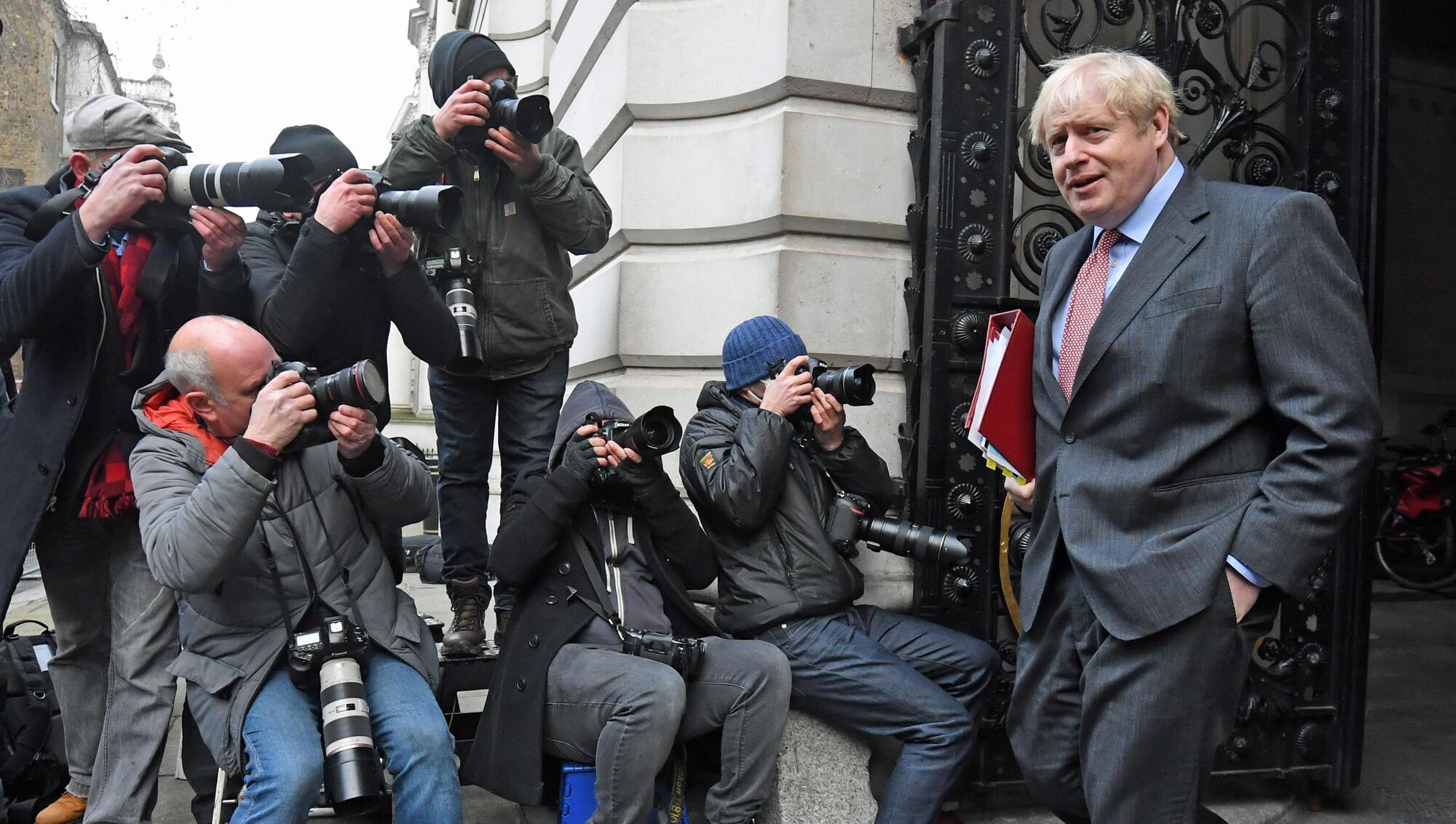
British Prime Minister Boris Johnson in Downing Street, London.
Leo Varadkar says Boris Johnson is "probably" willing to make concessions as Brexit reaches crunch talks.
The UK agreed yesterday to withdraw clauses in the Internal Market Bill which breached the Northern Ireland protocol, and says it will not introduce similar provisions in its Taxation Bill.
The Tánaiste said the agreement on the Northern Ireland protocol "was a good day for Ireland".
"We now know that there will not be a hard border between North and South. All-island supply chains will continue as normal, there'll be minimal disruption on trade from Northern Ireland to Britain, which is very important with the business community there and the unionist community too," he said.
"I think that gives some certainty, at least more certainty about the future today than there was yesterday and that's very positive but there's still more to be achieved and crucially what we want to achieve over the next couple of days, is that the future relationship between the EU and the UK, dealing with trade with fisheries with data, with security, with aviation."
The Taoiseach Micheál Martin said he felt the probability of a trade deal was 50/50, with Mr Varadkar adding he felt that was "absolutely correct".
"Ultimately, I believe that both sides have more to gain, and certainly more to salvage from an agreement over the next few days than we have to lose. Ultimately, it takes a little bit of politics at the end, and both sides to move a little bit at the end. But I think that is possible," he said.
Boris Johnson and Ursula Von DerLeyen will meet tonight for dinner in Brussels to try and come to an agreement over outstanding issues around fisheries and the "level playing field".
Mr Varadkar says he believes Mr Johnson will be willing to compromise.
"Britain going its own way, he's been very clear about a few things; that they're leaving the single market, they're leaving the Customs Union, we accept that," he said.
"We agree that we want a trade agreement where there are no tariffs, no quotas, that's really important for farmers, for the agri-food sector in particular.
"Where it's run into difficulties is around the whole issue of a level playing field.
"Europe is based on free trade, but it's also based on the single market economy and for us to have access to our single markets, for us to have free trade with the UK, we need to know that the United Kingdom isn't going to undercut us in standards, whether it's workers rights or health and safety, the environment, product standards, all of those things.
"I don't know him that well but I know him a bit, I think his natural instincts are actually much closer to the more liberal London mayor that he was than the more conservative Brexiteer.
"I think he wants Britain to be part of the world. I think he wants Britain to be seen as a country that is first actor, one with high standards.
"However, he will be very strong on the sovereignty point and I think any set of common minimum standards, and he said of level playing field rules would have to be ones that the UK wouldn't feel are imposed on them.
"That's I think where the sovereignty piece comes in and that will be a circle that's going to be hard to square."