Ceremony marks single biggest loss of life of Irish soldiers abroad
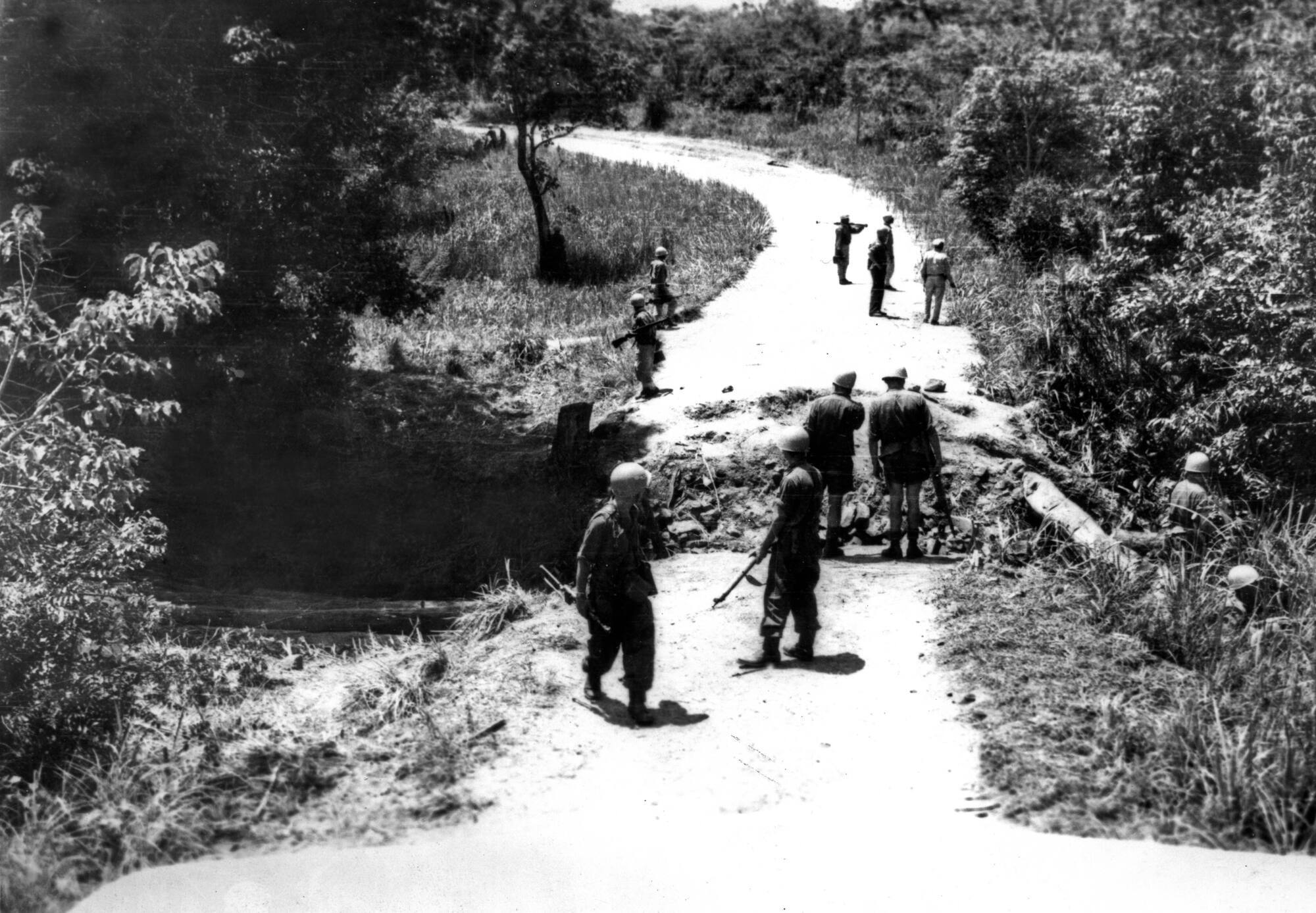
The scene at the bridge shortly before the first bodies were recovered after the Niemba ambush in Congo, 1960.
The Defence Forces held a wreath-laying ceremony earlier today on the 60th commemoration of the single biggest loss of life of Irish soldiers serving overseas.
Nine members of an Irish peace-keeping patrol were killed in the Niemba Ambush in the Belgian Congo on November 8, 1960, after being targeted by a large number of local tribesmen.
The nine ranged in age from 18 to 30 and were part of the 33 Infantry Battalion serving in a UN peacekeeping force in the central African state.
The commemoration was held at Cathal Brugha Barracks in Rathmines, Dublin, and the wreath-laying ceremony took place at the Memorial Garden, outside the Garrison Church.
This afternoon the 60th Commemoration of the Niemba Ambush took place in Cathal Brugha Barracks, Rathmines at the Memorial Garden outside the Garrison Church.
— Óglaigh na hÉireann (@defenceforces) November 7, 2020
Wreaths were laid separately in a reduced ceremony, adhering to Covid-19 guidelines. 1/3#niemba60 pic.twitter.com/wb1u0Td5uQ
A statement from the Defence Forces said the wreaths were laid separately in a reduced ceremony conducted in line with Covid-19 guidelines.
A wreath was laid by Company Quarter Master Seargent (Retd) Michael Colton, a member of the 33rd Infantry Battalion.
He was part of the escort party who accompanied the bodies of their fallen comrades back home to Ireland on Nov 19 1960.
Also taking part in the ceremony were Colm Campbell, chairman of the board of directors of Óglaigh Náisiúnta na hÉireann (Organisation of National Ex-Service Personnel) or ONE and General Officer Commanding 2 Brigade, Brigadier General Tony Cudmore.
The ambush was the biggest loss of life of Irish soldiers in any single incident overseas.
The troops were serving as UN peacekeepers with 33 Infantry Battalion as part of the Organisation des Nations Unies au Congo (ONUC).
On that fateful day, Lt Kevin Gleeson took his 11-man patrol over a bridge on the Luweyeye River near the town of Niemba where Baluba tribesmen ambushed them.
After a courageous fight against overwhelming numbers, nine of the patrol were killed.
Those that lost their lives were:
- Lt Kevin Gleeson, 30
- Sgt Hugh Gaynor, 29
- Cpl Peter Kelly, 25
- Cpl Liam Dougan, 34
- Pte Matthew Farrell, 22
- Tpr Thomas Fennell, 18
- Tpr Anthony Browne MMG, 20
- Pte Michael McGuinn, 21
- Pte Gerard Killeen, 27
Two members of the patrol survived, Pte Joseph Fitzpatrick, then 21, and Pte Thomas Kenny, then 24.
One member of the patrol, 20-year-old Tpr Anthony Browne from Rialto, Dublin, survived the initial attack but was subsequently killed. His body was not found until November 1962.
Tpr Browne was also posthumously awarded the first ever An Bonn Míleata Calmachta (Military Medal for Gallantry), the Defence Forces highest military honour, for his conduct during the ambush.
From 1960 to 1964, 12 Defence Forces units with almost 6,200 troops, served with ONUC. In those four years, 26 Irish troops paid the ultimate sacrifice in the name of peace — 17 died as a result of hostile action, three died from natural causes, and six died in accidents.
Of the 30 troop-contributing countries, Ireland had the fourth highest number of fatalities after Ghana 49 deaths), India (39), and Ethiopia (28).

In total, 87 members of Óglaigh na hÉireann have lost their lives on overseas deployment. Of these, 36 personnel have died as a result of hostile action overseas.


CONNECT WITH US TODAY



Be the first to know the latest news and updates