People who have returned from travel must wear mask for 14 days, committee to hear
People who have returned from travel must wear mask for 14 days, committee to hear

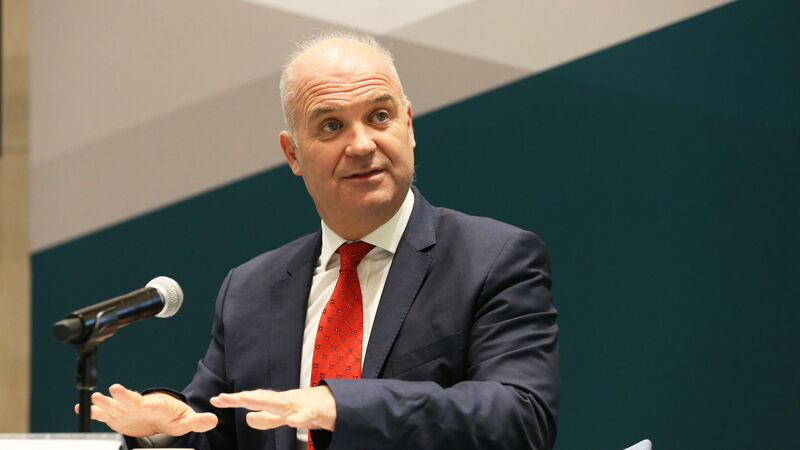
Dr Tony Holohan. Picture: Sasko Lazarov / RollingNews.ie

People who arrive in Ireland or who have returned from travel must wear a mask and avoid crowds for 14 days, the Chief Medical Officer Dr Tony Holohan will tell TDs today.

In his opening address to the Oireachtas Transport Committee, Dr Holohan will say those returning must pay close attention to maintaining two metre distance, hand hygiene, wearing face covering and avoiding crowded situations for a full 14 days, even if they are not asked to restrict movement for that period.


He will be addressing the Europe-wide move to a so-called traffic light system for international travel.

In his opening address, seen by the Irish Examiner, he will say HIQA research conducted on testing options backs up the WHO advice that Rapid Antigen Detection Tests are not suitable for use in screening asymptomatic people with an unknown levels of disease, such as arriving passengers.

If the video does not display, click [url=https://www.oireachtas.ie/en/oireachtas-tv/cr3-live/]here[/url]

HIQA recently undertook a rapid Health Technology Assessment on the use of alternatives to laboratory-based PCR tests.

He will say the WHO in its weekly epidemiological update from 27 October, has stated that the number of new cases in Europe is increasing exponentially, with over 1.3 million new cases recorded during the most recent 7-day reporting period.

“Against this backdrop there is a substantial risk associated with international travel at the current time,” he will say.

The area of international travel, which will represent a prominent area of risk as the disease comes under control nationally and we subsequently aim to maintain suppressed disease activity and low incidence rates, Dr Holohan will say.

Managing risks of importation

Once we bring the disease back under control in Ireland, it will be necessary to manage very carefully the risks of importation, the CMO will tell TDs.

“In circumstances of sustained low levels of domestic transmission, the relative impact of imported cases is all the greater, as was seen in Ireland at times during the summer when travel related cases at times accounted for approximately a quarter of cases,” he will add.

While long-term travel restrictions are of course difficult, we need only to look to the travel policies of countries that have achieved sustained low rates of transmission, particularly countries in Asia, to see the importance of controlling importations, TDs will hear.

“Our core national objectives are to maintain the safe reopening our education and health sectors, and to protect our vulnerable populations. Achieving these goals is predicated on maintaining low rates of transmission and avoiding an ongoing reseeding of cases for example through travel,” he will say.

Irish experts and many of their counterparts internationally consider that, should testing of asymptomatic passengers be introduced, a 5-7-day period of restricted movement, with a symptom check and test on day 5, is the most efficient method to contain importation of the virus, he will say.

“This approach can still miss up to 15% of the imported cases I understand that Finland and Germany are among the countries that have signalled intentions to adopt this measure as part of their travel policies,” Dr Holohan will add.

Committee members will hear that it is important that countries adopt approaches that facilitate travel, especially essential travel, while ensuring that those who need to travel are not posing an additional risk to the wider populace. 

“I would stress that countries that have adopted PCR testing as part of their travel policy have tended to do so as part of a suite of measures applying to international travel, often including even more restrictive measures than apply here such as travel bans, mandatory quarantines and border closures,” he will say.

The HSE has recently established an expert group to review the Antigen tests currently available and how they might be deployed in clinical and non-clinical settings. 

Validation studies with two rapid antigen tests are already underway in Ireland, in connection with potential for use in detecting Covid-19 in certain vulnerable populations.

More in this section

Lunchtime News

Newsletter

Keep up with stories of the day with our lunchtime news wrap and important breaking news alerts.

Cookie Policy Privacy Policy Brand Safety FAQ Help Contact Us Terms and Conditions

© Examiner Echo Group Limited