How a swimming pool in Tullamore helped inspire a world-renowned architect
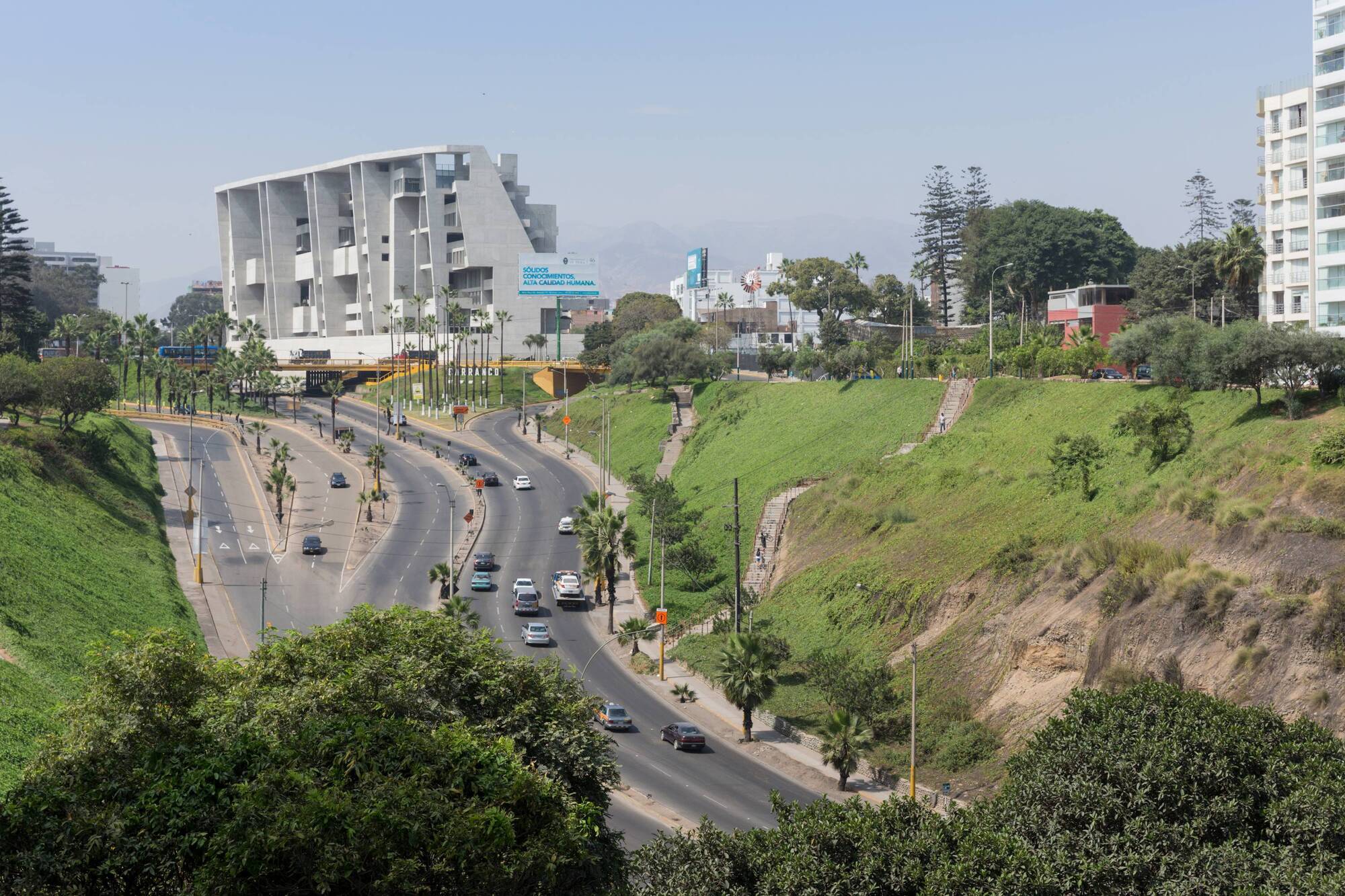
UTEC University campus in Peru, designed by Grafton Architects, won the inaugural 2016 RIBA International Prize for the world’s best new building.
Plunging into a freezing public pool in her home town was one of the things that first drew Yvonne Farrell, one of the world’s most highly acclaimed architects, to her chosen profession.
That public pool showed her how our built environment can impact and shape communities — allowing children in landlocked Tullamore to learn to swim.
After a stint at school with “brilliant” nuns who “didn’t bat an eyelid” when she wanted to be an architect, she studied her dream subject in UCD where she met friend and future business partner, Shelley McNamara.
Together they established multi-award-winning Dublin-based firm Grafton Architects in 1978 and went on to design some of the most acclaimed buildings on Earth. The pair won this year’s Pritzker Prize — the most prestigious award in architecture.
When bestowed with another major professional honour of curating the 2018 Venice Biennale, the world’s greatest celebration of architecture, they based their theme ‘freespace’ on that lesson from the swimming pool — about how architecture can create exciting spaces for public use.
Because Tullamore, “a planned town in the bogs of Offaly”, is where Ms Farrell’s journey began and it still influences her work today.

“I think Tullamore had the first outdoor swimming pool in the country. All the children learned to swim because of the foresight and thinking of the local authority," she said.
“It had natural river water. It wasn’t heated, but it was fantastic. All the local children would cycle out to this pool and spend their summers learning to swim.”
This “generosity of spirit” shown by the local authority which contributes to the wellbeing of a town is what interests Ms Farrell now because “public service is at the core of what architecture should be”.
“Architecture is how we make community, how we walk into our neighbour in city spaces, how we make a civic world that connects us as human beings,” she said.
“It’s how we make the world. It’s an optimistic profession, because people invest in the future.
“We must remember that architecture is in the service of humanity, it's really a civic gift.”
Architects must “hear the wishes of strangers that have no voice”, and create something for the public as well as the client to build a better, more beautiful and more inclusive world, she said.
She believes that it should be taught as a subject in schools so that people feel comfortable to “haul the profession over the coals”, helping to make sure that every building would have a civic function.
Sustainability, she said, is central to that civic duty and it is becoming deeply embedded into the thought behind and the practice of architecture.
“We have human clients — architecture is commissioned — but in the end, the Earth is our client,” she said.
“So it's up to us to make sure that we reuse these elements in a generous and thoughtful and responsible way.
“I love the fantastic image of Greta Thunberg in her yellow raincoat standing in front of some of the most prestigious places on the planet and saying: ‘What the hell are you doing?’ We must use the resources of the world carefully.
“I think there’s a change in thinking in the whole profession as regards sustainability — not just in the materials that we choose, but in the running of buildings. What kind of use can be sustained over a period of time?

“There’s an absolutely brilliant building in Milan, the Ospedale Maggiore, it means ‘major hospital’ in Italian.
“It was built in the 1400s as a hospital, and that building is still in use now as a university. That’s what I call a really good investment — something that can take change, that is not so tailor-made that once that use is finished you have to demolish.”
Ms Farrell is acutely aware that her buildings change the landscape and impact communities, becoming the “new geography” within which people need to live and should have the opportunity to thrive.
The importance of buildings and their connection to the outside world has never been so keenly felt as now, during the coronavirus crisis.
“Since 2008, more than half of the world lives in cities, and that will increase to something like 75% by 2050," she said.
"So we talk about architecture as the new geography, because it’s more than just making a building and then another building. We’re actually making geography, and we need to make places where people have a decent life.
“That you can open a window and let the air in, see a tree, hear the birds sing and see the sky and be aware of how beautiful the world is.
“That you can notice how the seasons are cyclical. We live in a lovely part of the world with spring, summer, autumn, and winter. We make buildings that try to make you aware of the passage of the day, and aware of the seasons.”