HSE: Almost three-quarters of close contacts of Covid-19 patients show no symptoms
The HSE has said that seven in 10 close contacts of confirmed cases of the coronavirus, who had in turn tested positive themselves, showed no symptoms of the disease.
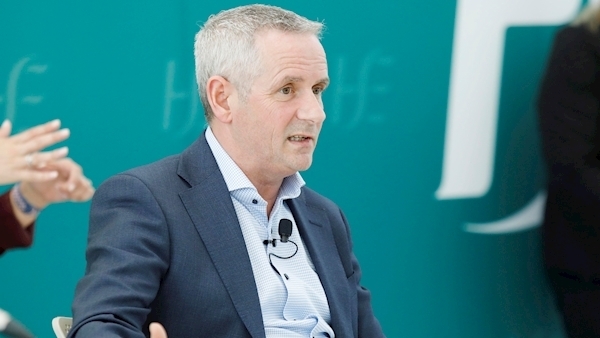
At the executive’s weekly briefing on Covid-19, chief executive Paul Reid said that 73% of such close contacts who have tested positive in the past week were asymptomatic.
It has been estimated that up to 50% of people with the disease may present with no symptoms, thus rendering it difficult to get a handle on the prevalence of the virus.
Mr Reid urged close contacts of confirmed cases of the coronavirus to “come forward” for testing in order to further suppress the virus.
Some 320 such close contacts were tested in recent days, with 12% of those, or 38 cases, having tested positive. The move to proactively test contacts is novel at present, he said, with Ireland one of the first countries in the world to do so.
COVID19 (coronavirus) weekly update from O’Brien Centre for Science, UCD https://t.co/j2BPukIaHt
— HSE Ireland (@HSELive) May 28, 2020
He said that 325,000 people have now been tested in Ireland, with a 2.5% positivity rate.
In terms of turnaround times regarding testing and contact tracing, negative results were now being provided in less than two days.
However, the HSE has failed to meet the turnaround of three days or less, from referral to the end of contact tracing, for 90% of positive cases. That figure is 83% at present.
By way of explanation for that shortfall, Mr Reid said: “We are obviously dealing with much more complex cases now, and they can take longer”. He mentioned the response to cases in mental health facilities by way of example.
At the briefing, the HSE said it “strongly welcomes” the setting up of a review group by Minister for Health Simon Harris to look into how the crisis in long-term residential care (LTRC) settings had been handled, and said the HSE would be “contributing as strongly as it can” to that investigation, and would take on board the “learnings” it would divulge.
With those aged 65 and greater and residential care facilities in general having been disproportionately affected by the crisis to date, Mr Reid moved to quell discontent over the 700 pages of correspondence between nursing homes and the health authorities released earlier this week, which had suggested that the HSE had been slow to respond to the crisis in those settings.
“The actions of the HSE haven’t been driven by any correspondence, but by the absolute commitment of our teams and the desire to do the right thing at the right time,” he said.
Of more than 800 such care facilities which had received HSE intervention over the course of the crisis, just seven are now considered to be “high risk” in terms of the disease, chief operating officer Anne O’Connor said.
Just 20% of personal protective equipment (PPE) currently being made available by the HSE is going to the acute hospital system, she said, with the rest being distributed to the likes of nursing homes.
Meanwhile, more than 400 people who have been deemed suitable for discharge from hospitals at present have seen that process delayed due to concerns over the illness, she said.
No quantification has yet been done on the number of cancer diagnoses that may have been missed in recent months due to the heightened focus on the virus, chief clinical officer Dr Colm Henry said.
He said that just 48 people remain in intensive care with the virus in Irish hospitals at present, down more than 100 from its peak in April.
“Those cases, while enormously difficult for the families concerned, are a reassurance that the virus hasn’t surged to the extent that we feared,” Dr Henry said.
CONNECT WITH US TODAY



Be the first to know the latest news and updates