Group urges 'upgrade' of A&Es to allow isolation of infectious patients
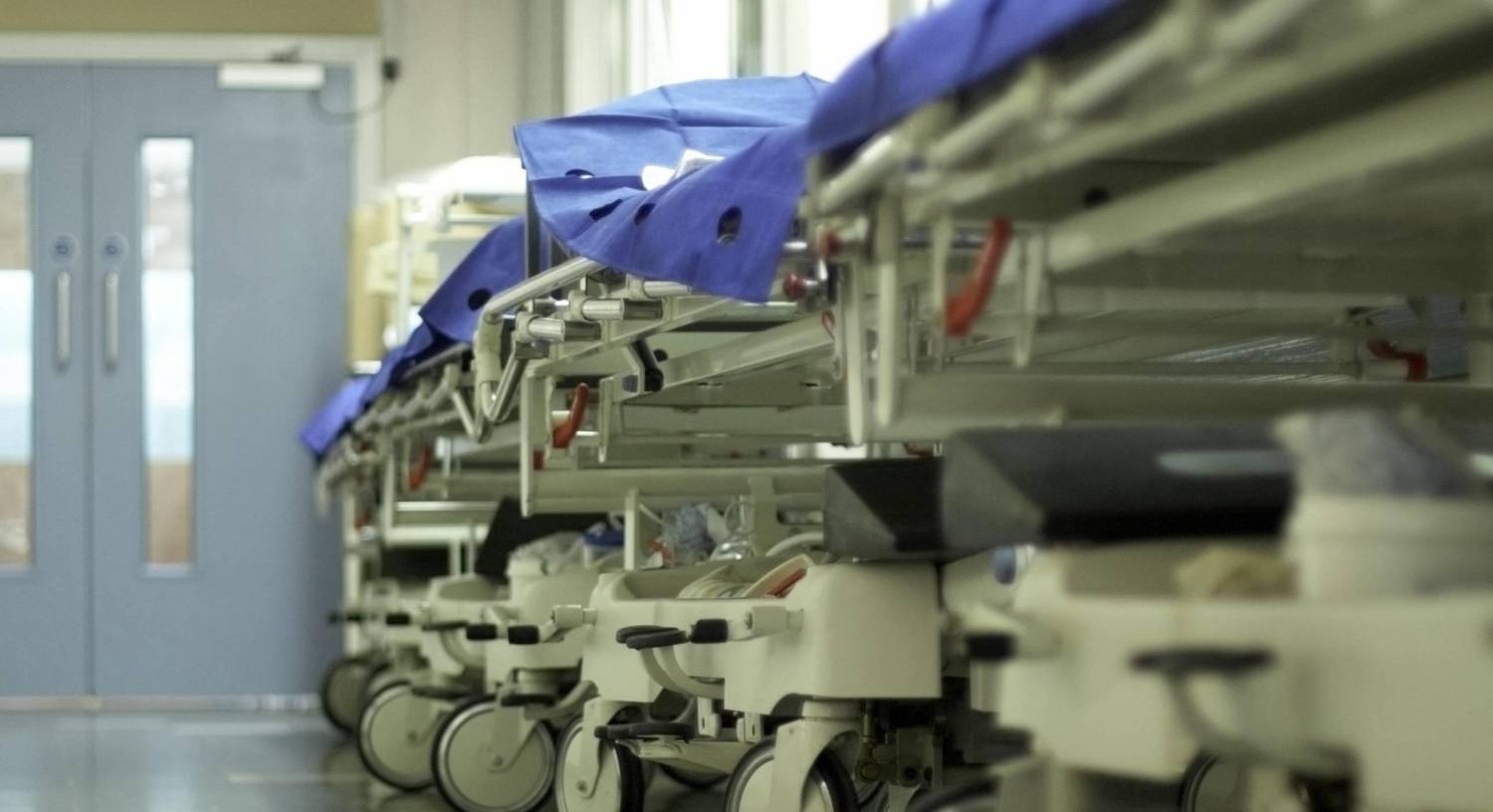
Care in emergency departments (EDs) must now be "upgraded" to ensure social distancing for staff and patients and to allow the segregation of people with infectious disease.
That's according to the Irish Association for Emergency Medicine (IAEM), which said care in EDs must now be "reset" to allow emergency medical care for those that need it in a safe way for patients and staff.
The organisation said that, as Ireland moves from a pandemic to an endemic state in relation to Covid-19, "three important principles" need to be at the heart of what happens in ED care.
Firstly, it stressed that EDs can not be allowed to become reservoirs of hospital or healthcare-acquired infection (nosocomial) for patients.
As a result, ED infrastructure must be upgraded to allow social distancing for staff and patients and allow segregation/ isolation of those with infectious disease.
The IAEM said that staffing in ED settings must be adequate to compensate for the extra time required in certain patient encounters in safely putting on and taking off personal protective equipment (PPE) and that there must be rapid access to the supports necessary so that patients spend as short a time as possible in the ED.
Secondly, the organisation stressed that EDs and hospitals cannot be allowed to become crowded again.
"Unoccupied beds must be always available so that once a decision is made that a patient needs to be admitted to a hospital bed (25%-30% of those who attend ED), this can occur immediately.
"There must be adequate isolation areas on wards so that patients are not kept in the ED simply because of infection control concerns – this is completely unacceptable," said a statement.
Thirdly, the IAEM said that pathways to treat patients outside the hospital setting should be "consolidated and significantly enhanced".
It said that the risk of nosocomial infection will always be greater in the congregated setting of the acute hospital than in more dispersed community settings.
"This is particularly the case in the ED, which sees undifferentiated patients in whom the diagnosis may not be clear. Large numbers of patients must not be expected to gather in ED waiting rooms with long delays to see a clinician," it said.
The organisation stressed that some patients with certain less urgent conditions should be able to avail of other care pathways and that the ED must be the best place to deliver the right care "at the right time to the right patient, rather than the only place available".