Delight for cyclists and joggers as Cork Marina goes car-free for summer
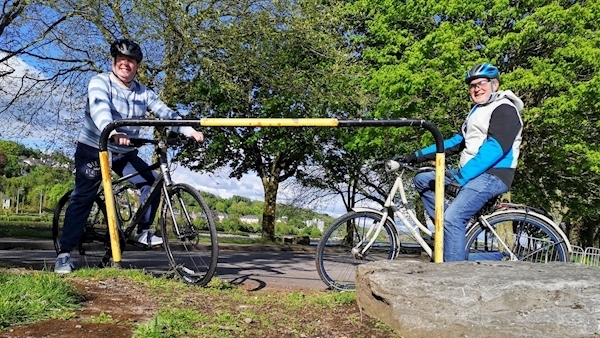
The riverside Marina amenity in Cork is to go car-free this summer.
The news comes amid calls for consultation before any changes are made to the city's streets to facilitate movement and businesses when the Covid-19 restrictions are lifted.
Orla Burke, the chairperson of Pedestrian Cork, said the estimated 15,000 people who live in the city centre know the streets better than anyone.
"They are the people who will most directly be affected by some of the proposals being discussed now," she said.
"Retailers need to be on the side of pedestrians too because if access is an issue, then people won't bother. With thoughtful leadership and engagement, we can overcome the challenges we face."
Her comments came with confirmation that a three-month ban on cars from the Marina could be in place within two weeks.
The measure, which has been proposed at meetings of Cork City Council several times over the years, was trialled successfully across several weekends last year as part of a Healthy Cities initiative.
But now, the measure is set to be introduced seven-days a week for three months, between the Atlantic Pond and Church Avenue in Blackrock.
Cars were banned from the Marina for a number of days in March to facilitate Covid-19 sampling at Pairc Ui Chaoimh. But the measure was lifted when sampling was scaled back.
Fine Gael Cllr Des Cahill said the reintroduction of the car-free zone is a very positive development.
"I assume this will be welcomed by all," he said. "It was trialled last year and it was a success but there seemed to be a hesitance to follow through on the recommendation from council that it be introduced full-time.
"This will facilitate comfortable social distancing for the many people living within 2km of the Marina who exercise there each day and I would hope that this is the first step towards the Marina becoming pedestrianised each weekend after the Covid pandemic, in line with my original proposal."
Ms Burke said news that pedestrianisation of some city streets is on the cards is welcomed, but she said there is a danger that lack of consultation with certain groups could leave the most vulnerable with the least access.
"What’’s happening at the moment is that a lot of decisions have to be taken quickly and what can be missing is the diversity of voices in the room when it comes to policy-making," she said.
"The proposal from the traders on Princes St is a very creative idea but we have to ask ’’how will it affect vulnerable groups?’’ too.
"It would be great to see and hear more voices of those on the ground who know what’’s going on."
Ms Burke, who lives in the South Parish inner-city area, said public parking spaces in some areas will have to be reallocated for cycling and pedestrians, and she also suggested the deactivation of the ’’beg buttons’’ at pedestrian crossings so that pedestrians don't have to touch the button.
She also warned that one-way systems on footpaths are unlikely to work: "People just don't work that way."
The National Council for the Blind of Ireland has also expressed concerns that some of the proposed changes being discussed in cities and towns around the country could potentially cause harm and injury to the almost 55,000 people who are blind and vision-impaired in Ireland.