Contact tracing Q&A – why it’s important and what to expect if you get a call
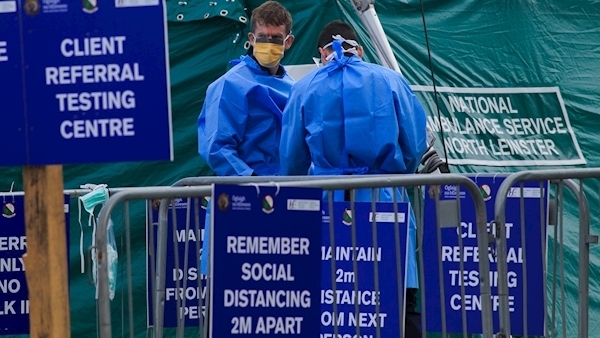
Contact tracing played a crucial role in flattening the Covid-19 curve in China and South Korea. Despite initial challenges in rolling out contact tracing in Ireland there are now 1,500 people manning phones across the country to trace the spread of the virus, as part of the national effort to contain the Covid-19 outbreak.
Contact tracing centres have been set up across the country to follow up with individuals who have tested positive for Covid-19 or are suspected to have the virus.
Staff from a variety of backgrounds, from army, health, revenue and university sectors, have been trained by the HSE to use a Covid-19 tracker system to identify the risk of infection spread in a bid to contain the outbreak.
Here we explain how contact tracing works and why it is important.
Contact tracing is used by health services to identify individuals who have been in close contact with someone infected by a virus, such as Covid-19. It is used to identify who may be at risk of catching the virus and also to prevent its spread.
Contact tracing is one of a numbers of tools being deployed globally to contain the spread of Covid-19.
It works by:
- identifying those in close contact with someone presumed or confirmed to have COVID-19
- identifying to what extent they were in contact with the individual presumed or confirmed to have COVID-19establishing if that person is at risk of catching the virus themselves, and providing them with advice.
Contact tracing centres have been set up across the country, at universities, government offices and statutory agencies, including at the Curragh Army Camp, offices of Health Information and Quality Authority and Revenue Commissioners, and university and college campuses. There are also two virtual contact tracing groups working remotely.
Trained staff will contact individuals with confirmed / presumed COVID-19 by phone to establish who they have been in close contact with and therefore potentially exposed to the virus.
They will then contact anyone considered a close contact to provide advice and guidance to help stop further spread of the virus.
Contact tracers are making calls seven days a week between 8am and 9pm but the centres cannot be contacted directly. If you have missed a call staff will follow up with a further call.
Contact tracers will confirm the person’s name, ask for their address, ask about symptoms, and the name and phone numbers of people they have been in contact with, if relevant.
If the person requires additional support on the call (for example, if English isn’t their first language or they are unwell at the time), they can nominate someone to take the call for them.
It is also possible to nominate someone to take the call at the time of testing.
If a person has tested positive for coronavirus, their information is inputted into a COVID-19 Tracker database.
Contact tracers call individuals with confirmed/presumed to have coronavirus to inform them of their test result and to find out who they have been in contact with.
The information about the person’s contacts is added into the COVID-19 Tracker for other contact tracers to call.
Each person is allocated a COVID-19 Tracker ID on the system to maintain confidentiality.

CONNECT WITH US TODAY



Be the first to know the latest news and updates