Ireland's 'reputation as an environmental laggard is well justified'
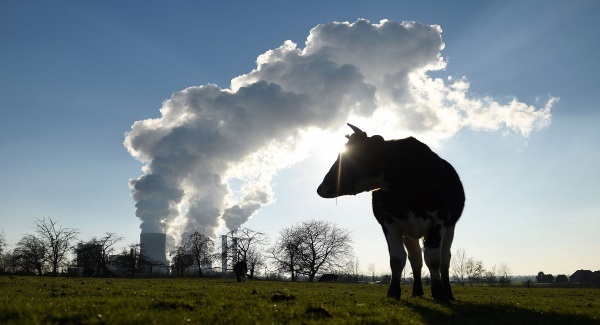
Ireland’s reputation as an environmental laggard is well justified according to this year’s Sustainable Progress Index commissioned by Social Justice Ireland.
The report — Measuring Progress: Sustainable Progress Index 2020 — ranks 15 comparable EU countries based on their delivery of the United Nation’s 17 sustainable development goals.
Ireland was ranked last on the environment index, suggesting we are facing significant challenges in meeting our environmental targets.
In recent years, Ireland has witnessed a fluctuation in greenhouse gas emissions, but continues to be ranked well above the EU average.
The country is also failing to meet the EU commitment as part of its Europe 2020 strategy to reduce greenhouse gas emissions by 20% by 2020 compared to its 1990 levels.
Ireland is ranked 11th of the 15 countries on the economy, but on the social index, it is in the middle of the ranking, in seventh place.
Overall, Ireland is in 10th place out of the 15 countries. Countries at the bottom are Greece, Portugal, Spain, and Italy — while Denmark, Sweden, and the Netherlands are at the top.
Economic and social analyst with Social Justice Ireland, Eamon Murphy, said Ireland is “not great” at providing quality employment and dealing with youth employment.
“Our reputation as an environmental laggard is well justified based on our measurement on how Ireland is performing in relation to the environmental goals that the United Nations has set for us,” he said.
Mr Murphy said the package of 17 goals needs to be looked at as a whole, but that there is no point in improving other areas if people can not live in a sustainable society.
“And if we don’t play our part in tackling the climate-related targets set for us by the various international organisations, there’s not going to be a society to worry about in 50 to 60 years.”
Mr Murphy said Ireland is “pretty miserable” in terms of how we are tackling the loss of biodiversity.
However, it is not just about the climate, and is the result of a long-term focus by various governments over the last few decades.
It was assumed that if the country got the economic aspect right in terms of growing annual economic output, everything else would follow, but that did not happen, he noted.
It did not follow that the jobs would be of high quality, and that the taxes from GDP would ensure that the social goals — relieving poverty and having adequate healthcare and education — would be achieved too.
Mr Murphy said SJI believes the 17 sustainable goals outlined in the report should form the basis of practically every policy aspect of the agreed programme for government.
If your policy is not tackling one of them, what is it doing? Every policy should be tagged with a sustainable development goal to show what it is aimed at.
One of the authors of the report, Dr Catherine Kavanagh from University College Cork, said the goals allow the next government to lead the way towards a new generation of politics shaped by the economic, social, and environmental demands of a truly healthy society.
Ireland does well in terms of quality education, and peace and justice — for which it is ranked second and fifth respectively. The country is also regarded as a relatively safe place to live with reasonably good, transparent, effective, and accountable institutions.
CONNECT WITH US TODAY



Be the first to know the latest news and updates