'Direct, immediate intervention' needed as UHL breaks own record for patients on trolleys
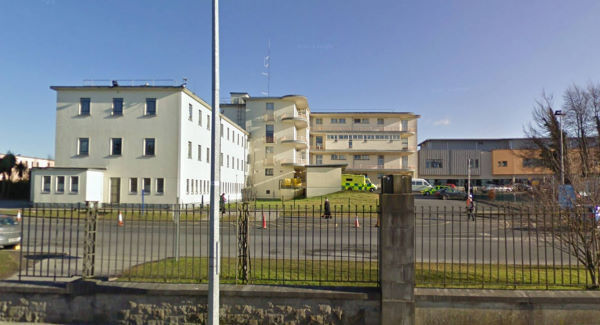
University Hospital Limerick has recorded the highest ever trolley figure in an Irish hospital with 82 patients without beds.
On four occasions since April UHL has had 81 patients waiting and last month the hospital had over 1,400 people without beds.
The Irish Nurses and Midwives Organisation, which published the figures, called for "a direct, immediate intervention" in the hospital by the Minister for Health, Simon Harris.
Mr Harris said the mid-west region had been really badly treated ”by the “reconfiguration agenda” because it did not get the beds that were needed.
“What am I going to do about it? I am going to reverse that trend,” Mr Harris told a meeting of the Oireachtas Health Committee.
A 60-bed ward block was well underway at UHL and 68 additional staff had been hired in the last five weeks, with 48 in the nursing area.
“When it comes to extra staff and extra beds we are genuinely putting those resources in," said Mr Harris.
He had arranged for officials from his department, the HSE and UHL management to meet on Thursday to discuss the situation.
Mr Harris agreed with Labour’s Alan Kelly that the reconfiguration in the mid-west was a “complete and utter disaster".
Mr Kelly said reconfiguration never worked because the resources were never put into it and the mid-west was being discriminated against.
“You do a comparison of UHL on key performance indicators and resources with Beaumont Hospital (Dublin) and you will see it is way behind,” he pointed out.
The issue here is there is an estimated €40m differential between what is needed to bring the mid-west group of hospitals up to a level when it comes to current funding.
“That is about 130 doctors, 200 more health and social care professionals, 150 nurses, 160 more beds and at least 50 to 60 transitional care beds.”
Mr Kelly also pointed out that there was only one public MRI scanner in Limerick.
The scanner was donated by a philanthropist 14 years ago and it kept on breaking down.
He believed that 30 of the 82 people on trolleys would not be waiting for a bed if the hospital had a new scanner but the hospital could not afford a new one.
HSE chief executive, Paul Reid, said the pressures on UHL was “significant” and the authority accepted that a second MRI was needed.
Mr Reid said efforts were being made to ensure that a new MRI was provided as soon as possible.
Chair of the committee, Dr Michael Harty, said the case for a second MRI scanner could not be stated strongly enough.
HSE national director of acute operations, Liam Woods, said it was agreed that Limerick needed a second MRI scanner and the quickest option was to acquire a leased MRI, costing about €1.4m.
Mr Woods said he wanted to have the scanner in place before the end of the year but that would depend on recruitment and funding.