Bird ancestor ruled the Jurassic skies
The skies of the Jurassic Period were rich with insect life and dominated by flying reptiles called pterosaurs.

Bird ancestor ruled the Jurassic skies

The skies of the Jurassic Period were rich with insect life and dominated by flying reptiles called pterosaurs.

Then along came Archaeopteryx. This small dinosaur with special feathers shaped to catch the wind was the first-ever bird and its descendants came to dominate the sky.

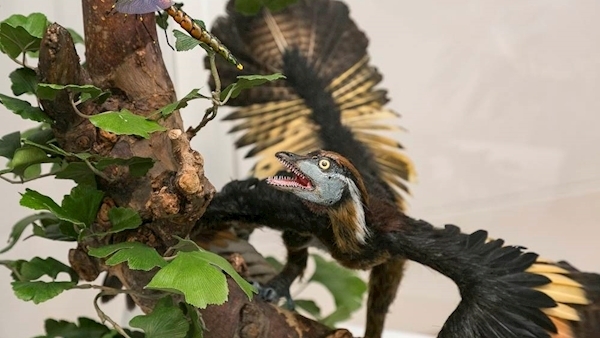
An exhibition currently on at the National Museum of Ireland features a reconstruction of what Archaeopteryx may have looked like.

Mounted on a model Ginkgo tree and chasing a Protolindenia dragonfly, the reconstruction was specially made for Jurassic Skies by artist and model maker, Tony Hitchcock.

The exhibition, which runs until March 24, is being held in collaboration with the National Museum of Wales and was officially launched at the Decorative Arts and History branch in Collins Barracks, Dublin.

The Welsh museum’s director general, David Anderson, who described it as a “collaborative effort by teams from both museums and something we intend to develop in terms of partnership”.

Illustration of the Archaeopteryx

Chairwoman of the Board of the National Museum of Ireland, Catherine Heaney, echoed those sentiments, saying: “Collaboration is a central theme of the National Museum of Ireland’s strategy.

"During a time, when Brexit could potentially put borders and barriers between Ireland and Wales, this initiative of a joint exhibition shows that cultural ties can continue to flourish, regardless”.

Jurassic Skies tells the story of the evolution of flight, offering visitors the opportunity to view a number of rarely seen fossils from the National Museum of Ireland’s collections.

The focal point of the exhibition is the Archaeopteryx, often thought of as the ‘missing-link’ between dinosaurs and birds.

David Anderson, Lynn Scarff, director, National Museum, and Paolo Viscardi at the opening of the exhibition. Picture: Paul Sherwood

Only 12 skeletal specimens have ever been found, all coming from the Bavarian town of Solnhofen in southern Germany.

Archaeopteryx is the earliest fossil that shows adaptations to powered flight, with asymmetrical feathers and development of the areas of the brain associated with flight in modern birds.

Director of the National Museum of Ireland, Lynn Scarff, said: “This exciting exhibition gives audiences an insight into flight and the ‘missing link’ between dinosaurs and birds.

"This is an opportunity to see how the Archaeopteryx looked and took flight.

"With the National Museum of Ireland now open seven days a week, it’s a terrific opportunity – over the next two months – to see a fascinating element of natural history come alive.”

x

More in this section

Lunchtime News

Newsletter

Keep up with stories of the day with our lunchtime news wrap and important breaking news alerts.

Cookie Policy Privacy Policy Brand Safety FAQ Help Contact Us Terms and Conditions

© Examiner Echo Group Limited