Prisoner who claimed human right to privacy was breached after 'modesty screen' removed loses action
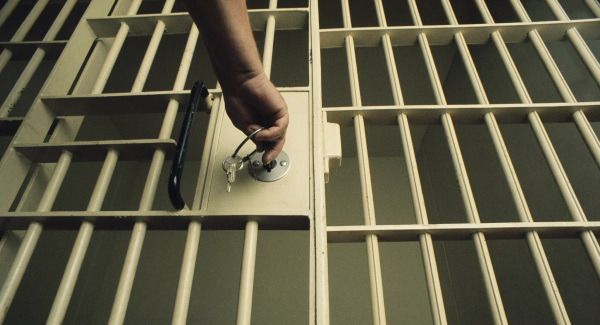
A prisoner has lost a High Court action claiming his human right to privacy was breached because a makeshift "modesty screen" around the toilet and shower in his cell was removed.
The man, who cannot be named, was sentenced to 14 years, with four suspended, for a number of offences by the Central Criminal Court in July, 2013.
Up to 2018, he shared a cell in the Midlands Prison with another man and they put up a duvet cover sheet around the toilet/shower to provide a curtain or screen.

Following a routine search of the cell a year ago, the prison authorities told him in January last year they would be removing it and from all other cells on his wing where such screens had been put up.
The man claimed the refusal to allow the screen caused considerable embarrassment and distress. It made using the toilet or show a humliating and embarrassing experience and amounted to an infringement of the right to dignity and basic rights.
His lawyers wrote to the authorities seeking confirmation the curtain would not be removed. When this was not forthcoming, he brought High Court proceedings against the governor and the Irish Prison Service.
He claimed the refusal to allow the use of the screen amounted to inhuman and degrading treatment contrary to the Constitution and the European Convention on Human Rights (ECHR).
Among the prison governor's arguments against the screen were that concealing an area in a cell from view would place the prisoner at risk.
In the event he collapsed or was being assaulted, an officer would be unable to see him during routine inspections. There were also the issues of suicide, self-harm and the possibility that the duvet cover and string used to hold it up could be used as a ligature.
Shortly after the legal action was initiated, the prison authorities provided him with single cell accommodation.
After three days in his single cell however, he sought the return of his cellmate.
In his action, the prisoner's lawyers argued that allowing a "modesty screen" would not impose a disproportionate demand, was not unreasonable and did not amount to effective micro-managing of the prison governor's functions.
In opposing his case, the prison authorities argued that while he had a right to privacy, it was not absolute.
The removal of such screens from all cells meant there was no arbitrary or discriminatory action against this prisoner, they said.
Prison policies cannot be trumped by an individual prisoner's preferences or demands, they said.
The policy was a fair, reasonable and proportionate balance between privacy and the duty to keep prisoners safe.
It was also argued that the prisoner preferred companionship to privacy.
The prisoner's lawyers said that was because of his vulnerabilities in choosing companionship (the return of his cellmate) and this was in ease of the governor in relation to prison safety. It was not appropriate that this be taken into account in considering this case, it was argued.
Ms Justice Miriam O'Regan refused the application.
In a judgment published this week, she said inhuman or degrading treatment or a breach of of the ECHR "requires a minimum level of severity". Within the context of the circumstances of this complaint, "such level of severity is not engaged", she said.
The authorities' explanation for doing so provided a rational basis for the measures taken which did not fly in the face of reason or fundamental common sense.
CONNECT WITH US TODAY



Be the first to know the latest news and updates