Farmers poll: Two thirds of respondents optimistic about future
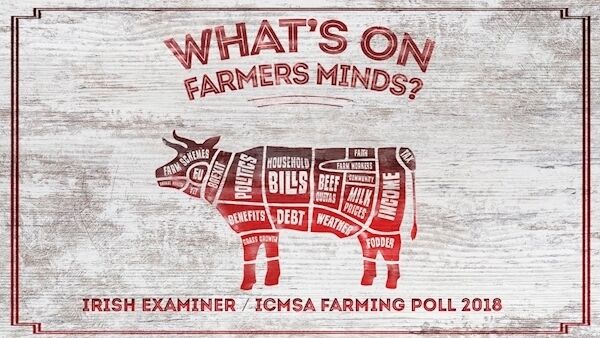
This is the sixth Irish Examiner national opinion poll of farmers and farm-dwelling adults undertaken in association with the Irish Creamery Milk Suppliers Association and conducted by Behaviour and Attitudes.
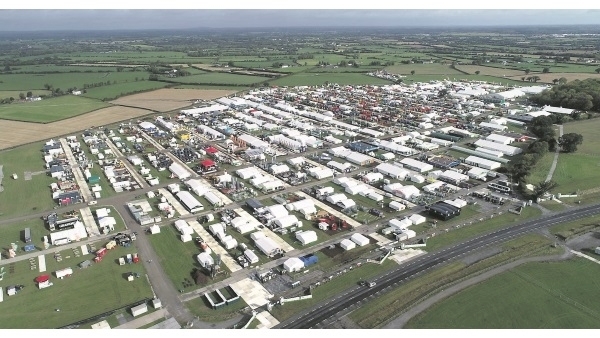
In all, 524 farmers and farm dwellers were interviewed at a series of agricultural shows between August and September this year. Questions were posed at seven agricultural events over that period, with the largest amount of polling conducted at Tullamore Show in August.
Essentially a random sample of attendees at those agricultural events, this year it included 408 men and 116 women and had a slightly higher percentage of younger farmers compared with that of previous years, although it should be noted that 63% of those polled were aged 45 and above. One fifth were aged over 65.
One in five was single and 71% were married, while 2% were widowed and just 1% divorced or separated.
As for family composition, as fitting with the generally older age profile, 71% of respondents did not have a child aged under 15 living at home while 29% did.
According to the poll, 77% worked as a farmer, similar to figures over recent years, while 8% of respondents said they were a farm spouse and also worked on the farm. That is the lowest percentage of people fitting that description in the poll in the past five years.
Another 7% of respondents said they were a farm spouse but did not work on the farm, the highest such figure over the past five years.
Another 7% said they were a farm worker or labourer.
When asked as to the acreage they worked, 44% said they have 120 acres or more.
The average farm size was 131 acres, higher than in any previous year of the poll and higher than the national average.
In parallel, the average number of livestock in 2018 was given as 99 by those who answered the question, also the highest such figure across all the polls we have conducted.
Those in cattle/livestock are more likely to work smaller land holdings while those in dairy tend to have larger farms.
Dairy farming was also more likely to be a feature among those aged under 55, with older farmers more likely to be involved in cattle/livestock.
Livestock/cattle farming is still the most prevalent type of farming, with 74% saying they had an involvement in it, including 56% who said it was their main farming activity, although the percentage here has declined over recent years.
Dairy, which has been the most lucrative sector, continues to be a steady presence, with one third of respondents saying it is their main activity and another 4% saying they also have an involvement in dairy.
Around 13% said they were involved in tillage and 5% were involved in other sectors such as poultry and horticulture.
When it comes to off-farm income the results this year are almost identical to those for the past two years, with 52% saying they have no off-farm income, 30% stating the farmer also has an off-farm job and 21% stating the spouse works off the farm.
Livestock farmers (39%) are more likely to have an off-farm job compared with those working in other agricultural sectors, although one-in-five of those working in dairy farming, usually perceived as a full-time job, said they had a second job. Younger farmers and those in middle-age were also much more likely to work off-farm than older farmers.
When it came to levels of optimism and pessimism, two-thirds said they were positive about the future of farming, including 27% who strongly agreed with that sentiment — up 7% compared to the corresponding figure last year.
Among those questioned, 22% said they were pessimistic about the future of farming.
As for their own agricultural sectors, the results were similar — 24% strongly agreed they felt optimistic (up 5% on last year’s corresponding figure) while there was a contraction in the number of respondents who felt slightly optimistic about their own farming sector.
Those in dairy were most optimistic, at 74%, although this was down from 80% last year, followed by those in tillage, where 71% said they were optimistic, up from 60% last year.
There was a similar growth in overall optimism levels among tillage farmers about the agricultural sector as a whole, and a similar fall in optimism levels in that regard among dairy farmers.
Younger farmers were most likely to be optimistic about the future of farming and their own sector, followed by those in middle-age, with older farmers having the highest level of pessimism.


CONNECT WITH US TODAY



Be the first to know the latest news and updates