‘Broken’ health care for patients with dementia
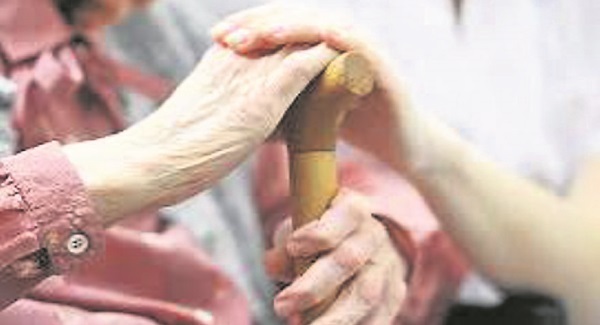
The granting of court orders to prevent two patients with dementia from leaving a hospital is indicative of a “broken healthcare system” for people with dementia, campaigners say.

‘Broken’ health care for patients with dementia

By Eoin English and Aodhán Ó Faoláin

The granting of court orders to prevent two patients with dementia from leaving a hospital is indicative of a “broken healthcare system” for people with dementia, campaigners say.

The Alzheimer Society of Ireland described as “deeply worrying” a scenario whereby the State obtains permission to detain people living with dementia in an environment without their control or consent.

It also raised concerns about how such patients might be prevented from leaving hospitals.

“Will they be physically or chemically restrained?” it asked.

It was reacting to separate and unrelated cases in which a hospital secured High Court orders preventing two of its patients with severe dementia from leaving the facility.

The hospital sought the orders over concerns that a woman in her late 80s and a man in his late 70s, who have severe cognitive difficulties arising out of their dementia, may try and leave.

The hospital, in a case where none of the parties can be identified for legal reasons, had serious concerns about the health and safety of both patients if they were to leave and asked for orders allowing it to keep them as in-patients.

Medical experts who have treated both patients said it is in their best interests that they are not allowed to leave the hospital where they are receiving the care and support they require.

David Leahy, counsel for the hospital, told Mr Justice Michael Hanna that the applications arose following a recent Court of Appeal judgment which found there is no common law power permitting a hospital preventing patients with conditions like dementia from leaving if they so desire.

He said the orders, which are among the first of their kind to be sought from the courts, were being applied for in the best interests of the patients’ well-being.

In the case of the woman, she was admitted to the hospital in recent days and had no insight into her severe difficulties and has severe paranoia.

Mr Leahy said that since her admission, she had been disruptive, thought the staff were gangsters, and had set off a fire alarm in the hospital, threatening to leave and return home.

She insisted she can still drive despite not having motor tax or insurance. When her car was immobilised she had gone and bought another car.

He said the social work team that had been dealing with her was very concerned about her financial affairs and an application to make her a ward of court was pending.

In relation to the male patient, the court heard he has severe cognitive communication difficulties, is highly agitated, and his family have been unable to cope with him.

He had recently injured himself in a fall and had a tendency to wander and again there were fears he could leave the hospital.

Mr Justice Hanna made orders in both cases allowing the hospital to prevent the patients from leaving.

Both applications were supported by the patients’ next of kin.

The judge, who in the case of each of the patients appointed a ‘guardian ad litem’ to look after their interest during the proceedings, adjourned the actions to a date in September.

But Alzheimer Society of Ireland said it has been campaigning for the government to fund more community supports and services for people with dementia and their family carers “as a matter of urgency” in order to prevent crises situations such as these.

Its head of advocacy and public affairs, Tina Leonard said a culture change is now required in how people with dementia are treated, perceived and reported on.

She said the families of the people in these cases and the hospital staff were also victims of the “inadequate provision from the healthcare system that is in place to support people living with dementia and those caring for them”.

“There is extensive evidence to indicate that the behaviours described in these cases can be initiated by change in the environment of the person with dementia, a change in caregiving staff or a frightening experience.”

x

More in this section

Lunchtime News

Newsletter

Keep up with stories of the day with our lunchtime news wrap and important breaking news alerts.

Cookie Policy Privacy Policy Brand Safety FAQ Help Contact Us Terms and Conditions

© Examiner Echo Group Limited