Taoiseach was entitled to campaign for repeal, court told
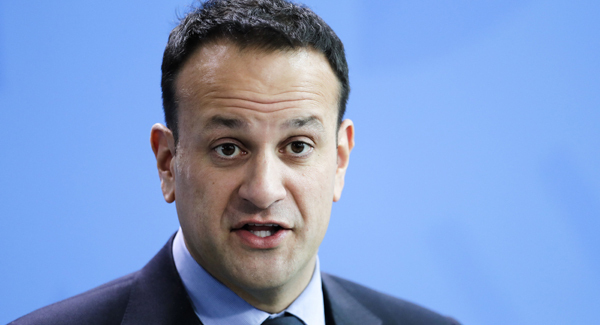
It is “untenable” to argue that Taoiseach Leo Varadkar and Minister for Health Simon Harris breached the Constitution when they campaigned for repeal of the Eighth amendment, lawyers for the State have told the High Court.
Charles Byrne’s argument that campaigning for repeal was an abrogation of the government’s responsibilities to the unborn under the Constitution was “untenable” and the product of “intellectual confusion”, Frank Callanan SC, for the State, said.
If Mr Byrne was correct, that would mean government members could not promote any referendum affecting the rights of the unborn but government members who opposed any such referendum could promote its defeat, he said.
That would mean “multiple unintended effects and consequences” in a democratic state, counsel told the president of the High Court, Mr Justice Peter Kelly.
Mr Callanan also rejected claims by Mr Byrne that certain statements by the Taoiseach and Minster for Health were inaccurate and had misled, misinformed and “duped” voters.
There is “neither authority nor logic to the proposition that Ministers can be held to account on matters of “legal accuracy”, counsel said.
The courts should also respect the intelligence of the voter, he added.
Such arguments as advanced by Mr Byrne “lose sight of the respect citizens of the State owe to each other”.
Mr Byrne was professing an intent to “perfect” the referendum process based on arguments that in fact curtailed and impaired that same process, he said.
Counsel was beginning his arguments opposing an application by Mr Byrne, a piano teacher and musician, of College Rose, Drogheda, for leave to bring a petition challenging the result of the May 25th referendum.
A separate application by Joanna Jordan, a homemaker, from Upper Glenageary Road, Dun Laoghaire, will be heard after Mr Byrne’s application concludes.
The Referendum Act requires, before any petition can be brought, an intended petitioner must show prima facie evidence of matters likely to "materially" affect the referendum outcome.
On May 25th, 1,429,981 people voted to repeal the Eighth amendment. 723,632 voted against.
Mr Byrne contends he has evidence of irregularities in the conduct of the referendum such as entitled him to leave to bring a petition.
Outlining the State’s opposition to the application today, Mr Callanan said Mr Byrne had not met the legal criteria which would entitle him to be permitted bring a petition.
Mr Byrne’s claims concerning irregularities were based on “assertions” and Mr Byrne had not demonstrated prima facie evidence of conduct or mistake such as to have a material effect on the referendum as a whole, he submitted.
The hearing continues.

CONNECT WITH US TODAY



Be the first to know the latest news and updates