IMF: Ireland making 'good progress'
The IMF has said Ireland is making "good progress in overcoming the worst economic crisis in its recent history".
“The new Government, through its Programme for Government and its decisive approach to banking sector reforms, has taken full ownership of the goals and key elements of the EU-IMF-supported programme," the organisation said in a statement.
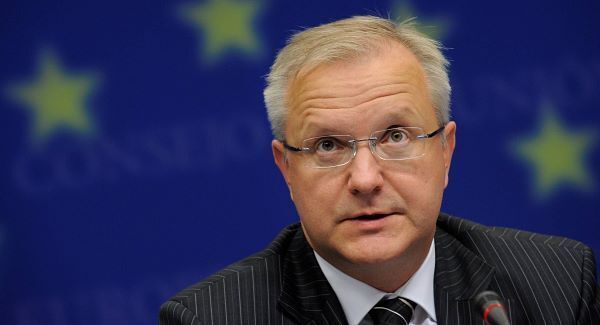
European Commissioner for Monetary Affairs Olli Rehn agreed with that assessment.
The IMF said the bank reform plan announced on March 31 is a major step to bringing the sector back to health.
The Government will also remove competition restrictions in the legal, medical and pharmacy professions to further reduce costs.
The IMF will return to Dublin to check progress in July.
Taoiseach Enda Kenny said Government actions on the banks, employment and spending would help provide the confidence needed for recovery.
“The engine of our economic recovery has not been working the way that it should,” he said.
“And the reason that the Government is now taking action across a range of areas is actually to get that engine working before you can give the fuel of confidence for people to get through this frustrating period of austerity and economic difficulties.”
:: Minimum wage is restored to €8.65 in exchange for 50% cut in employers’ PRSI;
:: Ireland is on track for its commitments for the first quarter of 2011;
:: The IMF, EC and ECB support plans for the Government‘s jobs initiative as long as it is revenue-neutral;
:: A second phase of loan transfers out of troubled banks known as Nama II, and dealing with borrowings under €20m, is cancelled;
:: The IMF and Europe wants banks fully recapitalised by July 31.
Mr Noonan said the IMF was "very complimentary" on decisive actions the Government has taken to finalise the bill for rescuing bank - €70bn.
“The negotiators have to revert back to their principals so the final signing off will be May 15-16,” he said.
The minister said the IMF, Commission and ECB agreed that Ireland is fully in line with the bail-out programme at the end of the first quarter.
“That is very satisfactory from our point of view,” Mr Noonan said.
CONNECT WITH US TODAY



Be the first to know the latest news and updates