Union to decide on public sector deal on April 8
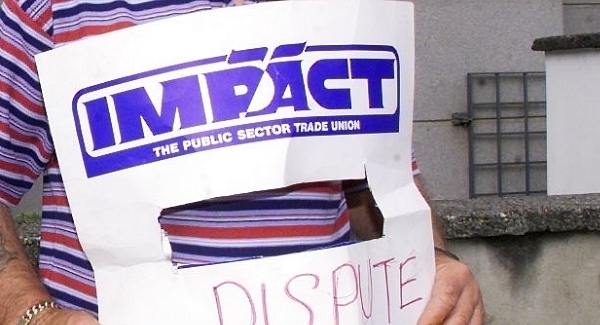
Trade union Impact has said it would decide whether to recommend the public sector pay deal on April 8, it has emerged.
In a deal struck in the early hours of the morning, public sector unions and management reached agreement on pay and reform after two weeks of intense negotiations.
The agreement, which has yet to be presented to union members in ballots, does not contain guarantees on reversing pay cuts that were put in place in the Budget last December.
Impact set out the proposals, which include:
* Government commitments of no further pay cuts if extensive reforms in work practices and conditions are implemented;
* A mechanism for the reversal of existing pay cuts over time, with a review in spring 2011 and, if sufficient savings have been achieved, the reversal of cuts will begin;
* Priority given to public servants earning €35,000 or less and similar reviews take place in 2012, 2013 and 2014;
* Plans for pension protections and a guarantee of no compulsory redundancies.
Peter McLoone, of the Irish Congress of Trade Unions’ public service committee, said there would have to be extensive negotiations between unions and members about how to deal with the challenges the change agenda presents.
He said the proposals could restore the trust, confidence and morale that has been damaged in recent months.
“The outcome presents everybody in the public service with the real possibility that we can find an alternative to the industrial conflict that has dominated the landscape in recent months,” said Mr McLoone.
“And through the proposals that emerge from Kieran Mulvey, find an alternative to deal with the many, many challenges that we as a society face in public service provision over the coming years.”
Taoiseach Brian Cowen welcomed the positive conclusion to talks, which were brokered by the Labour Relations Commission.
He said: “This agreement will provide confidence and stability in the public service to meet both current and future challenges and I hope that there will be a positive outcome to the ratification process.
“The negotiations were complex and both sides made very significant efforts to develop the terms of this agreement.
“It is my view that implementation of the measures in question would result in greater efficiency, better services for the citizen and more satisfactory working conditions for public servants.”
Mr Cowen said a shared vision for transformation in all sectors of the public service, and a path on how it is to be achieved, have been agreed.
“This agreement will ensure that together we can create a public service of which we can be proud and a public service which we can afford,” he continued.
“The agreement covers a range of important transformation issues across all of the main sectors of the public service including health, education, local government, justice, defence, the civil service and state agencies.”
Kieran Mulvey, of the Labour Relations Commission (LRC), said the breakthrough was revolutionary and called on public service workers to suspend their work to rule.
“I have requested the unions, at the end of talks last night, to cease the industrial action,” he said.
“I hope in light of what we have achieved, a more positive approach will be taken as to how we manage pay change and transformation of the public service.”
Eamon Gilmore, Labour Party leader, said the draft agreement could significantly reform the public sector and lead to much-improved services.
He welcomed reports that state employees earning less than €35,000 would be given priority for the reversal of pay cuts.
“The climate for agreement has not been helped by the continued demonisation by some of decent hard-working public servants, many of whom were on low pay, even before the cuts of the past year,” the Labour leader said.
“Despite this I hope that the draft agreement will now be considered by trade union members in a calm and rational way, taking into consideration all factors, including the need for public sector reform, the state of the national finances, the level of unemployment and conditions in the private sector.”
Business leaders from Chambers Ireland welcomed any move to contribute to enhancing competitiveness.
Chief executive Ian Talbot said: “However, all sides must remain sensitive of the fact that any agreement must be based on prevailing circumstances. Assurances of no pay cuts through to 2014 must be based on economic realities through to 2014.”
Impact General secretary Peter McLoone said the proposals presented an opportunity to bring stability to public services.
“Since last February, our public services have been characterised by uncertainty, despondency, poor morale and disruption,” Mr McLoone said.
“We know that the economic climate will continue to be extremely difficult, but I believe these proposals hold out the hope that our public services can be better managed and delivered, and that public servants will see some certainty over their pay, jobs and pensions, with the prospect of restoring pay cuts over time as reforms deliver real verified savings.”
Thousands of lower-grade public sector workers have maintained a work-to-rule for several weeks, with unions threatening an escalation of action – including work stoppages – over controversial Budget pay cuts.
Staff were also angered after payments to senior management were reinstated.
The impact of the industrial action was felt most by the public at the Passport Office, where 50,000 applications are waiting to be processed.