Ministerial veto row heightens Stormont divisions
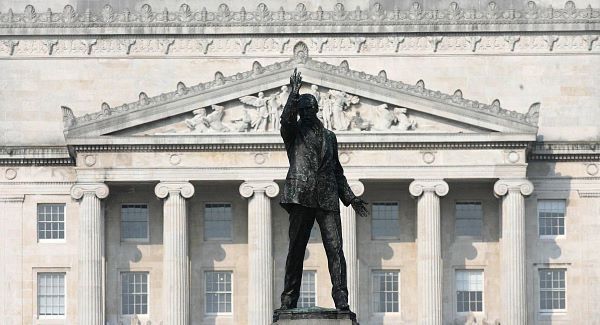
Divisions deepened today at the heart of the North's government as Sinn Féin and the Democratic Unionists clashed over the selection of a future Minister of Justice.
Deputy First Minister Martin McGuinness dismissed claims by First Minister Peter Robinson that republicans had signed up to a voting system which critics claimed could hand unionists a permanent veto over who held the sensitive job.
The public clash between the political leaders comes as they are spearheading private talks between their parties aimed at ending the deadlock that has prevented the Executive meeting for four months.
The latest row centres on the wording of a letter sent to a Stormont committee plotting the future creation of a new justice ministry.
The letter confirms the selection process will step outside the normal power-sharing system for allocating ministries in line with party strength and will instead require a cross-community vote of Assembly members.
The letter said the arrangement would be required “at all times”, but Mr McGuinness today rejected claims this meant the arrangement was permanent.
Critics in the nationalist SDLP said the voting system could allow unionists to prevent a nationalist ever taking the job.
Mr McGuinness said claims by the DUP that the arrangement would be permanent was: “Absolutely wrong. Totally untrue.”
Mr McGuinness said: “I listened with amusement to what Peter (Robinson) said yesterday.
“Our position is crystal clear. The DUP are under no illusions whatsoever about where Sinn Féin is coming from on this issue.
“Our position is crystal clear and we have made it crystal clear during the course of these discussions that we are involved in.
“Now those discussions will continue and from our perspective it will continue for the purposes of achieving a successful outcome.”
The Deputy First Minister added: “The reality is that the particular context within which that phrase was used was explained in very categoric terms to Peter Robinson and to his entire negotiating team.
“They are under no illusions whatsoever about where Sinn Fein is coming from.”
The DUP and Sinn Fein are divided over a series of issues, but the most obvious split has been over republican demands for the transfer of policing and justice powers in line with the 2006 St Andrews Agreement.
The DUP insists the agreement did not tie unionists to a deadline – though the deal set May 2007 as a devolution “target date”.
Prime Minister Gordon Brown has called on the parties to agree a date for devolution, but the DUP has rejected his demand.
Last night Mr Robinson reacted to the row over the wording of the letter sent to the committee and insisted there could only be one interpretation of its contents and said a justice minister would always require cross-community support.
“I hope it is just an error on the part of the committee members and they will recognise that it isn’t open to any other interpretation.
“All time means for all time.”
A Sinn Féin spokesman, however, said the letter merely noted that any justice minister would be elected “at all times from the Assembly” to rule out suggestions that a high profile public figure from outside the ranks of the 108 Assembly members would be brought in to fill the ministry.
The latest dispute yesterday saw the Assembly and Executive Review Committee adjourn its work on proposals for establishing a ministry.
It was asked to compile a report to be implemented in the event of the two main parties agreeing to the devolution of policing and justice powers from Westminster to Stormont.
The parties on the committee are divided on what to call the new ministry, with unionists favouring the label Home Affairs, while nationalists say it smacks of the old Stormont regime, favouring instead the title of Minister for Policing and Justice.
CONNECT WITH US TODAY



Be the first to know the latest news and updates