Rowers to recreate Columba's journey
An international team of rowers was today beginning an epic sea voyage recreating the route taken by Saint Columba in the sixth century.
The crossing, from Ireland to the island of Iona, off the west coast of Scotland, will commemorate the 1440th anniversary of the journey which brought Christianity to Scotland in the year 563.
The team of rowers, from Ireland, Scotland and the US, were beginning their trip from Ballycastle in Co Antrim today in a 37ft canvas skin curragh named Colmcille.
They will initially travel across the Irish Sea to Southend on Mull of Kintyre before taking just under a week to reach Iona via the Isle of Gigha, Loch Crinan and Easdale on the Isle of Seil.
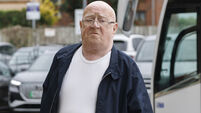
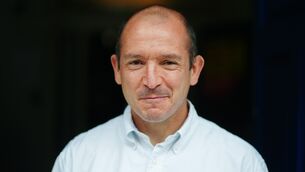
Robert Gould, 61, from Erskine, Renfrewshire, is among the team which totals 16 rowers and which is being led by Scots-born Donald McCallum who now lives in the States.
Mr Gould, a leading Scottish artist, is in remission from cancer and will use the voyage to raise money for the Cancer Research Fund as well as drawing inspiration for his paintings.
He has little experience of sailing but has been training for the trip at home using a chest expander to form a makeshift rowing machine.
And the group recently met in Northern Ireland where they practised rowing together on the Colmcille.
The boat, which is open to the elements, also has two sails and holds a maximum of 13 rowers.
Mr Gould said: “This is a bit of a challenge but I am looking forward to it.
“Weather permitting we will leave from Ballycastle on Monday and head for the Mull of Kintyre, which is a journey of about 20 miles.
“We’ll then head towards Gigha before going to Crinan and Easdale and then on to Iona.
“The project is a re-enactment of the journey taken by St Columba in June 563, and as well as rowing we will be taking part in community services with local ministers in the places we stay overnight.”
The men also plan to sing ancient hymns during their journey and will be dressed in monk-like woollen robes when they arrive at their various destinations.
On board the curragh they will have a tent and a stove in case of emergencies, some basic dried food while each of the rowers will have a barrel to store their personal belongings.
Mr Gould, as father-of-two, said: “The idea was to get as close to the original journey as possible.”
Barely three miles long, the sacred island of Iona has had an influence out of all proportion to its size in the establishment of Christianity in Scotland, England and throughout mainland Europe.
Its place in history was secured by St Columba – or Colmcille as he is known in Gaelic – an Irishman who converted Scotland to Christianity in the sixth century.
He and 12 other men sailed from Ireland to Iona to found a religious community.
St Columba, who died in 597, established a monastery on the small island which lies off the west coast of Mull.
He then set about converting most of pagan Scotland and northern England to the Christian faith.
Iona’s fame as a missionary centre and outstanding place of learning spread throughout Europe turning it into a place of pilgrimage.
It also became a sacred isle when kings of Scotland, Ireland and Norway were buried there.
The rowers plan to arrive in Southend this evening, Gigha on June 11, Crinan on June 13, Easdale on June 14 and Iona on June 15.
After a few days on Iona, a number of the rowers – including several men who will not make the outward journey – will then return to Ireland via Jura, Islay and Colonsay.

CONNECT WITH US TODAY



Be the first to know the latest news and updates