Peace talks were 'exhausting': Ahern
Recent talks aimed at resolving difficulties in the Northern Ireland peace process may have been more intense than the Good Friday Agreement negotiations five years ago, Taoiseach Bertie Ahern said today.
He said everybody involved in the process had been putting in days of up to 20 hours in order to get the institutions up and running again.

He said that although talks had continued over the weekend there had been no further breakthrough.
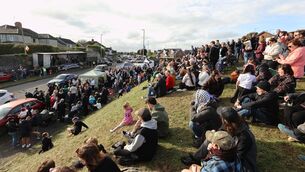
Speaking at the commemoration of the Easter 1916 Rising, he said: “We have given this 12 hard days up until Thursday evening.
“It was 12 days which was as intense a negotiations as I think we have all been through – may be even more intense than the Good Friday Agreement because there were days of 18 to 20 hours by everybody.
“I think it is fair to say that all of the main people involved, which is about 30 people, were absolutely exhausted.”
Mr Ahern said he did not think it was impossible to find a resolution to the problem.
“If one group changed their position ... that means everybody also has to move in other ways,” he said.
“This is not just about one group of people making one move and then everybody else sits down and says that is great, we will do nothing.
“It is about one group making a move – a significant move for them – and everybody else moving on their agenda very quickly.
“If that is not possible then I think we have a big problem.”
In his speech at the commemoration in Arbour Hill, Dublin, he warned that there could be no “cherry picking” in honouring acts of completion required for the Agreement.
“The Agreement is a totality and all parties have a collective responsibility to implement it,” he said.
Mr Ahern said that five years after the Agreement, the transition to exclusively peaceful and democratic means needed to be brought to a conclusion.
“In a context where the full delivery of the Agreement is on offer, including participation in Government, democratic politics and continued paramilitarism simply do not mix.”
He said that the recent joint proposals prepared by the Irish and British governments provided a comprehensive framework for acts of completion by all sides that would fully implement outstanding aspects of the Agreement.
He said: “The impact on all the key areas – policing, criminal justice, security normalisation and the entrenchment of human rights and equality at the heart of the new dispensation in Northern Ireland.
“Prime Minister Blair and I remain ready to publish these proposals once we are satisfied that the responses to them will contain sufficient clarity to restore the necessary confidence in the process.
“Unless our proposals, together with the responses they engender, produce the right confidence building impact, there is little point in publishing them.”
He added: “There were many positive aspects to the proposed IRA statement that was handed to the Government last Sunday.
“Both governments have acknowledged this. The proposed statement represents obvious progress and the clear desire to make the peace process work.”
However without sufficient clarity they would only be storing up difficulties for the future, and this was the reason they had asked for clarification on a number of issues.
Mr Ahern also warned that the “stop-start approach” to the operation of the Agreement must be brought to an end.
“The loyalist paramilitary must also make their contribution to acts of completion. A definitive end to IRA activities and capability also have clear implications for them.”
He responded to a newspaper report that the main political parties in Northern Ireland would have been given the automatic right to seats in the Seanad as part of the blueprint drawn up by the Irish and British governments.
He said information on reform of the Seanad was already in the public domain.
“We will try and combine the various reports for reform of the Seanad which would include looking at the issue of representation for Northern Ireland,” he added.