Review of electoral areas in Cork; Same number of councillors after boundary adjustment
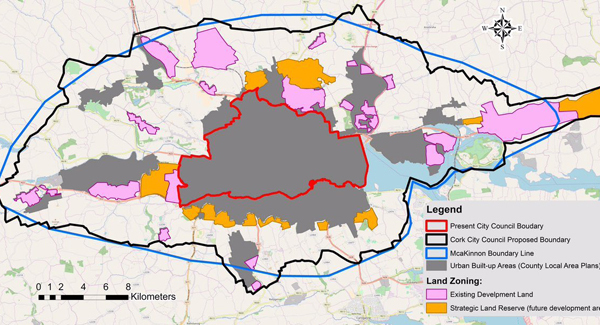
A review of the local electoral areas in Cork city and county has been announced as the Government prepares legislation to give effect to the first extension of the city’s boundary in more than 50-years.

Review of electoral areas in Cork; Same number of councillors after boundary adjustment

However, there will be no change to the number of councillors in both the city and county councils ahead of the 2019 local elections.

Despite the city’s population set to increase by up to 100,000, Cork City Council will retain 31 seats. Cork County Council will still have 55 seats.

Fine Gael city councillor John Buttimer expressed surprise that the review committees have been told to assume no change in the total membership of each local authority.

“There is a significant population coming into the city following the boundary extension and this review seems to be moving from a local to a more national boundary, or Dáil-type constituency situation, for local representation,” he said.

“This, to my mind, doesn’t reflect local democracy and I will be seeking clarification on it.”

However, Independent county councillor Marcia D’Alton said she and her colleagues in her 10-seat area represent 720 people per councillor — almost twice the recommended ratio.

“We are run off our feet,” she said. “And in parts of West Cork, councillors have to drive huge distances within their electoral areas. I think the minister is trying to redress that imbalance and spread the workload.”

News of the review was announced late on Friday by John Paul Phelan, minister state for Local Government and Electoral Reform.

He has appointed the existing Local Electoral Area Boundary Committees to review and make recommendations on the new local electoral areas in both the city and county by mid-June.

He said the review will be conducted on the basis of the revised boundary between the city and county, as proposed by the Cork Implementation Oversight Group and agreed by Government late last year.

The proposed extension will see Ballincollig, Blarney, Glanmire, and Cork Airport becoming part of the city. The rates-rich areas of Little Island and Carrigtwohill, east of Dunkettle, which the Mackinnon review said should become part of the city, will remain in the county under the terms of the compromise deal.

Cork county is currently divided into eight electoral areas with 55 councillors.

The terms of reference for the committee reviewing the county say a “distinct urban-focused local electoral area” should be designated for each town with a population of around 15,000, with not less than five and a maximum of seven councillors assigned, except in compelling circumstances where a three or four-seat local electoral area may be recommended.

Other local electoral areas should be designed around urban centres taking into account local and community identities and linkages as well as natural boundaries.

The current Cork city area is divided into six electoral areas, with 31 councillors.

The terms of reference for the city state that its new local electoral areas should be designed, as far as possible, around urban villages or have a neighbourhood focal point.

x

More in this section

Lunchtime News

Newsletter

Get a lunch briefing straight to your inbox at noon daily. Also be the first to know with our occasional Breaking News emails.

Cookie Policy Privacy Policy Brand Safety FAQ Help Contact Us Terms and Conditions

© Examiner Echo Group Limited