Surge in obese homeless children referrals
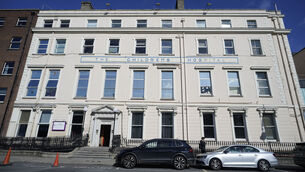
Last month five children who were homeless for three to four years were referred to the W82Go! Weight Management Service at Temple Street Children’s University Hospital in Dublin.
Concern about the noticeable increase in the rate of homeless children being referred to the service was highlighted at yesterday’s meeting of the Oireachtas Committee on Children and Youth Affairs.
Clinical specialist physiotherapist in paediatrics, Nicola Sheridan, said homelessness had become more common. “As such, we are seeing first-hand the effects of inequality on health outcomes,” she said.
Ms Sheridan said the homeless children had parents who were working but had no access to cooking facilities. “The children develop habits, such as hiding food because they do not feel secure. They are under a lot of stress,” she told the committee.
Ms Sheridan explained that the average nine-year-old child in Ireland weights 34kg (5st 5lb) but the average nine-year-old attending the clinic is 55kg (8st 9lb).
The W82Go! service was established 14 years ago in response to the increasing health problems associated with childhood obesity and has treated more than 1,500 children. However, children with clinical obesity are now having to wait two and a half years to see the treatment team, a situation they describe as “unacceptable”.
Almost half (49%) of the children treated last year were aged under 10 years; 29% were aged between 11 and 13 years and 22% were 14 years or older.
Ms Sheridan said providing services to children and adolescents suffering from a range of complications was “challenging”.
Four out of 10 would already have risk factors for heart disease and a similar number would have significant and severe mental health problems.
Almost one in five (17%) children would meet the criteria for having metabolic syndrome — a cluster of conditions occurring together that increase the risk of heart disease, stroke and diabetes.
Three quarters (75%) of the children would have experienced bullying, with 11% experiencing severe bullying.
“Unfortunately, a number of the children seen have a history of self-harm or suicidal intent,” said Ms Sheridan.
About 40% of the children referred are from deprived and, sometimes, severely deprived areas. Some of the children treated said they were afraid to go out and play because there had been a shooting on the road where they lived or because they were shouted at or bullied.
“Where I grew up we went out and played all the time. But when we ask the children if they play hopscotch, they ask: ‘What’s that?’ That’s sad,” said Ms Sheridan.
Labour’s Sean Sherlock asked what could be done to make children go out and play. Ms Sheridan said there must be safe places provided for children to play in and schools had to encourage lots of physical activity.
The services clinical lead, Dr Grace O’Malley, said children must be allowed to run around at break time and schools should also encourage children to drink water. Dr O’Malley said she had met children who were aghast when told they should drink more water — they thought it came from the toilet.
CONNECT WITH US TODAY



Be the first to know the latest news and updates