NUIG-developed app to limit Parkinson’s sufferers’ falls
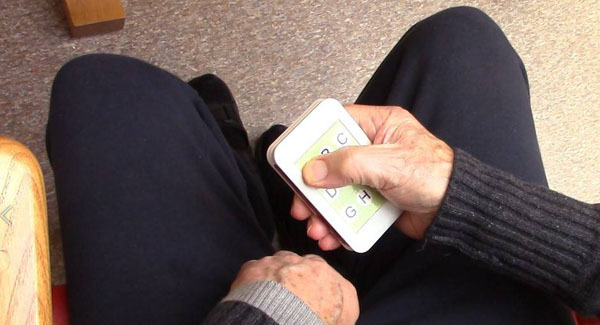
Researchers are continuing usability tests with Parkinson’s patients on the cueStim device.
It is worn on the waist and will prevent or relieve ‘freezing of gait’, where people with the condition feel as if their feet are stuck or glued to the floor. This symptom prevents them from moving forward and is a common cause of falls.
“The severity of freezing of gait depends on the stage of the disease and it can have a very severe impact on quality of life, affecting people with Parkinson’s ability to walk for extended periods of time,” said Leo Quinlan, physiology lecturer at NUI Galway’s school of medicine.
He and professor of electronic engineering Gearóid Ó Laighin are principal investigators on the project in the human movement laboratory at NUI Galway’s Cúram Centre for Research in Medical Devices.
The user wears CueStim on their waist, perhaps with a belt, and it is connected to small electrodes on the skin of the thigh.
Rather than sending a signal to stimulate muscle movement, the device uses the skin as a pathway to get a signal to the brain to get it out of the ‘freezing’ mode.
As well as reducing the likelihood of falls, it is intended that the device would help reduce the frequency of medication, leading to long-term benefits as the effectiveness of some treatments is reduced with regular use.
“We are using what is referred to as a user-centred design methodology, to ensure that the developed technology meets the needs of the intended users,” said Prof Ó Laighin.
“This involves testing all aspects of the system with the Parkinson’s community and seeking their feedback on its usability throughout the design process.”
A recent workshop was attended by 16 members of the Clare Parkinson’s Support Group, as researchers refine the system, including the associated smartphone app used to configure its operation.
Such interactions should prove valuable when the NUI Galway team move to commercialise the technology, which Prof Ó Laighin hopes should see it available to Parkinson’s patients in two to three years.
Meanwhile, a spinout company from NUI Galway’s school of natural sciences features in a report highlighting knowledge transfer activity from third-level colleges and other publicly-funded research organisations.
The technology used by NVP Energy means not just lower costs for wastewater treatment, but also generates a by-product that can be used to produce heat or electricity.
Knowledge Transfer Ireland reported that 109 spin-out companies are still active three or more years after being formed out of the 26 research institutions, and the firms currently employ almost 1,000 people.
CONNECT WITH US TODAY



Be the first to know the latest news and updates