Children’s abuse of parents ‘a hidden type of family violence’
Children who perpetrate violence against their parents is a problem “that’s very much under the radar” “but it’s happening everywhere” and research shows it’s most prevalent in middle-class families.

Children’s abuse of parents ‘a hidden type of family violence’

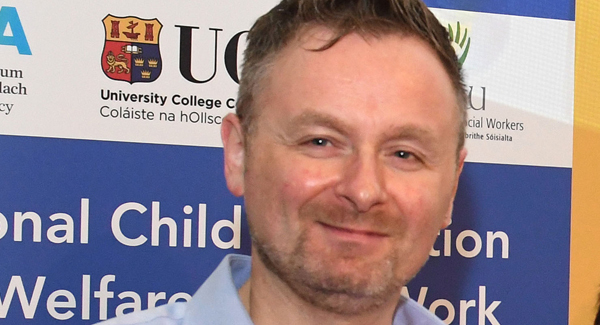
Declan Coogan, a lecturer in social work at NUI Galway, said it is a “hidden type of family violence” that comes in under “other types of referrals” made to social work departments.

Dr Coogan, who was addressing the sixth National Child Protection and Welfare Social Work conference at University College Cork yesterday, said Australian research has found child to parent violence and abuse (CPVA) is most prevalent in middle-class two-children families “with over-entitled kids”.

He said this is the profile he has encountered from his own experience — he worked for nine years as a social worker and is also a psychotherapist — and that he has heard it anecdotally, from social workers.

He said the upshot is that “love becomes hidden” and parents and children stop interacting. Sometimes it leads to family breakdown and can be difficult to detect and talk about.

In his presentation ‘Say Something Loving - Social Work Responses to Child to Parent Violence and Abuse’, Dr Coogan said CPVA involves children aged 18 and younger, in a range of social, cultural and family contexts, where threats or use of physical, psychological, or financial abuse are directed at parents or carers.

What sets it apart from challenging behaviour is “power and fear” where parents feel they have to adapt their behaviour due to threats or violent behaviour.

And while people “think first about boys” in relation to CPVA, from Dr Coogan’s work, which includes NUI Galway lead for an EU-funded project Responding to Child to Parent Violence, “girls use it more than you would think and also fathers are targeted”.

CPVA remains under the radar because parents blame themselves or fear blame from social workers or because social may not ask about it or respond in helpful ways. Also, there is a stigma around it.

He said some children threaten to self-harm if parents do not give them what they want “and this is happening more often than you would think”.

Dr Coogan said an intervention model called Non-Violent Resistance (NVR), where one of the key actions is to enlist support from extended family, could be a useful tool for social workers seeking to empower parents living with CPVA.

NVR also helps parents recognise that calling their child “a little shit” for abusing them is not helpful. NVR helps parents send a clear message to the child: “I am your parent. I will no longer put up with this situation and I will do all in my power to change it — except by attacking you verbally or physically”.

Dr Coogan said CPVA should be recorded in a separate category when referrals come in to social workers, because the first step to tackling it is identifying it.

More in this section

Lunchtime News

Newsletter

Keep up with stories of the day with our lunchtime news wrap and important breaking news alerts.

Cookie Policy Privacy Policy Brand Safety FAQ Help Contact Us Terms and Conditions

© Examiner Echo Group Limited