Decision due on bid to extradite Ian Bailey
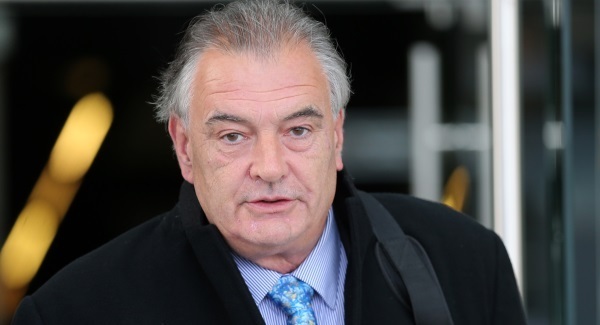
Mr Bailey, aged 60, of The Prairie, Liscaha, Schull, West Cork, denies involvement in the death of Ms du Plantier, who was found dead in Schull in December 1996.
French authorities previously sought the surrender of Mr Bailey in 2010 but this application was refused by the Supreme Court in 2012. A second extradition request was transmitted to Ireland last year, seeking the surrender of Mr Bailey for alleged voluntary homicide.
In the High Court yesterday, Mr Justice Tony Hunt said he would give judgment on July 24 on the issues discussed at hearings in May.
Mr Justice Hunt said he would make clear to the parties what arguments he regarded as “left over” which may have to be the subject of further hearing. These include legal matters relating to the issuing judicial authority, among others. Lawyers for the State had sought an adjournment.
Counsel for Mr Bailey, Garrett Simons SC, said last month his client had a “very straightforward and obvious case”.
He said there was “no way around” the Supreme Court decision in 2012 which identified an “absolute jurisdictional bar” to Mr Bailey’s extradition in relation to the alleged offence.
He said section 44 of the European Arrest Warrant Act 2003, which implemented the European Framework Decision on extradition between member states, was determined by the Supreme Court as an “absolute bar” to Mr Bailey’s surrender and that continued to apply.
A five-judge panel of the Supreme Court refused to surrender Mr Bailey in 2012 and four of the five judges upheld Mr Bailey’s argument that section 44 prohibits surrender because the alleged offence was committed outside French territory and Irish law does not allow prosecution for the same offence when committed outside its territory by a non-Irish citizen.
Applying for the surrender, counsel for the justice minister, Robert Barron SC, said the State was asking the High Court to refer the Supreme Court’s 4-1 interpretation of Section 44 to the European Courts of Justice for determination.
Mr Barron said O’Donnell J, the single dissenting Supreme Court judge on the Section 44 matter, was correct in his interpretation of the framework decision and the act; That the majority Supreme Court interpretation was “incorrect” and it would be appropriate to have a reference from the High Court to the European Courts on the matter, Mr Barron submitted.
He said it was “recognised by the Supreme Court” there were two interpretations and the only way it could be resolved conclusively was by the court in Luxembourg.
Mr Justice Tony Hunt remarked that “somebody, somewhere” had apparently decided the Supreme Court got it “catastrophically wrong” and the way to correct it is to get the European Courts to tell the Supreme Court they got it wrong.