53% of unplanned pregnancy cases intended to abort
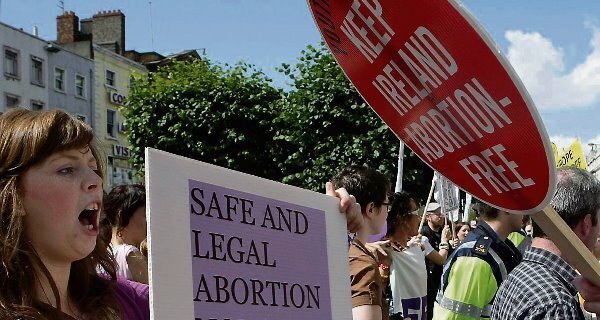
At their first counselling session, 283 (53%) said they had decided to travel to another state for an abortion, with most stating they planned to go to Britain for a termination.
Three pregnant women were considered eligible to access abortion services in Ireland under the 2013 Protection of Life During Pregnancy Act, but none of them wanted to undergo the necessary assessment procedures and opted to travel for an abortion.
IFPA chief executive Niall Behan said restrictive laws on abortion were still a significant barrier to women’s access to sexual and reproductive healthcare.
“The IFPA supports the choices of women and girls with an unplanned or crisis pregnancy in all circumstances,” he said.
“These women and girls should be able to access safe and legal abortion in Ireland if that is their choice,” he said.
Mr Behan said the IFPA believed the Eight Amendment of the Constitution harmed women.
The amendment, which guarantees the right to life of the unborn, was inserted into the Constitution after a referendum on the issue in 1983.
“If we are serious about women’s health, the Eight Amendment must be removed from the Constitution as a first step to respecting women’s basic human rights and autonomy,” said Mr Behan.
Last year, the IFPA provided almost 3,700 pregnancy counselling sessions — over half of the women (51%) attending had an unplanned pregnancy or a pregnancy that had become a crisis.
The age profile of women attending for pregnancy counselling has changed in recent years with an increasing number over the age of 35 with an unplanned pregnancy.
Although the majority of women (66%) were between the ages of 25 and 44, the number of women over the age of 44 more than doubled compared to 2014, while those aged 34 to 44 increased by 51%. One in five women were aged between 17 and 24, 11% were over 44 and 3% were under 17
Just under half of the women received post-abortion counselling, while 3% were counselled about a diagnosis of foetal anomaly. Most of the women were Irish – only 11% were foreign nationals.
Of the 3,600 contraceptive services provided last year, 56% related to the contraceptive pill, patch and vaginal ring, with 5% for the emergency contraceptive pill.
Almost 1,200 screenings for sexually transmitted infections were carried out.

CONNECT WITH US TODAY



Be the first to know the latest news and updates