Public ‘could be persuaded’ to fund better healthcare
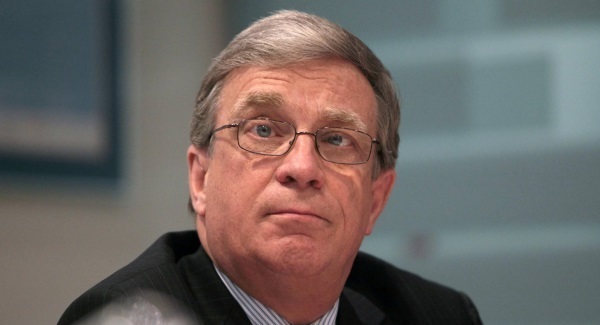
Professor Tom Keane, who headed the National Cancer Control Programme (NCCP), also believes people could be persuaded to pay more in taxes for healthcare.
But he said there must be political will and an educated public who understood the issues and the changes needed.
“I think there is a sense out there that faced with a choice — if Irish people were asked to pay more in taxes to fund healthcare, compared to some other alternative, they could be persuaded to do so,” he said.
However, Prof Keane warned against taking on the whole system during a meeting of the committee on the future of healthcare because such a move was unlikely to be successful.
He believed the best way to build trust was with an innovative five to 10-year strategy that had key milestones to be reached in sequence.
Earlier, Prof Keane said that he believed the successful implementation of the NCCP provided valuable lessons for attempts at major healthcare reform in other areas.
The chairwoman of the committee, Róisín Shortall, said the NCCP was seen as one of the most successful examples of reform in the health service in recent years.
Prof Keane said it was “gratifying” for him to see latest cancer figures showed that patients diagnosed with cancer between 2008 and 2012 had a 60% chance of surviving five years, compared to 45% for those diagnosed between 1994 and 1999.
A key element of the NCCP included the consolidation of all cancer surgery within eight designated cancer services. Prof Keane said the NCCP was the “pet project” of former minister for health Mary Harney, who invited him to come to Ireland on secondment from his position at the British Columbia Cancer Agency and the University of British Columbia.
When he took up his post as director of the NCCP in November 2007, it was apparent that the implementation of the plan to reform cancer control in Ireland was proceeding very slowly and that not everyone supported it.
Prof Keane said it was impossible to force change in the medical environment unless it was rational, supported by evidence, and there was a willingness to talk to the parties involved.
However, he regarded the cancer strategy as “sacrosanct” and refused to reopen it.
He was intent on implementing the plan and did not want to spend all his time in Ireland talking about it.
Prof Keane had also made it clear to Ms Harney that when he came to Ireland, he would refuse to engage in discussions about issues that occurred before his arrival.
“I focussed entirely on the future, saying that if we had a better system, these things would not arise,” said Prof Keane.

CONNECT WITH US TODAY



Be the first to know the latest news and updates