Naval kite plan flies the nest with spin-off company
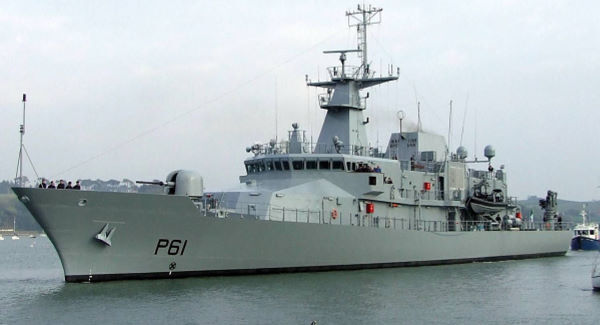
But the proposals — first revealed by the Irish Examiner in 2012 — resulted in successful trials, funding from Enterprise Ireland, and plans to create a spin-off company which could employ up to 20 people to sell the technology.
The kites, which can be reeled out on steel cables from a pulley system, fly over the ship and are equipped with a batch of sensors which can dramatically increase the range of radar and other surveillance equipment. It can improve radar capabilities by nearly 10 times.
Normally, a ship’s radar has a sweep of about 250 square nautical miles, but sensors on the kites — which will fly up to 300m above the vessel — would significantly increase the radar sweep and other surveillance technology to up to 2,500 square nautical miles.
The technology will be particularly useful to the Irish Navy because it now has to cover 1m square kilometres of sea for fishery protection, drug interception, and search and rescue missions.
Depending on the way the wind is blowing and the direction the ship is taking, the kite can also be reeled out to provide a type of sail propulsion which will save on diesel.
Fuel savings are especially important to the naval service which uses around 40% of the fuel allocated to the Defence Forces. When in use the kites on their own could provide speeds of up to eight knots, which is as fast as an average trawler.
The technology isn’t just useful for military purposes but for coastguards and commercial vessels.

It’s not clear yet where the potential spin off company will be based, but it’s highly likely it will be in the IMERC (Irish Maritime Energy and Resource Cluster) campus in Ringaskiddy, Co Cork, because that’s just a stone’s-throw from the naval service headquarters on Haulbowline Island where prospective buyers could see it in action.
The technology was developed through the collaboration of the naval service, UCCs Halpin Institute, and CIT’s Nimbus Centre and SEAI and UL under the umbrella of IMERC.
Meanwhile, the LÉ Áisling last night hosted the announcement that UCC’s School of Law is creating two new master’s programmes — in Environmental and Natural Resources Law, and Marine and Maritime Law.
The master’s degrees are the first of their type to be offered in the country and reflect the ongoing research activities carried out in Cork, within UCC’s law school and with key partners including IMERC.