‘Game-changing’ evidence at inquest into baby’s death
In evidence described as “game-changing”, a pathologist’s report found an incident that could potentially have contributed to Darragh Byrne’s death from hypoxia occurred before he was born.
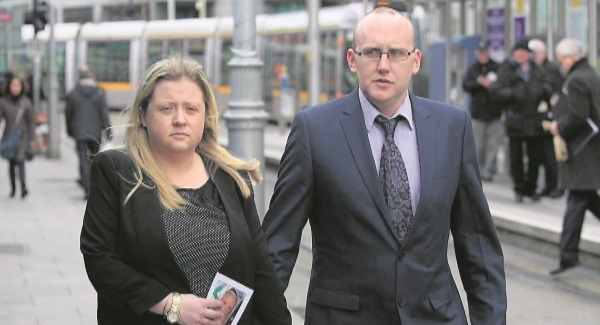
At Dublin Coroner’s Court, parents Maree Butler and Eoin Byrne, from Portlaoise, heard evidence from Colette Adida, a consultant neonatal pathologist at the Coombe Women and Infants University Hospital.
The court heard that Dr Adida found evidence of both acute and chronic hypoxia, the latter of which could have been caused by an event in the weeks before the child’s death.
As the inquest got under way this week, Brian Farrell, the coroner, heard that the Coombe had issued an apology for failures relating to aspects of the management of Ms Butler’s care during labour, relating specifically to a one-and-a-half-hour period prior to birth.
The cause of death was multi-organ failure due to hypoxia (lack of oxygen), according to Dr Adida.
From the autopsy, Dr Adida said it was not possible to give the exact cause of the hypoxia, which was described as a “global cerebral hypoxic change” that caused the baby’s death.
She found evidence of chronic hypoxia in the form of non-fatal impairment of the placental function and foetal circulation, which, she said, can take “a few days to weeks to develop”.
“I can’t give the exact timing, it takes days to weeks to happen, I can’t be more precise than that,” she said.
Simon Mills, for the HSE and the hospital, apologised for his use of a colloquial term but said the evidence was a “game changer”.
Sara Antoniotti, for the family, said the evidence was “entirely inconsistent with what we have been told by our experts”.
Adjourning the inquest until March 8, Dr Farrell said: “This is a crucial issue that I need to look at.”
Born on February 15, 2013, Darragh was unresponsive at birth and passed away four days later.
The court heard how Ms Butler had developed gestational diabetes during pregnancy. On the labour ward leading up to delivery, progress was deemed slow and oxytocin was administered. Darragh was born by cesarean section at 1.06pm, but was unresponsive and had no brain activity.

CONNECT WITH US TODAY



Be the first to know the latest news and updates