‘Unbalanced’ media reports criticised by president of the district court
Judge Rosemary Horgan said the media perform “an essential and valuable service in our democracy” — but said the job comes with a responsibility to “ensure accuracy and fairness”.
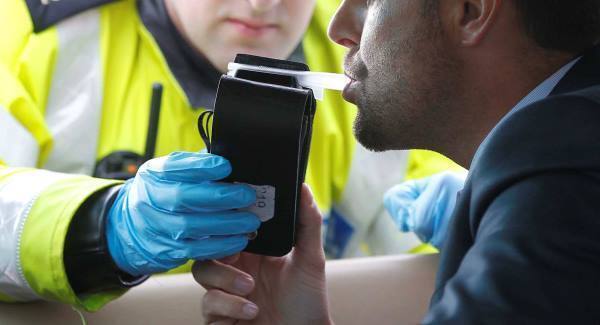
Last month, The Irish Times ran a front page story stating that only 40% of drink driving cases listed before the district courts resulted in convictions.
In an editorial, the newspaper said this represented “a serious failure of the criminal justice system”, that it “undermined” the work of gardaí and brought “the law into disrepute”.
The Courts Service subsequently published a statement saying the reports and commentary were “simply wrong” and “distorted reality”.
The Courts Service said the figures used extrapolated conviction rates “from the wrong set of figures” and the actual conviction rate was between 85% and 88%.
Speaking yesterday at the retirement of Judge William Early from the district court, Judge Horgan said the media can influence what the public thinks.
“It is very concerning therefore if public confidence in the justice system is undermined through any inaccurate or unbalanced reporting or editorial comment,” she said.
She said the public was entitled to expect high professional standards from journalists and editors.
“Inaccurate, incorrect, unbalanced, and incomplete reports of either the facts of an individual case, or a statistical trend in a particular category of cases, is both a disservice to public interest and to public debate.”
Informed sources yesterday said the comments made by the president were, in large part, in reference to a front-page report in The Irish Times on October 19 and an associated editorial the next day.
The articles attracted extensive coverage in the broadcast media, as well as in newspapers.
It said that new figures showed that only 40% of drink driving cases listed before the country’s district courts since January 2013 resulted in a conviction.
It said the figures “compared unfavourably” with England and Wales, where 97% of drink driving cases brought before the magistrates’ courts resulted in conviction.
The newspaper said the figures were supplied to Parc, a group that aims to raise awareness of road safety in Ireland, through a parliamentary question.
It said the Department of Justice had pointed out that they included some cases listed before the courts but not yet finalised, and some summonses that have not been served.
It said some of the cases have also been adjourned pending an appeal of a High Court decision.
The reports prompted a strong response from the Courts Service, which said the reporting and commentary was “inaccurate”, due to the extrapolation of conviction rates from the wrong set of figures.
It said that this distorted the actual outcomes in cases heard and in no way reflected the conviction rates in the district courts — which was more than double the 40% figure quoted.
Praise for ‘courage, sensitivity’ of gardaí
A retiring district court judge has said gardaí perform their duties with “courage, sensitivity and efficiency”.
Judge William Early, who departs the bench today after 22 years, said that one of the greatest successes of the State was the maintenance of an “unarmed police force”.
He said a “strength of the criminal justice system” was that prosecuting gardaí were not primarily concerned about securing a conviction, but “fairly presenting the evidence”.
He was speaking in Court 18 of the Courts of Criminal Justice yesterday, where the president of the District Court, Judge Rosemary Horgan, made an address.
“He is very hard working and can manage a busy court list, deftly applying the relevant law to the complex facts in each of the many cases in the list,” Judge Horgan told a room packed with district court judges, court staff, solicitors, barristers, gardaí and Judge Early’s family.
“Judge Early has consistently demonstrated the very best judicial traits of patience, open-mindedness, courtesy, tact, courage, punctuality, firmness, understanding, compassion, humility and common sense,” she said.
Judge Gerard Haughton recalled a colleague and friend who was “gentle and soft spoken”, who had a great knowledge of the law and who showed “great compassion” to his clients.
He said Judge Early became a ‘movable judge’ in 1995 and dispensed justice the “length and breadth of the country”.
Judge Haughton said he was an “iconic” presence on the bench and was “an impossible act to follow”.
John Rogers SC said his friend displayed “a deep commitment to social justice” and was very encouraging to junior counsel fresh to courtrooms.
Kevin O’Higgins of the Law Society said he made “an immense contribution to the administration of justice”.
Veteran solicitor Michael Hanahoe said the district courts could often be “a raucous and tumultuous place”.
He said that while some judges tried to retain control by shouting or glowering, Judge Early did so by “courteous, civil behaviour”.
Judge Early said the administration of justice could be “trusted” in the hands of criminal lawyers.
“You represent the poor, the weak, the desperate and, sometimes, the dangerous. I salute you.”
CONNECT WITH US TODAY



Be the first to know the latest news and updates